


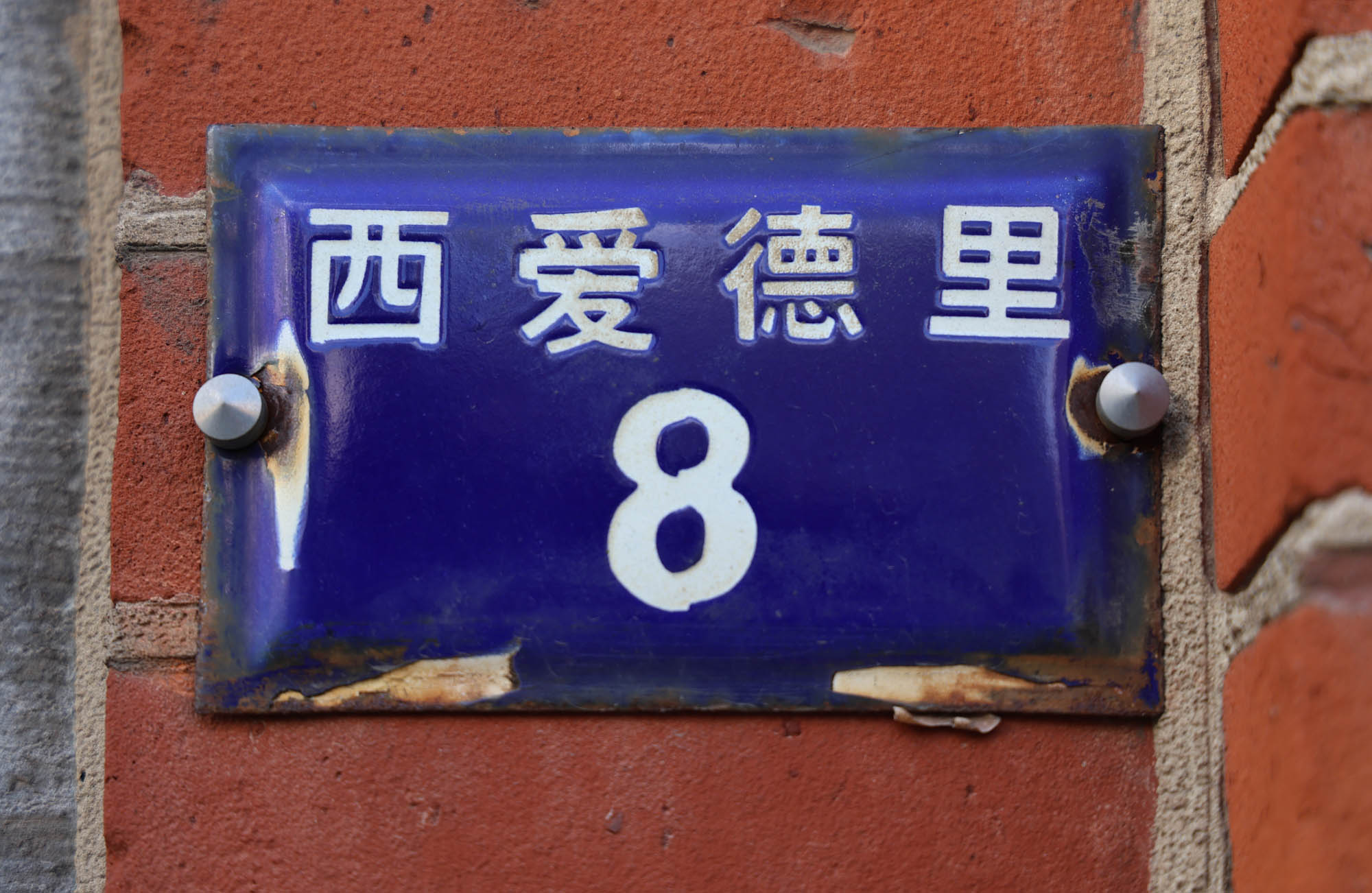
I see this house number plaque on the building at 8 Rue Léonard da Vinci in Brussels whenever I occasionally pass it on my way to the History Museum in the Parc du Cinquantenaire. It challenges me every time, and I struggle to make sense of it. The characters themselves are not the problem, they are easy: 西爱德里 Xī ài dé lĭ – “west-love-virtue-place”, but what they mean together is another matter. These familiar characters are often used to transliterate Western names. I try to force them into Leonardo. Perhaps from right to left, starting with Li-, as in old Chinese books? But it simply does not work.
Today, however, I came across the name 爱德华 Àidéhuá in a work about Chinese teahouses around the turn of the century; this is the transliteration of King Edward's name. The characters are flattering: “love-virtue-prosperity”, suggesting that the name was coined during the brief period of Chinese Anglophilia, sometime in the first half of the 20th century. And then it dawns on me: this is the name on the house number plaque! The final 里 lĭ, which cuts off the final 华 huá of Edward, means not only “place” but also “neighbourhood”: so this was a house number plaque from Tianjin's West Edward neighbourhood (or rather, residential block, in English Edward Road). Its wear and typography also suggest that it is an original Chinese plaque, from the period before the street was renamed 民权路 Mínquán Lù, Democracy Road.
The Edward neighbourhood stretched across Tianjin's British concession. The concessions were peculiar autonomous territories that the weakened Qing government ceded to foreign powers for commercial and diplomatic purposes, in 1860, after the Second Opium War, and in 1901, after the suppression of the Boxer Rebellion by foreign troops, in Tianjin, which was directly connected to Beijing and the sea via the Grand Canal and the Hai River. A total of ten countries had concessions here, as the map below shows:
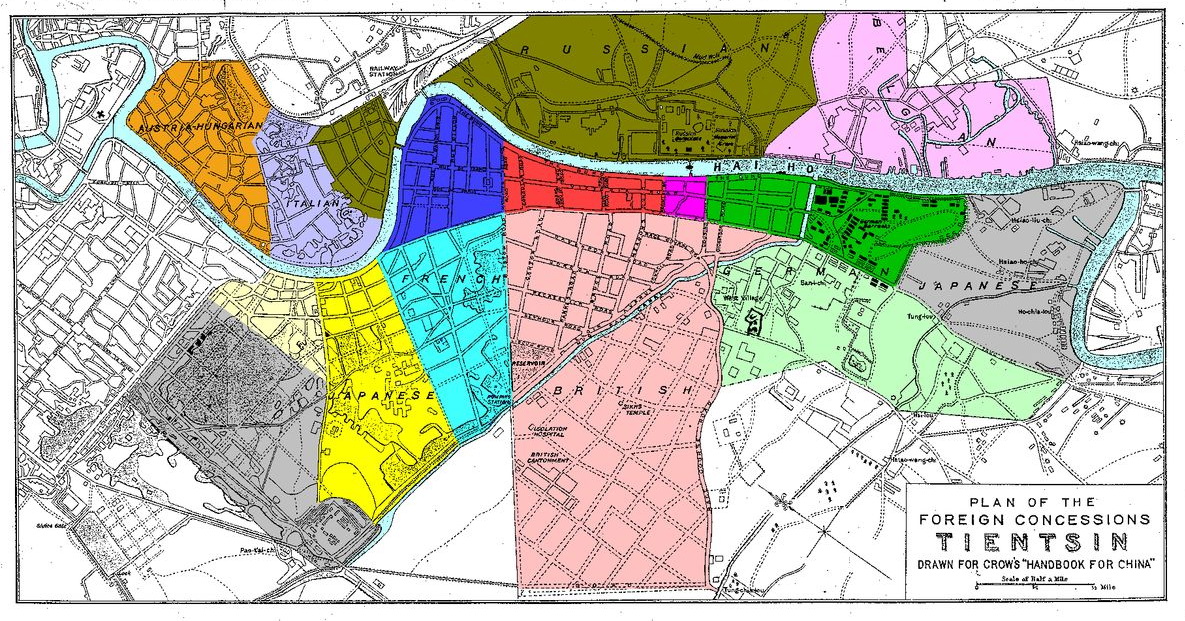
Belgium also had a concession, opposite the British concession, on the other side of the river. But the house number plaque comes from the British quarter. They may have acquired it at a flea market, or perhaps it came to them because in 1904 the Belgian concession won the contract to build Tianjin's entire electric and public transport network, which brought Belgian engineers to settle throughout the city. Perhaps one such engineer brought the house number plaque home with him when the concessions came to an end, at a time when the quarter was also given a new name.
Curiously, the Austro-Hungarian Monarchy, which had taken part in the suppression of the Boxer Rebellion, also received a piece of the concession territory in Tianjin. There is good literature on this Chinese Monarchy of less than one square kilometre, our only overseas colony, “our little China”, as a Hungarian article put it in 1904: Michael Falser's book Habsburgs going global. The Austro-Hungarian concession in Tianjin (1901-17), 2022, Miloš Jovanović's 2017 study Imperial disconfort in Post-Habsburg Tianjin, and the related blog post by the Max Planck Institute, as well as a 2011 blog post by Falanszter.
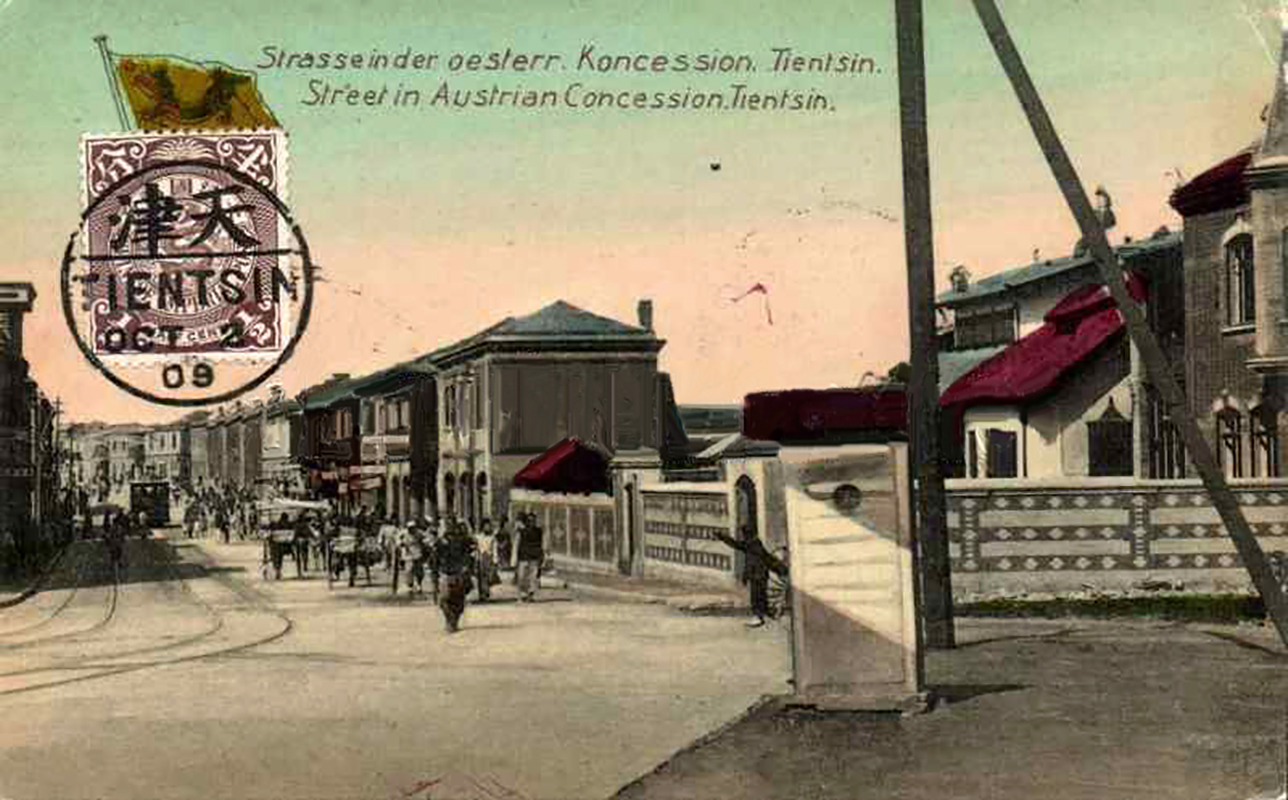
The concessions of the Central Powers, including the Austro-Hungarian one, came to an end in 1917, when China entered the war. Yet something of their legacy remained. In 1922, the Hungarian Jesuit mission in China was established. It was founded far from there, in Taming (Daming, 大名), but we know that the first Jesuits still went to Tianjin to study the language. The Hungarian Jesuits expelled from Communist China later moved to Rome, from where they returned to Hungary in the mid-1990s. In the library of their religious house on Mária Street, I saw two bulky handwritten volumes: the first—and remarkably thorough—Chinese-Hungarian dictionary they compiled in the 1930s, bringing home the language they had learned in Tianjin.
The Jesuits of Taming who had been trained in Tianjin also influenced Hungarian perceptions of China between the two world wars through their publications, such as Pagan China, Hungarian Jesuits in China, and Shining Stars in China's Sky, which dealt with the Chinese Christian martyrs. I read these as a child among the books left behind by my grandfather. The Franciscan mission in China also published similar works, for example The Bloody Days of Christian China.
Hungarian author Antal Szerb—who, as a Catholic, would presumably have encountered these popular publications—also writes about the Chinese missions in Journey by Moonlight, where Mihály and Éva, who are still together at this point in the novel, visit the Franciscan mission collection in Fiesole:
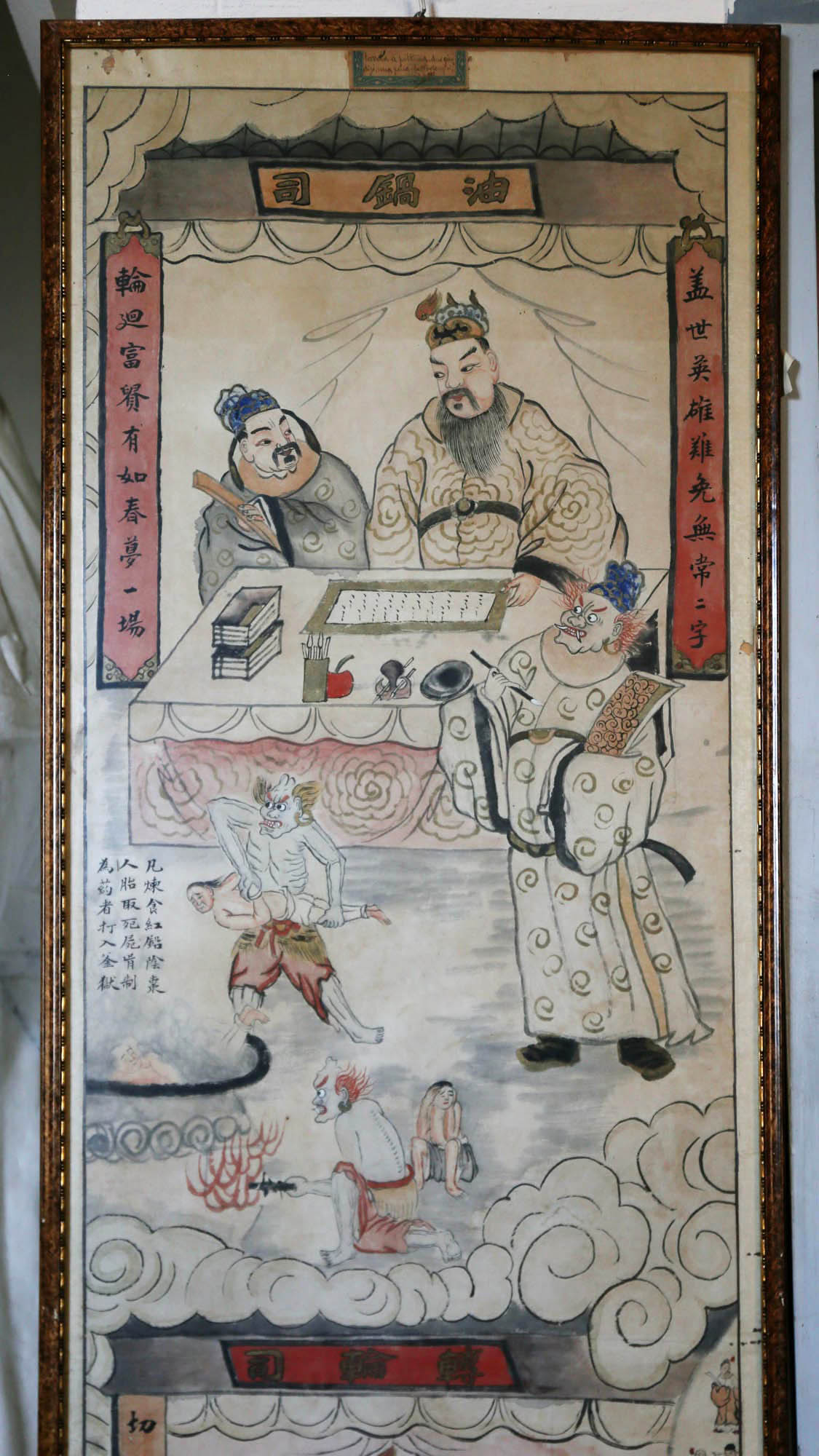
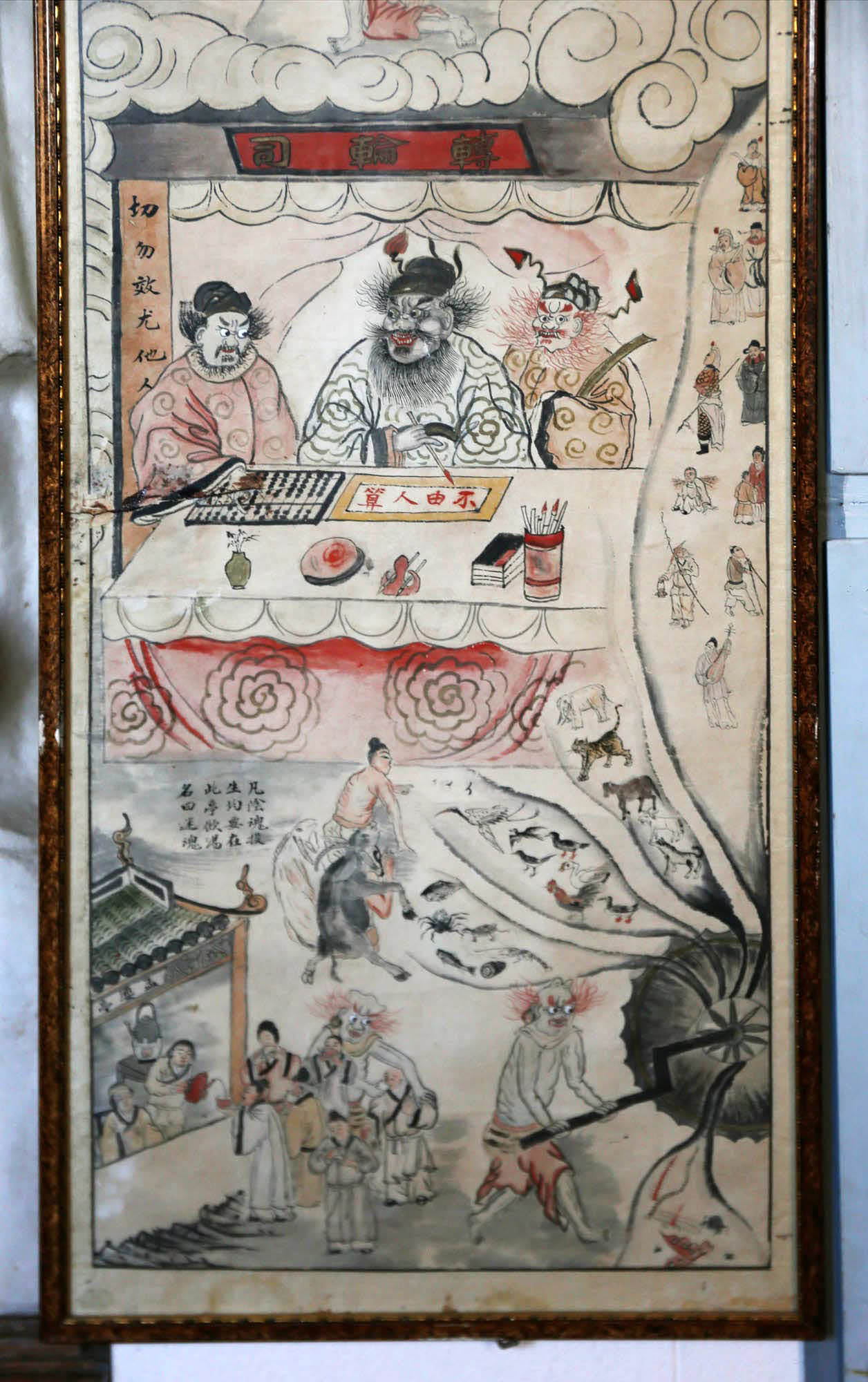
“They went up to Fiesole and watched as a thunderstorm came striding across the mountains with self-important speed, as though determined to catch up with them in time. They took refuge in the monastery and looked at the many Oriental curiosities the pious friars had brought home from their missions over the centuries. Mihály spent a long time admiring a series of Chinese pictures before finally figuring out what they depicted. In the upper part of each picture sat an angry and terrifying Chinese figure, with a large book before him. His face was made particularly frightening by his hair, which stood up on either side above his temples. In the lower parts of the pictures, all sorts of gruesome things were taking place: people were being thrown with pitchforks into some unpleasant liquid, some were having their legs sawn off, one was having his rope-like intestines carefully pulled out, and in one scene an automobile-like contraption, driven by a monster whose hair was combed upward above his temple, crashed into a crowd, while rotating axes mounted on the front of the machine hacked the people to pieces.
He realized that this was the Last Judgment as seen by a Chinese Christian. What expertise and objectivity!”
Szerb Antal was probably unaware that Buddhists too have a judgment in the afterlife, if not a final one, since afterwards one is reborn—but all the harsher for the unfortunate soul, so that for an entire subsequent lifetime it might remember what happens to those who go astray. The Chinese scroll paintings hanging in the Franciscan missionary museum in Fiesole, founded in 1906, depict various versions of this Buddhist judgment in the afterlife, entirely without Christian assistance.
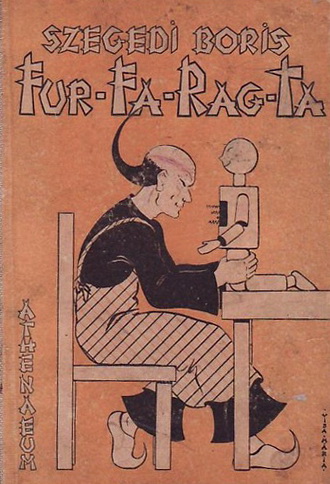
The most influential popular publication on China between the two world wars, however, was Boris Szegedi's Fur-fa-rag-ta (1936), a collection of humorous tales about a Chinese jack-of-all-trades whose fantastic inventions usually end in disaster. This, however, was not based on the image of China conveyed by the missions, and not merely because Boris Szegedi, the wife of Lajos Nagy, was more closely associated with the circle of Nyugat, where the book was also praised by Józsi Jenő Tersánszky. Rather, its connection with China consists only in the stereotypes of the period, which, if she drew them from anywhere, probably came from Jenő Cholnoky's book on China, From the Land of Dragons, since its themes can be broadly compared with those of Fur-fa-rag-ta, and because Cholnoky too wanted to write an entertaining book, seasoning his scholarly material with “varied episodes, amusing and interesting events.”
And speaking of entertainment, there is one more memory of Tianjin that has stayed with me: a rhyme I heard from my father. Although I cannot trace its source, it probably comes from a pre-war cabaret, and depicts the civil war waged by the warlords in the decades after 1912 with the amused relief of those living far away:
|
Halló, halló, Csing Csong csenget. |
Hallo, hallo, Ching Chong is ringing. |
“They report from Tianjin” was a standard opening formula for radio broadcasts at the time, since the news agencies based there were a source of Chinese news for Europe. This is all that remains of our memories of Tianjin.


Add comment