


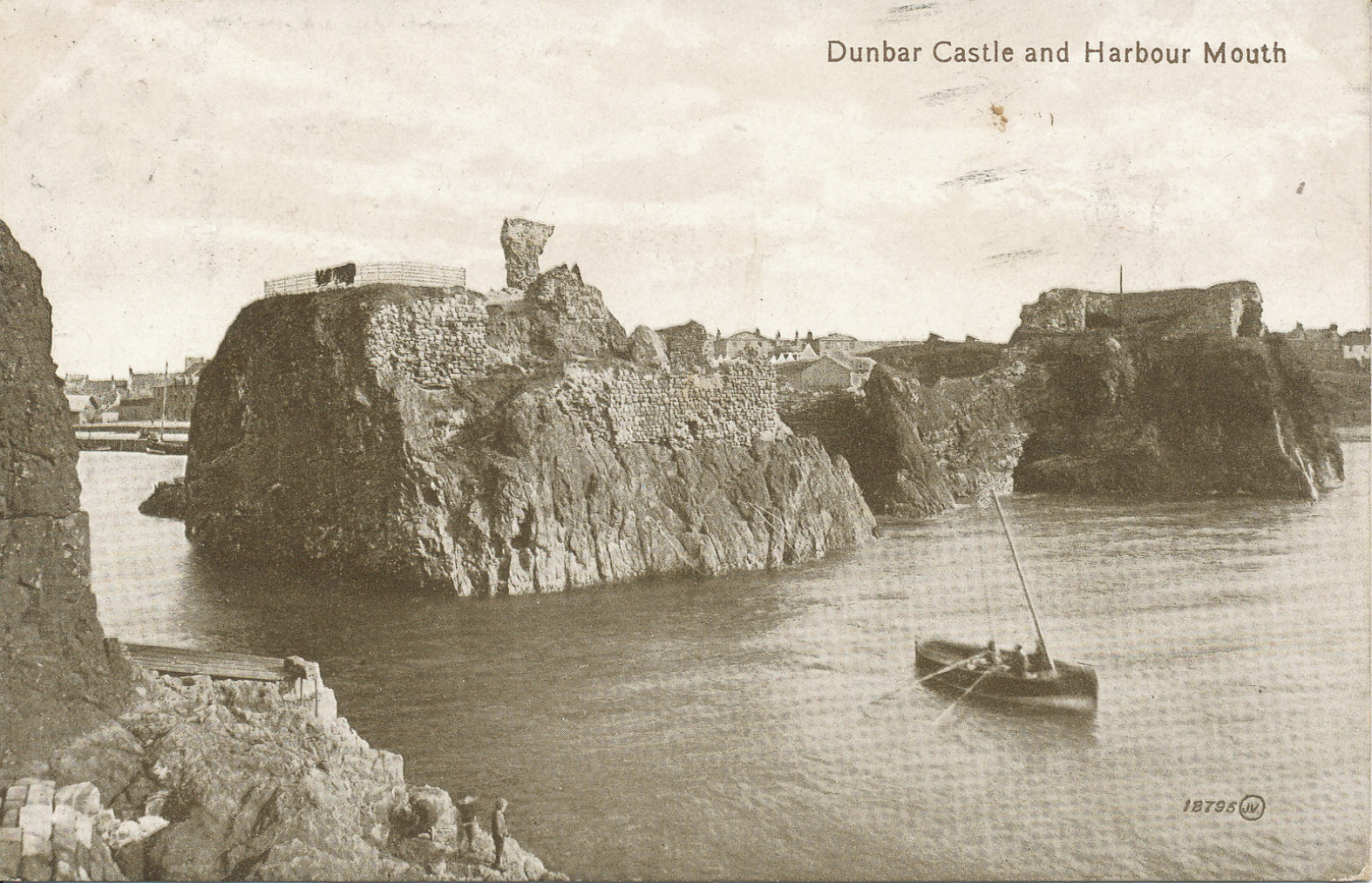
Dunbar Castle is one of the most brilliant dark spots, one of the brightest missing links, in the history of Scotland. It has already surfaced several times during our journey through Scotland: the Countess of Dunbar, Black Agnes, had Whitekirk Church built, and Bothwell, captain of Dunbar, brought Mary, Queen of Scots here for refuge from the Protestant lords who were plotting against her. Dunbar appears at both the beginning and the end of the wars of independence against England, at Edward I's triumphant arrival and Edward II's disastrous flight, at the unsuccessful English siege of 1338 and Cromwell's triumphant entry into Scotland.
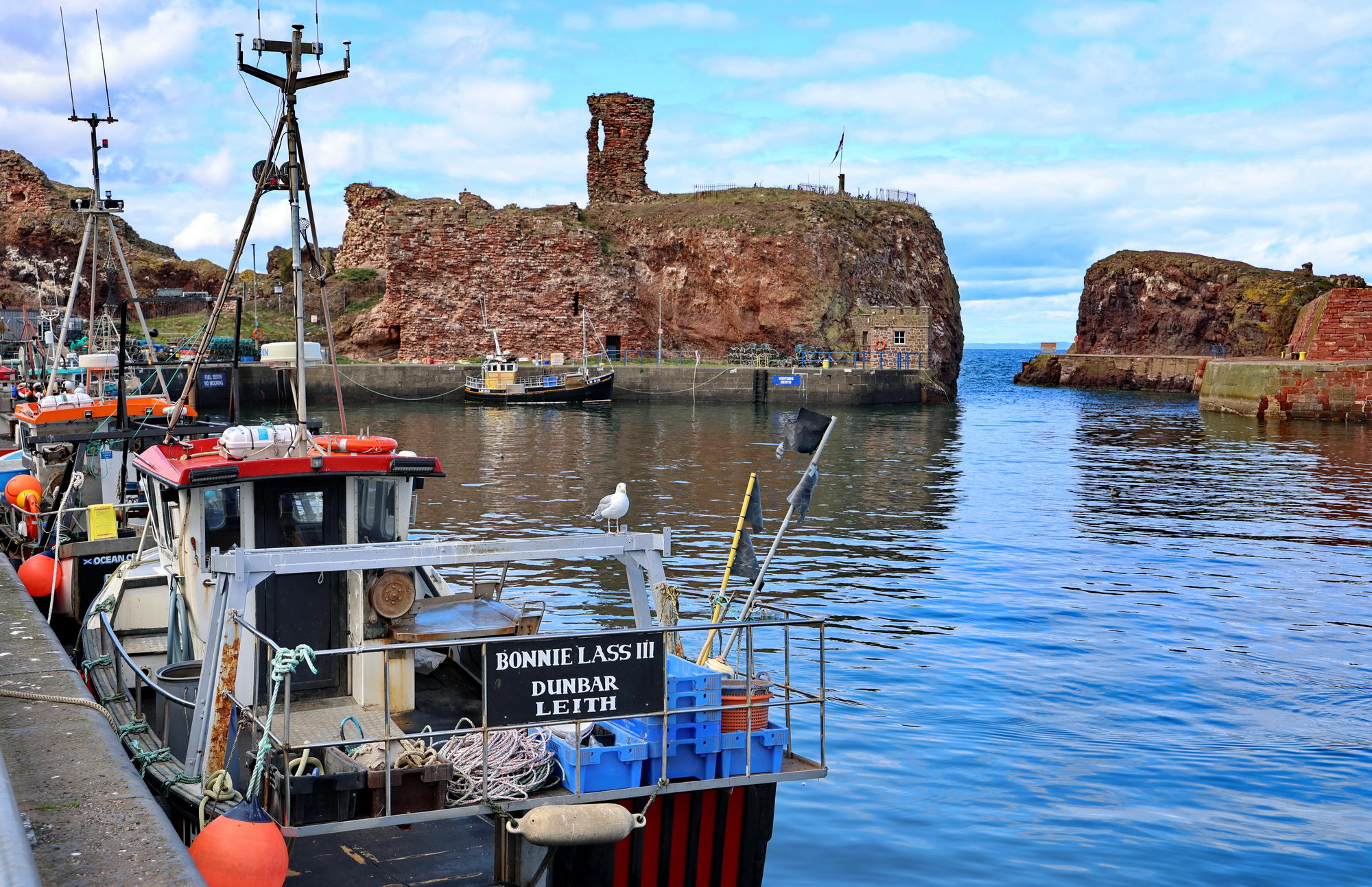
At places of such importance in Scottish history, we expect a splendid castle or a majestic ruin beautifully restored, something commensurate with the historical weight of the place. Yet on the coast at Dunbar, only a single red fragment of wall rises towards the sky from among the layers of brick that have settled like algae on the coastal rocks. The rocks stand at the entrance to a small rural fishing harbour. Nothing suggests that we are standing at one of the most important sites in Scottish history.
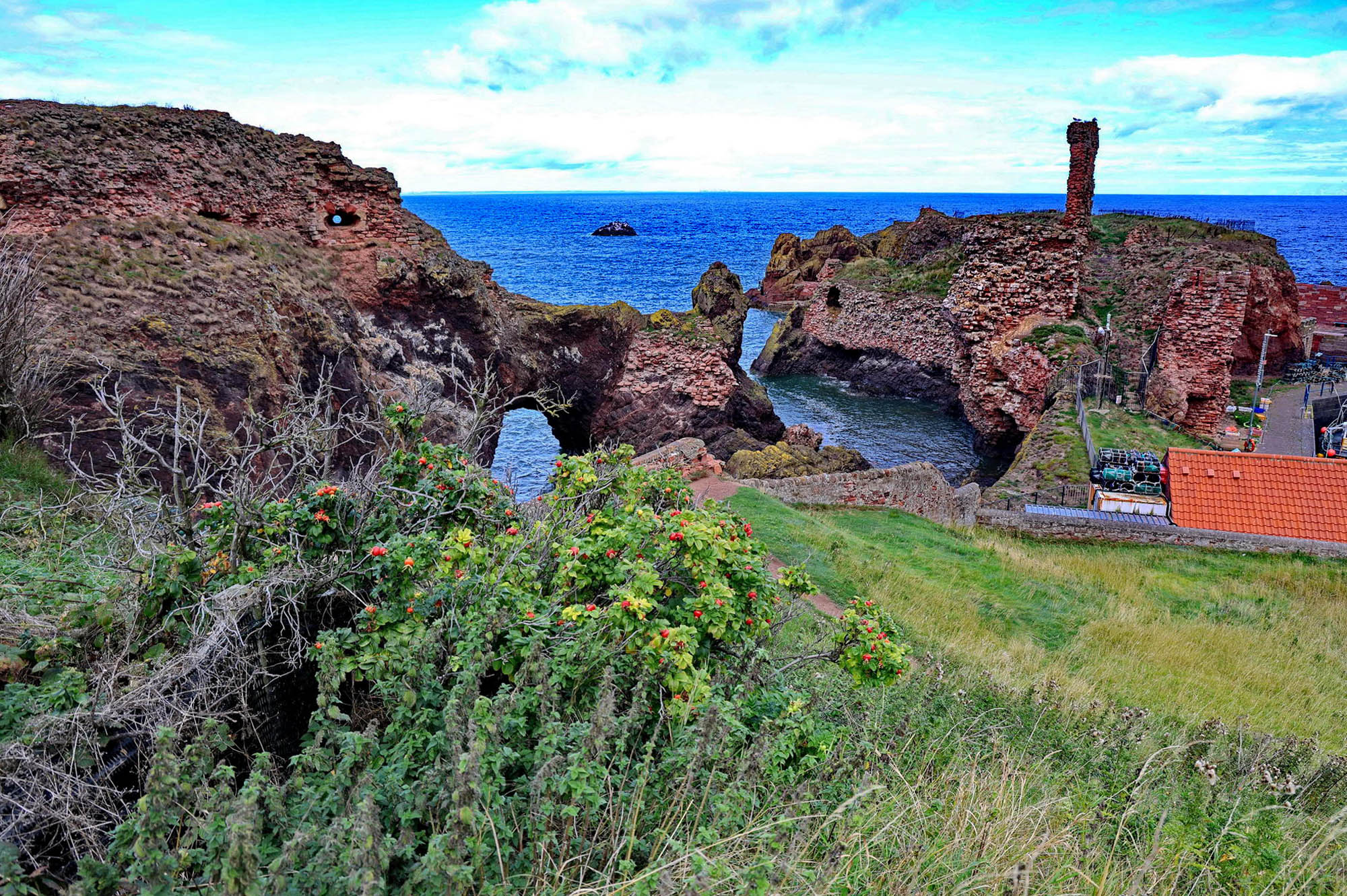
Only when we know its history do we see that at Dunbar it is precisely the totality of its destruction that is commensurate with the importance of the place. A castle of such weight required devastation on such a scale.
The castle was founded at the entrance to the Firth of Forth by Gospatric, the Anglo-Saxon Earl of Northumbria, who fled to the Scottish King Malcolm III after the Normans' victory in 1066. The king, with good judgement, entrusted him with the defence of the funnel-shaped estuary leading to Edinburgh against the expected Norman invasion. Thus an Anglo-Saxon nobleman became one of Scotland's most powerful aristocrats, the Earl of Dunbar and March. “March” derives from the Latin “Marca”, meaning a borderland, and referred to the eastern half of the entire Scottish Borders. The defence of this territory against the English was also the responsibility of the Earl of Dunbar.
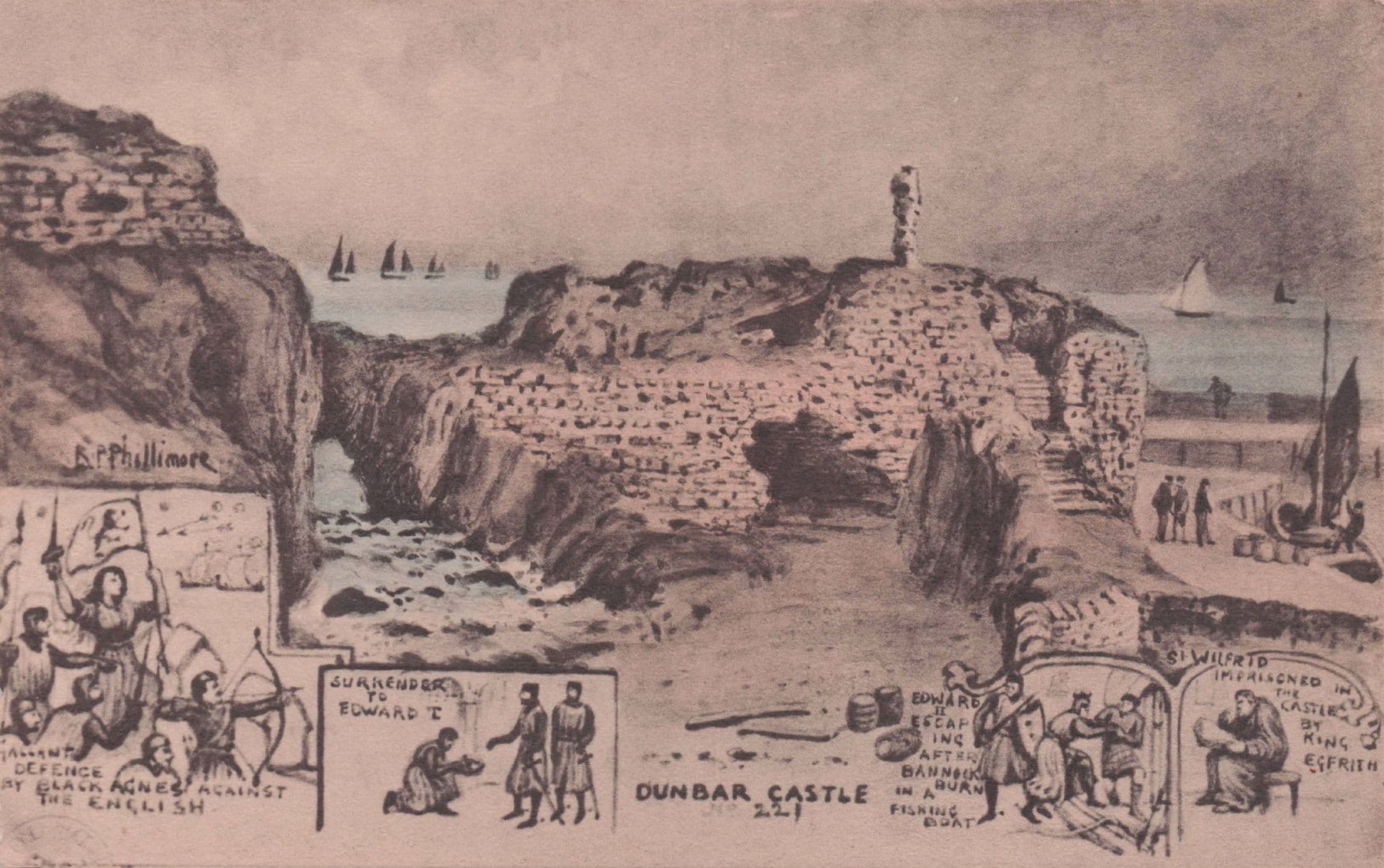
In 1296, when the Scottish nobles, quarrelling over the vacant Scottish throne of 1286 like bear cubs fighting over a piece of cheese, invited Edward I, the fox, to act as arbiter, he decided that he would keep the whole cheese for himself. He landed at Dunbar, and in the battle fought here defeated the armies of the quarrelling Scottish lords, thereby opening the way for himself into the interior of the country.
Then in 1314, when Robert the Bruce spectacularly defeated the English army at Bannockburn, the defeated Edward II fled to Dunbar Castle, the last place where an English king could still feel safe. From here he returned to England by ship.
All the Edwards had to test their claws at Dunbar. During the Second War of Scottish Independence (1332–1357), when Edward III attacked Robert the Bruce’s heir, David II, he decided that Dunbar had to be captured as a strategic port and an important point of control over the Borders. In 1338, the English besieged it for six months, but when the Scottish relief fleet arrived, they withdrew with bloody noses.
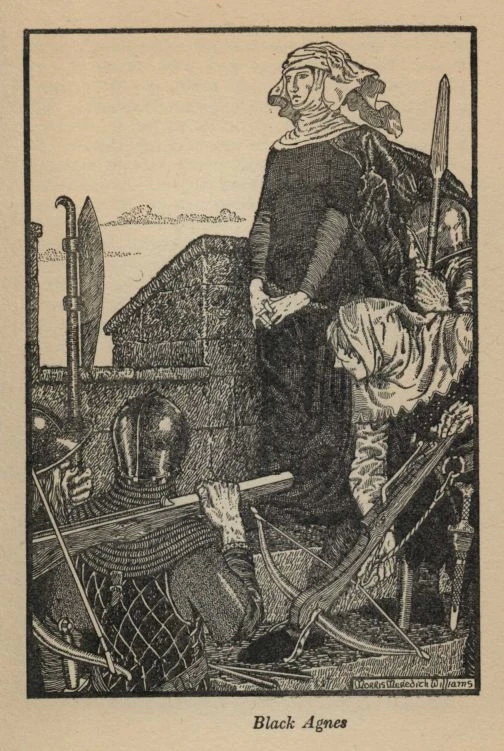
A legendary motif of the siege is that the earl was not in the castle when the English arrived, and afterwards was unable to get back in, so the defence was led by his wife, Agnes the Black, daughter of the Earl of Moray. The countess boldly walked along the battlements amid the projectiles of the siege engines, and after every shot she had her servants wipe the dust from the walls with kitchen cloths, signalling that, as far as she was concerned, this was merely a kitchen operation.
When the English set up a gigantic catapult called the “Sow” to capture the castle, Agnes sent word that the sow would soon give birth to piglets. And the following morning the catapult was smashed to pieces by a hail of stones.
But the castle’s most dramatic historical role came when it was no longer in the hands of the Earl of Dunbar, but of the Scottish monarch, who at this point was Mary Stuart. In 1566, when her husband, Lord Darnley, allied with the rebellious Scottish Protestant nobles and murdered her Italian secretary, David Rizzio, before her very eyes, the captain of Dunbar Castle, James Bothwell, brought her here to safety. Then, in 1567, after the death of her husband, when she married Bothwell, they set out from here to confront the rebel lords. The battle never took place, because Mary surrendered herself to the rebels in exchange for Bothwell being allowed to leave freely. This marked the beginning of her twenty-year captivity, first in Scotland and then in England, where she was eventually executed.
But the castle did not fare any better. The parliament, now controlled by the rebels, ordered its demolition. Officially, because maintaining it was too expensive. In reality, on the one hand to erase the memory of Mary and Bothwell, and on the other to prevent it from serving as an impregnable stronghold for the still-powerful pro-Mary Scottish nobility.
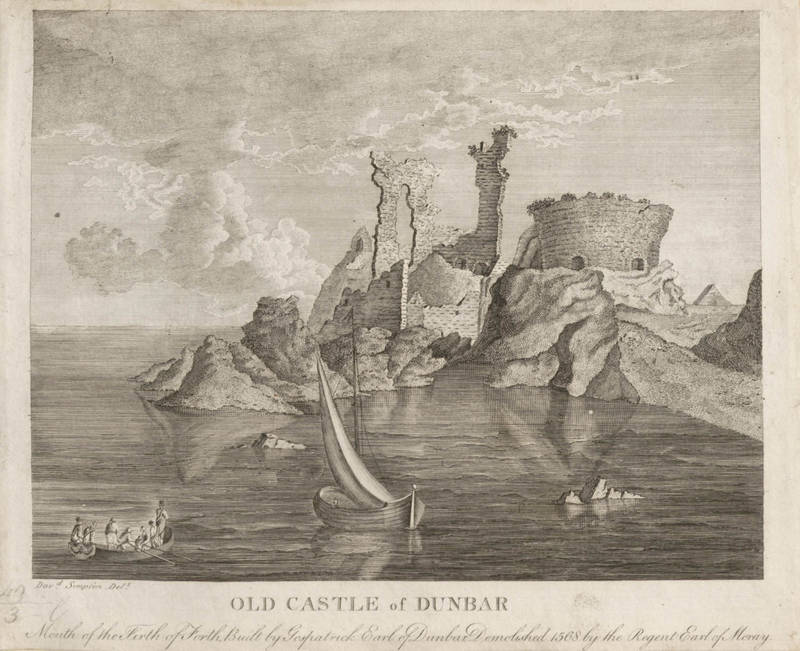
What the English army had been unable to achieve for centuries was destroyed by the Scots themselves. This would become a recurring theme of the centuries that followed, from the destruction of the Gothic cathedrals to the forced emigration of the Highland Scottish population.
The castle, which, had it been preserved, might have stood as a monument to the Scottish people’s resistance, thus became, after being so totally destroyed in such a dramatic situation, a monument to the Scottish people’s self-destruction.


Add comment