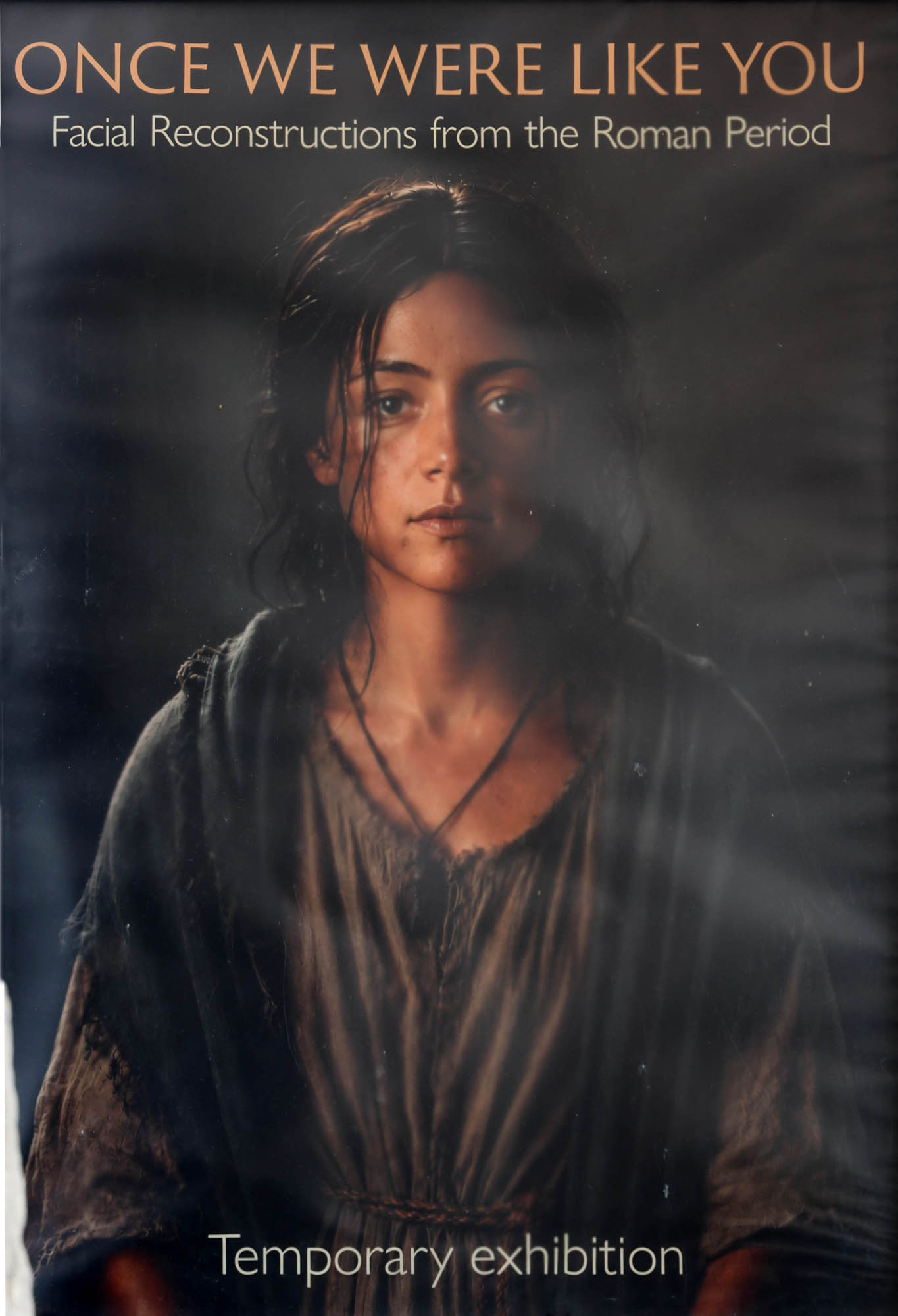
In Budapest there is a city that lies almost like a dead enclave, encapsulated within the living fabric of the modern city. It stands above the Danube, with massive walls, baths, streets, houses, shops, sanctuaries, tombs, aqueducts, two enormous amphitheatres, each capable of holding ten thousand people, and the castra and contracastrum that guarded the river crossings, along with much else that was destroyed when the housing estate of Óbuda was built. Tens of thousands of people once lived there. Some were born here, others came from the farthest reaches of the empire. Soldiers, merchants, craftsmen, women, children, slaves, veterans. They loved, quarrelled, traded, prayed, fell ill and died.
And yet somehow Aquincum never became part of Budapest's history.
We have stories about medieval Buda. We know where Matthias Corvinus walked, in which great hall courtly feasts took place, where the castle was besieged, who lived in which of the more important houses of Buda, who loved, stole from or killed whom. Looking into the vaulted gateways with their recessed seats, we almost automatically imagine the life that once unfolded there. The Ottoman city has its characters, anecdotes and memories too. And the later Pest-Buda and Budapest are connected with an almost infinite number of personal stories.
But we have no such relationship with Aquincum. These stones are silent.
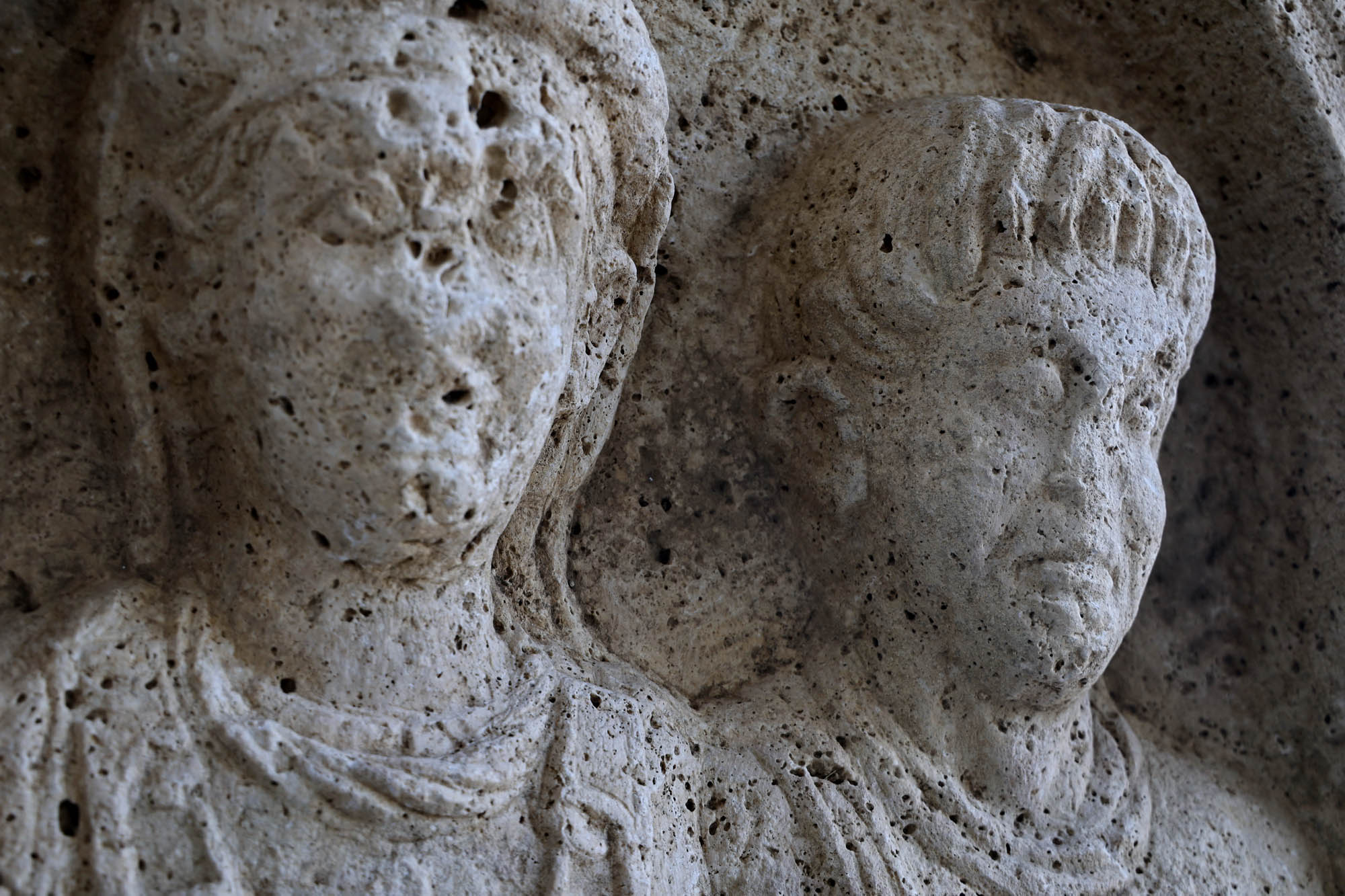
And yet that is not quite true either. The faces of the people who once lived here are there on the Roman tombstones. Some of them seem to look at us across two thousand years, almost as if for a moment that world were to stop before us. A man, a woman, a child: we do not know how they lived, what they did, or whom they loved, yet through their faces they nevertheless appear before us as individuals. And sometimes the epitaph has preserved their names as well.
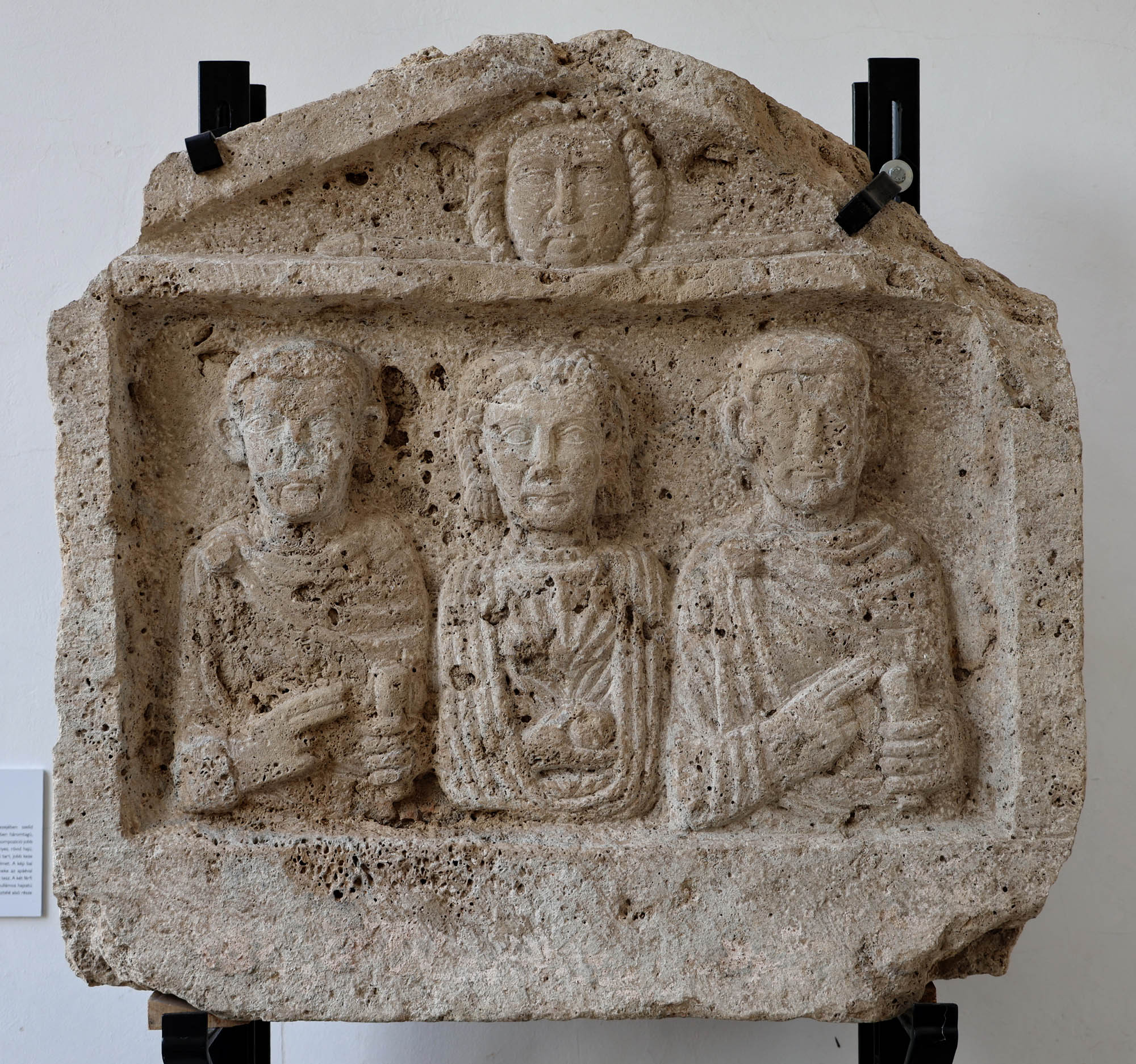
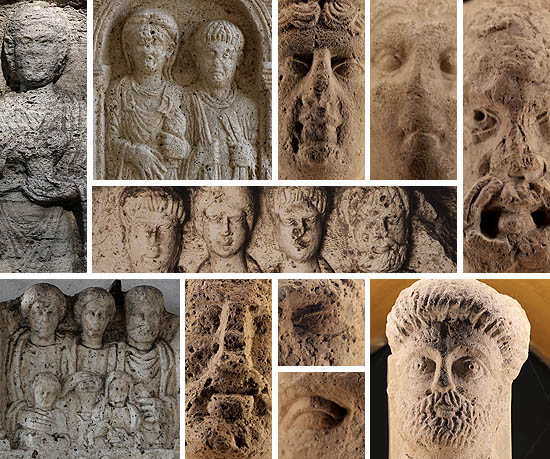
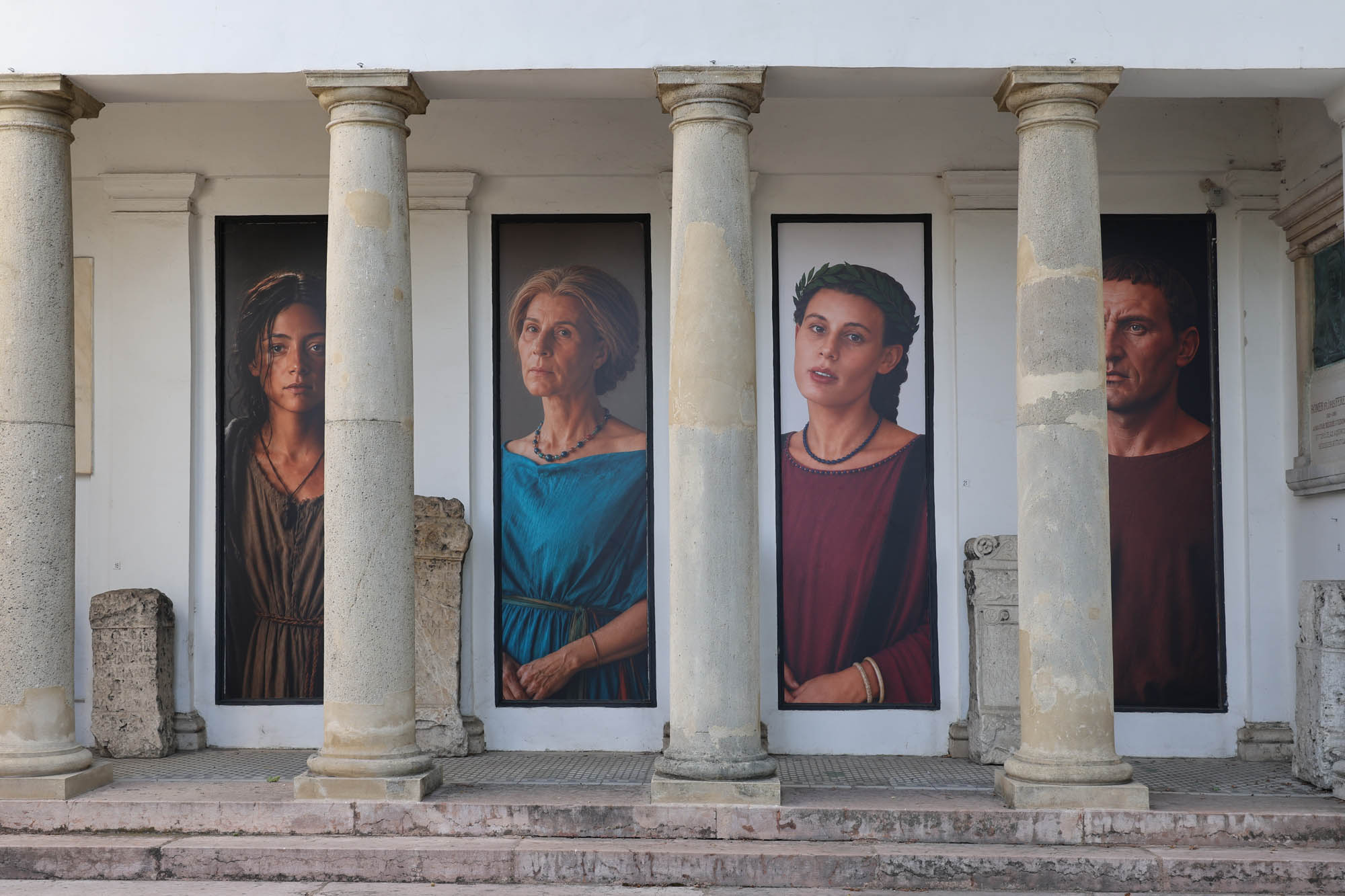
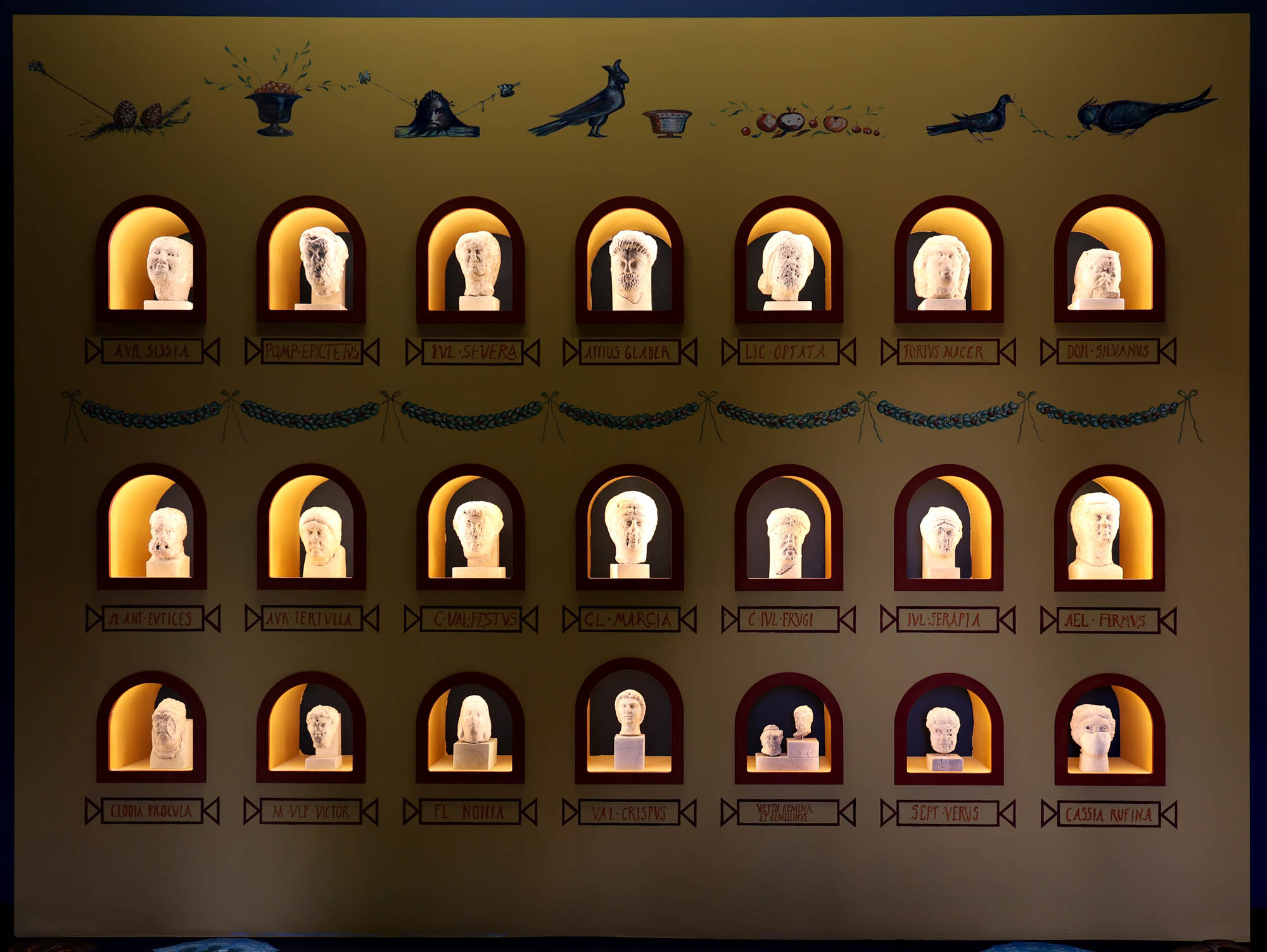 Aquincum portrait fragments arranged at the entrance to the exhibition in the form of a Roman columbarium (niches for urns), anticipating the reconstructed portraits in the exhibition
But these faces are just as silent as the stones. There is no story behind them through which we could relate to them and to their city.
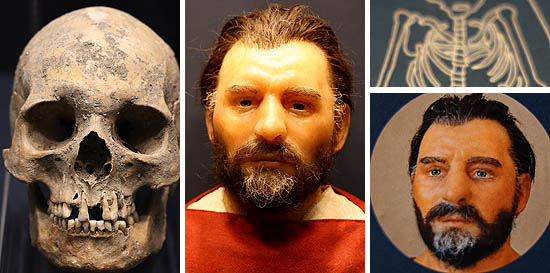
The Aquincum Museum has now given sixteen former inhabitants a face and a story. Sixteen skulls from graves excavated here have been almost brought back to life through facial reconstruction. Their bones were subjected to DNA analysis, which revealed their genetic ancestry, traits, and diseases. The grave finds provided information about their social status and living conditions. Enough evidence to allow an individual to emerge from it.
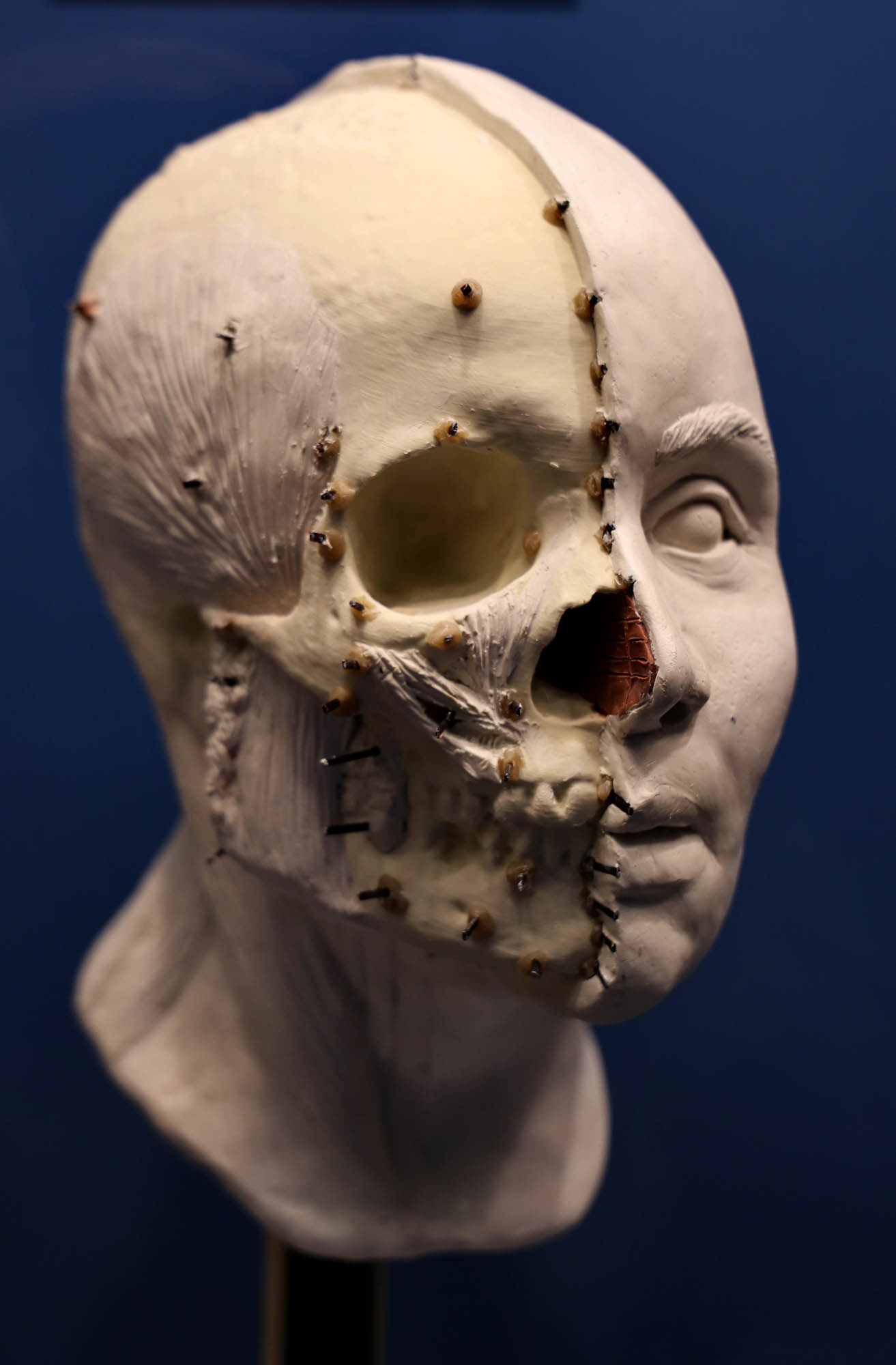
The museum staff completed the final portrait by assigning the individual a story, one based on the information that can be established, but naturally connecting the pieces with fictional threads.
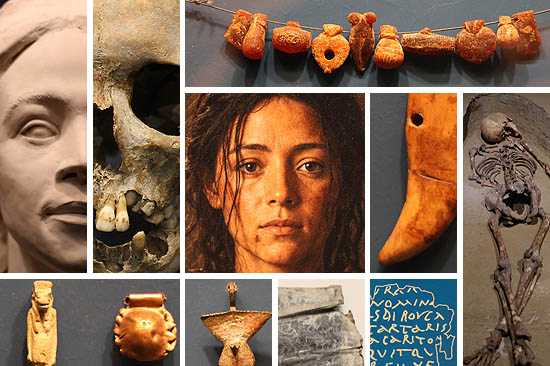
A young girl of Caledonian origin (present-day Scotland) was buried face down, with her legs bound, in the “deviant section” of the cemetery. That is all that is certain. The story calls her Calgaca, who was brought to Aquincum as a slave and made her living in her homeland through the practice of magic, which was still widespread there at the time; this, too, brought about her downfall, as described through passages borrowed from Apuleius’ The Golden Ass. The display case places beside her curse tablets and magical amulets excavated at Aquincum, which bear witness to magical practices here.
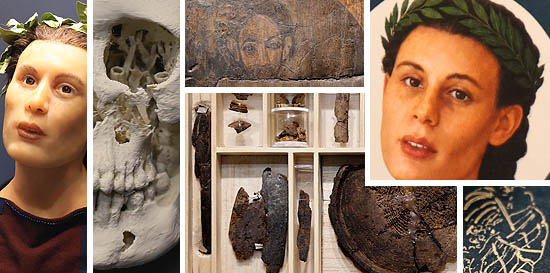
A young woman of Arabian origin (present-day Jordan) was carefully embalmed and buried in an elaborate dress and with a laurel wreath on her head. Beside her they placed a male portrait painted on an Egyptian wooden panel, as well as a distaff, symbols of marriage. In the story she is given the name Domitia Decorata, the wife of a merchant who had travelled through many provinces and who also became a member of Aquincum’s city council, and the mistress of a luxurious villa on Testvérhegy, whose enslaved women she managed like a good housewife.
A young Sarmatian boy who had immigrated from the region of the present-day Don had an artificially elongated skull, suggesting an aristocratic origin. According to the story, orphaned and given the name Aspachos, he becomes a stable boy, only to be swept away by the flooding Danube while grooming the horses.
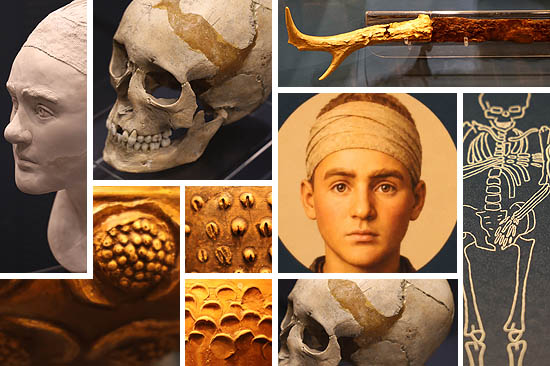
A man from southern Gaul, who had suffered repeated hunger and illnesses during childhood yet grew into a tall, strongly built adult, becomes a blacksmith under the name Flavius Speratus “Malleus”, or “Hammer”. His workshop becomes one of Aquincum’s meeting places, where soldiers of the legio II Adiutrix bring their weapons for repair, while local women bring their household implements. He dies in the prime of his life, at around the age of thirty-eight.
And twelve further stories: of a legionary from the Rhineland, a Sarmatian infantryman, a Celtic brothel keeper, a teenage girl from Aquileia, an Eraviscan construction worker, a fleet veteran who grew up along the Danube, a Syrian wet nurse, and the wife of a Roman soldier. Beside each are the skull, the reconstructed face, finds from the grave and elsewhere, and a short essay on an aspect of Aquincum’s history: immigration and local ethnic groups, military life and the barbarization of the Roman army, child mortality and the burial of children. Taken together, these mark out the fixed points around which a plausible story can already be woven, allowing a person to emerge behind the newly recreated face.
These are fictional stories, but because of the factual material underlying them, they are no less convincing or enjoyable than the characters of historical novels, who likewise play an important role in helping us find a connection with a given age.
Through these individuals, the city they inhabited also comes to life. On the basis of these sixteen people, we can already imagine the others who were connected with them, or who simply lived in the same place, populated the same city, frequented the same shops, served in the army, worked in workshops, died and had a tombstone erected over them — or did not.
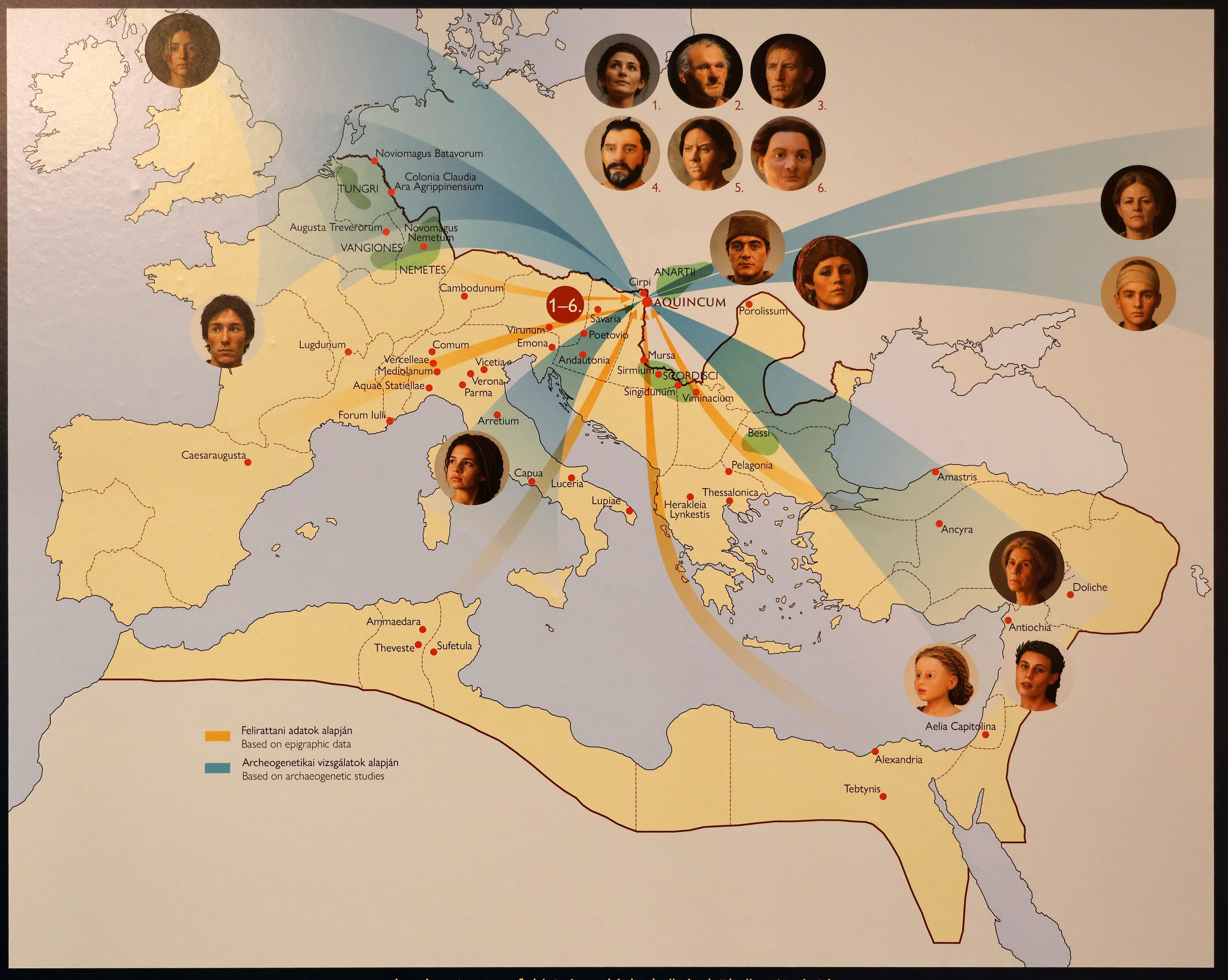
One of the most interesting things we learn about the city imagined as the “little Rome on the Danube” is just how much it was a frontier city with a migrant population. A map shows the main directions from which immigrants arrived in the city, placing the sixteen individuals on it, while the thickness of the arrows also indicates roughly how many more people may have come from each direction.
The next time a visitor looks out of the HÉV window at the foundations of the Aquincum city, they will no longer see only stones, but a once-living city where — and in the cultural landscape shaped by it, from the villas and vineyards of the surrounding hills to the mills along the Danube — Romans and barbarians lived side by side, people as vividly alive as these sixteen. To establish this connection, it is worth going to meet them now, before the end of October.