


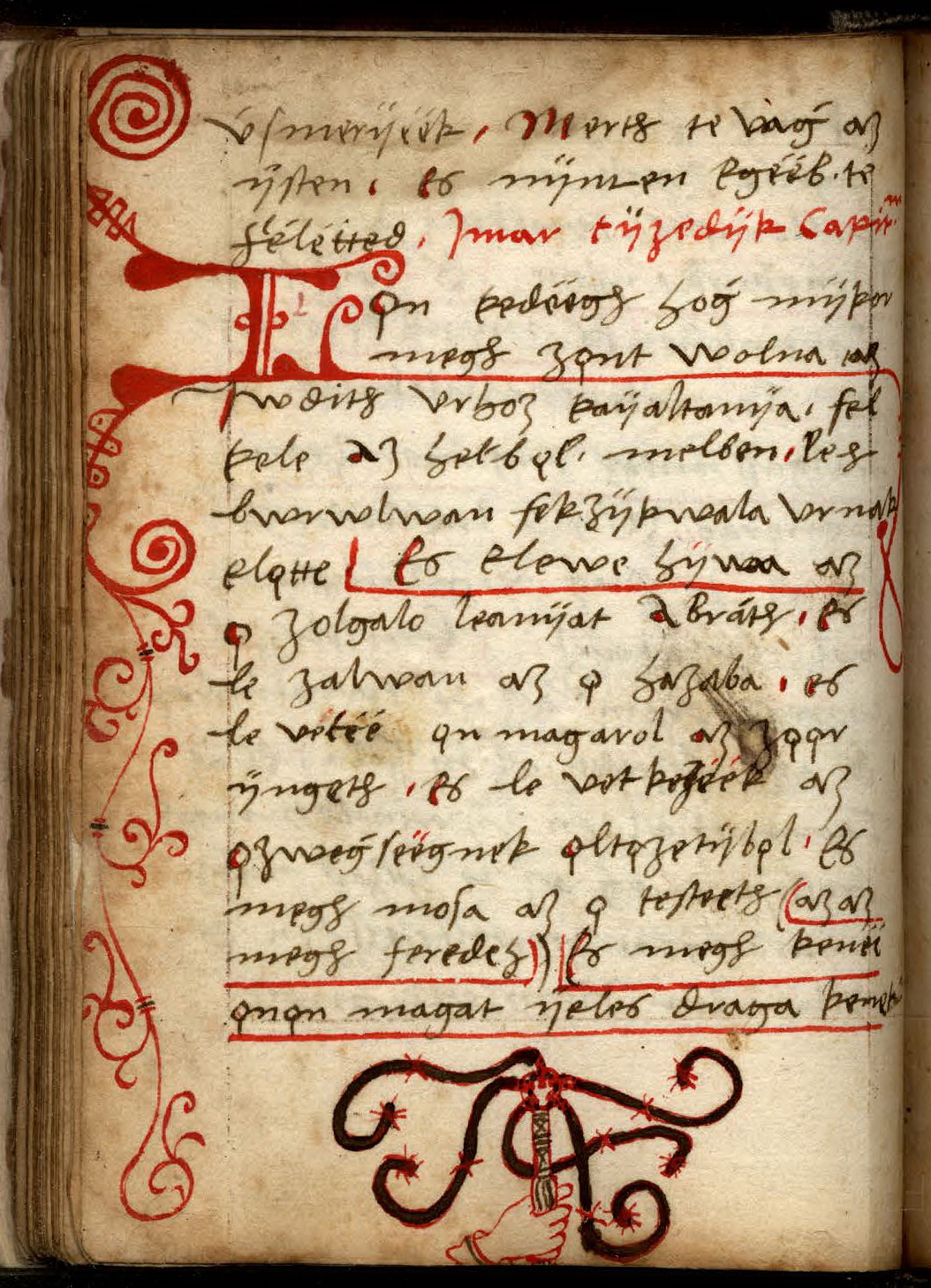
One of the most frequent subjects in Lucas Cranach’s paintings is Judith posing with the severed head of Holofernes. Between 1525 and 1530, he and his workshop painted more than a hundred versions of the pair. After the initial experimentation, the composition settled into a mature form that was repeated many times: Judith, shown half-length and dressed in the very latest fashion, holds a drawn sword in her right hand, while with her left she almost slams the tyrant’s severed head down onto the table.
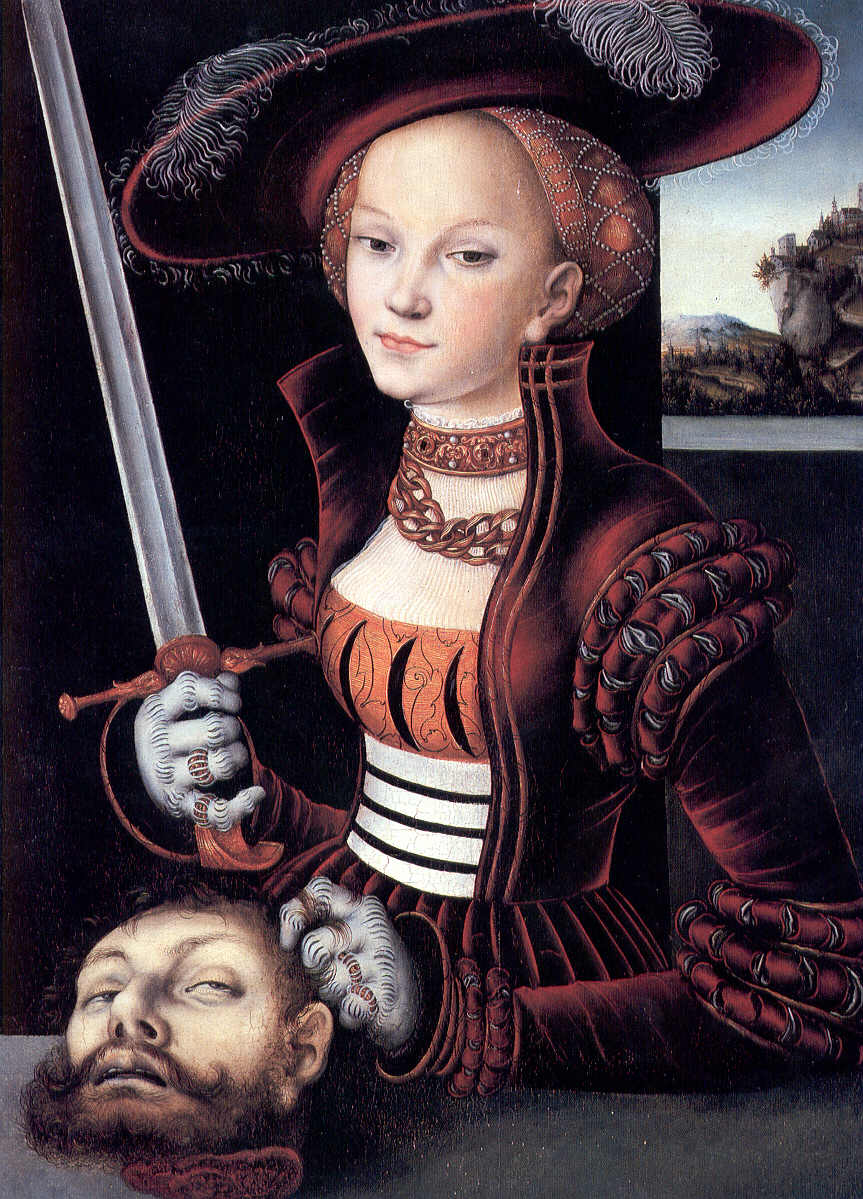
The first version may have been painted around 1525–1526. In this painting, now in the Rau Collection, Judith triumphs over Holofernes’s head between two equally elegant maidservants.
At this stage, the maidservants were still important attributes. In the earlier, medieval iconography, the elegant lady + severed head combo represented Salome and Saint John, the pairing of the wicked woman and the innocent man murdered by her. The fact that this was now an inverted pairing, in which the woman was the positive figure and the man the legitimately slain villain, had to be signalled by the maidservant, who plays a prominent role in the story of Judith. In the Rau painting, Judith is given two servants at once, primarily to balance the composition.
When the composition – devised jointly by Cranach and Luther as an emblem of Protestant opposition to the Catholic Holofernes – subsequently spread and became popular, Lutheran noblewomen commissioned version after version in which Judith bore their own features and wore the clothes they themselves longed to wear. From then on, maidservants were no longer necessary: everyone knew that this was a symbol of the new age, the true-believing woman standing up to tyranny, who on this occasion was given the opportunity to wear her dream clothes and display her seductive power, two things that Protestant ethics otherwise deeply prohibited, just as it prohibited rebellion against actual tyranny within the family. And we know that when women throw their weight behind a religious movement, it is destined for success.
At the same time, someone in Hungary was also drawing the severed head of Holofernes.
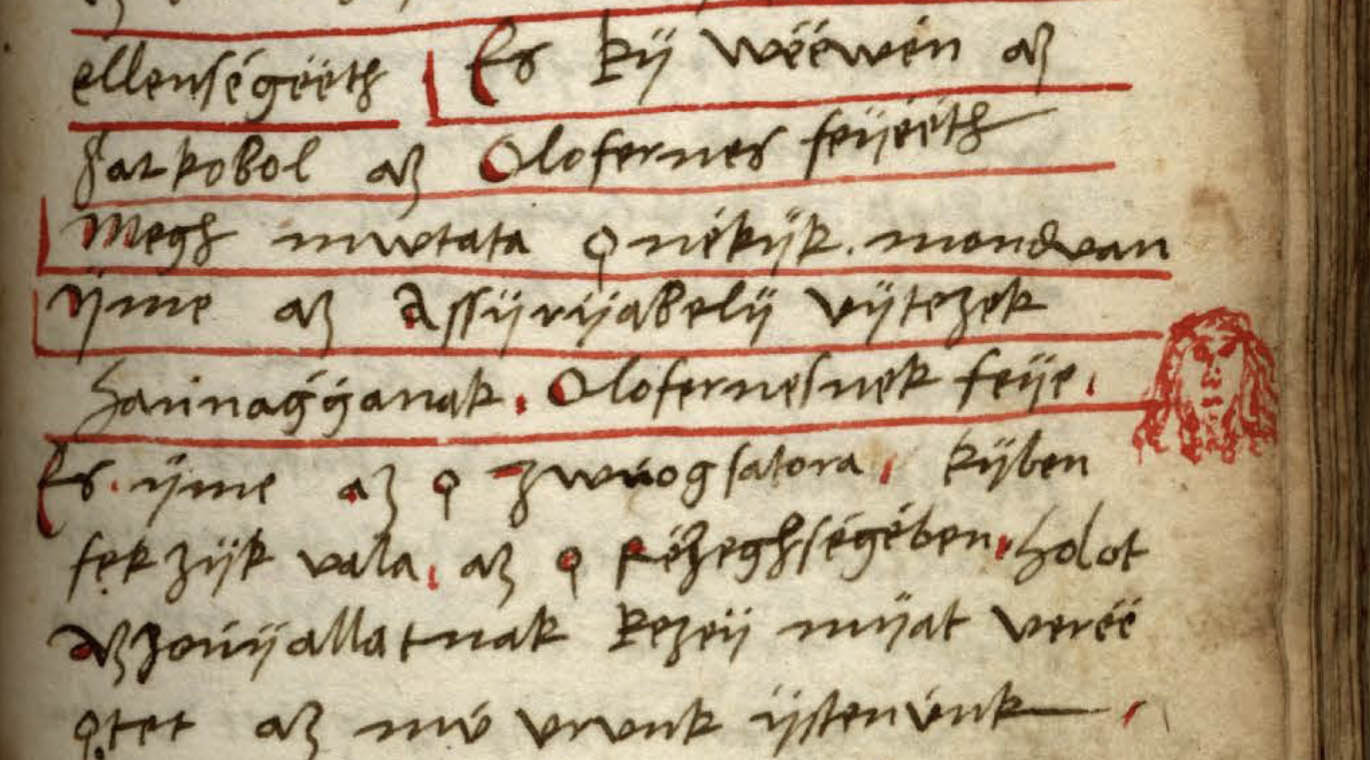
In this case, too, the drawing was made as an illustration for the Book of Judith. But just as much less terrifying as Holofernes’s head is in this drawing, so much less coquettish is the Judith of this manuscript.
The manuscript is the so-called Székelyudvarhely Codex, written in Tövis (Dreikirchen/Teiuş) in Transylvania by an elder brother for his younger sister: a Franciscan friar in the monastery founded by János Hunyadi for a Poor Clare sister in the neighbouring convent, exactly five hundred years ago. According to the colophon, he completed it on 13 June 1526. “Behold, my beloved sister, Judith Nyújtódi,” he explains why he is writing the book, “so that you should not be in your cell without the book of your saint.”
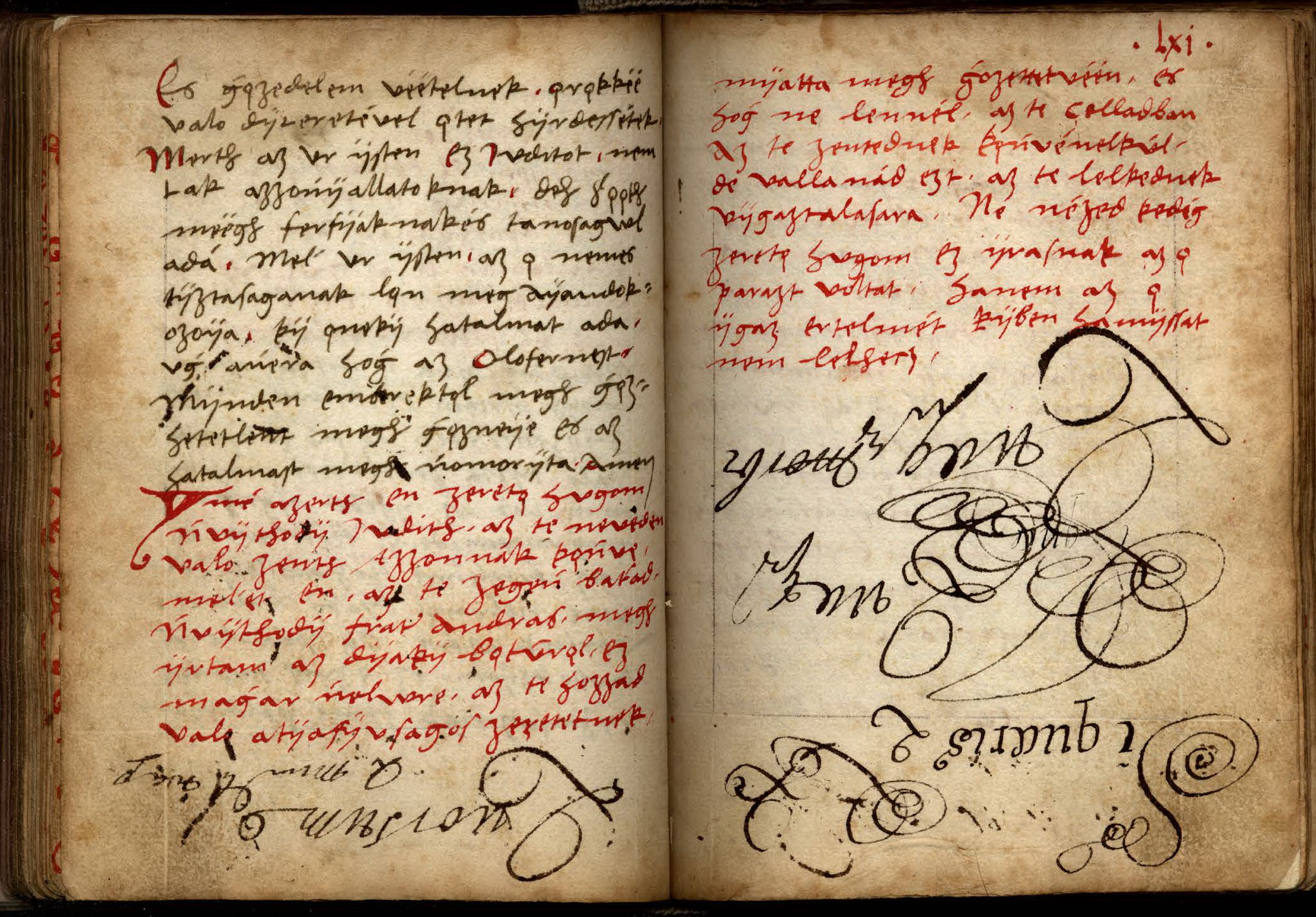
“Behold, therefore, my beloved sister, Judith Nyújtódi, the book of the Holy Woman after whom you are named, which I, your poor brother, Friar Andrew Nyújtódi, have rendered from the Latin letters into this Hungarian language, moved by brotherly love for you, and so that you should not be in your cell without the book of your saint…”
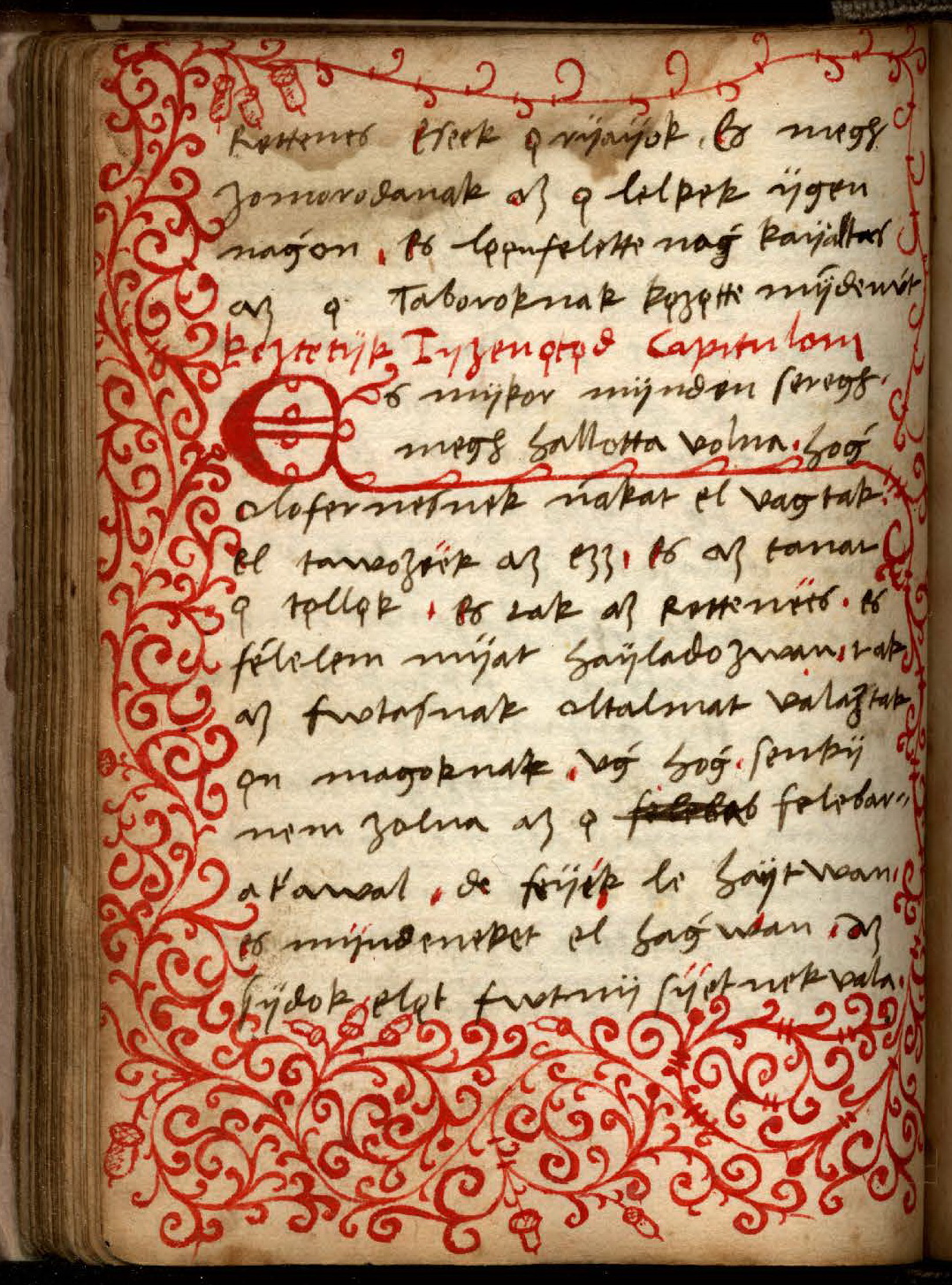
The drawing of the head was made for the passage where Judith returns to the Jewish city besieged by the Assyrians and triumphantly holds up the severed head of the enemy commander:
“and taking out of the
sack the head of Olofernes
she showed it to them, saying
Behold the head of Olofernes,
captain of the warriors of Assyria,
and behold his wretched tent, in which
he lay in his drunkenness, where
the hand of a woman struck
him, by our Lord God’s will”
This translation was made from the Latin Vulgate, but not slavishly: it is a creative rendering, with the insertion of the translator’s own comments, interpretations, and admonitions. Where the Latin original has a masculine or feminine pronoun, ille or ipse, Friar Andrew repeatedly writes out the names of Judith and Holofernes, if only because the gender-neutral Hungarian pronoun “ő” would give no clue as to whom he was referring. Elsewhere he explains things with two synonyms: “with the throat or edge of the dagger”, “with lamps, that is, torches”. He also explains geographical names, such as the waters of the Euphrates and the Tigris and the land of Samaria; in one place he renders the expression “the depth” as the “Red Sea”. His aim, therefore, was not to produce the most accurate translation possible, but to make the text as comprehensible as possible to his intended audience: his own sister.
“Do not, my beloved sister, look at the rustic nature of this writing, but at its true substance, in which you shall find nothing false.”
The Franciscan friar Andrew Nyújtódi calls himself a “rustic translator”. But this is merely the obligatory humility of a humanist author. In fact, we know that he enrolled at the University of Kraków in 1508, and a year later became first the senior and then the consiliarius of the Hungarian bursa – the community of Hungarian students.
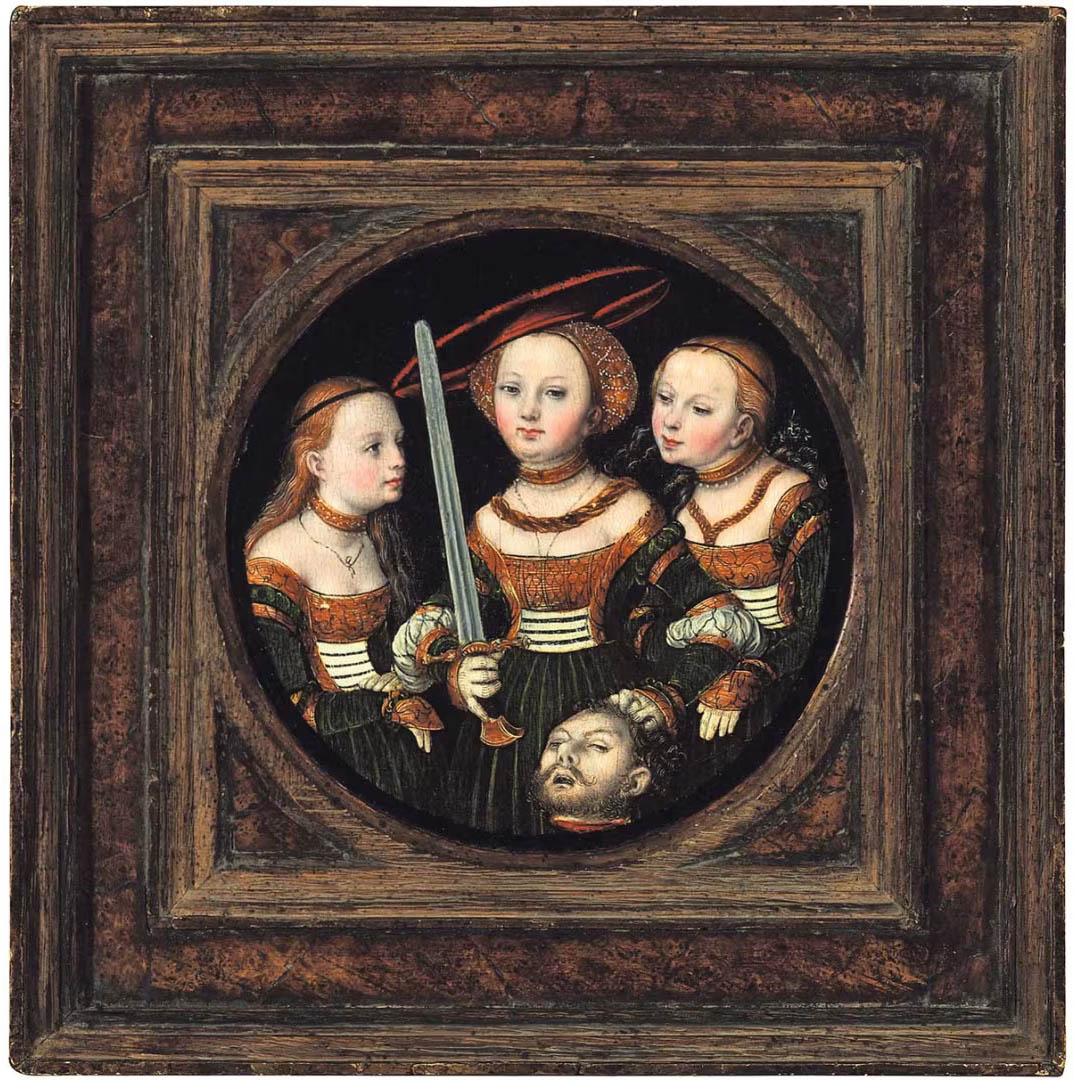
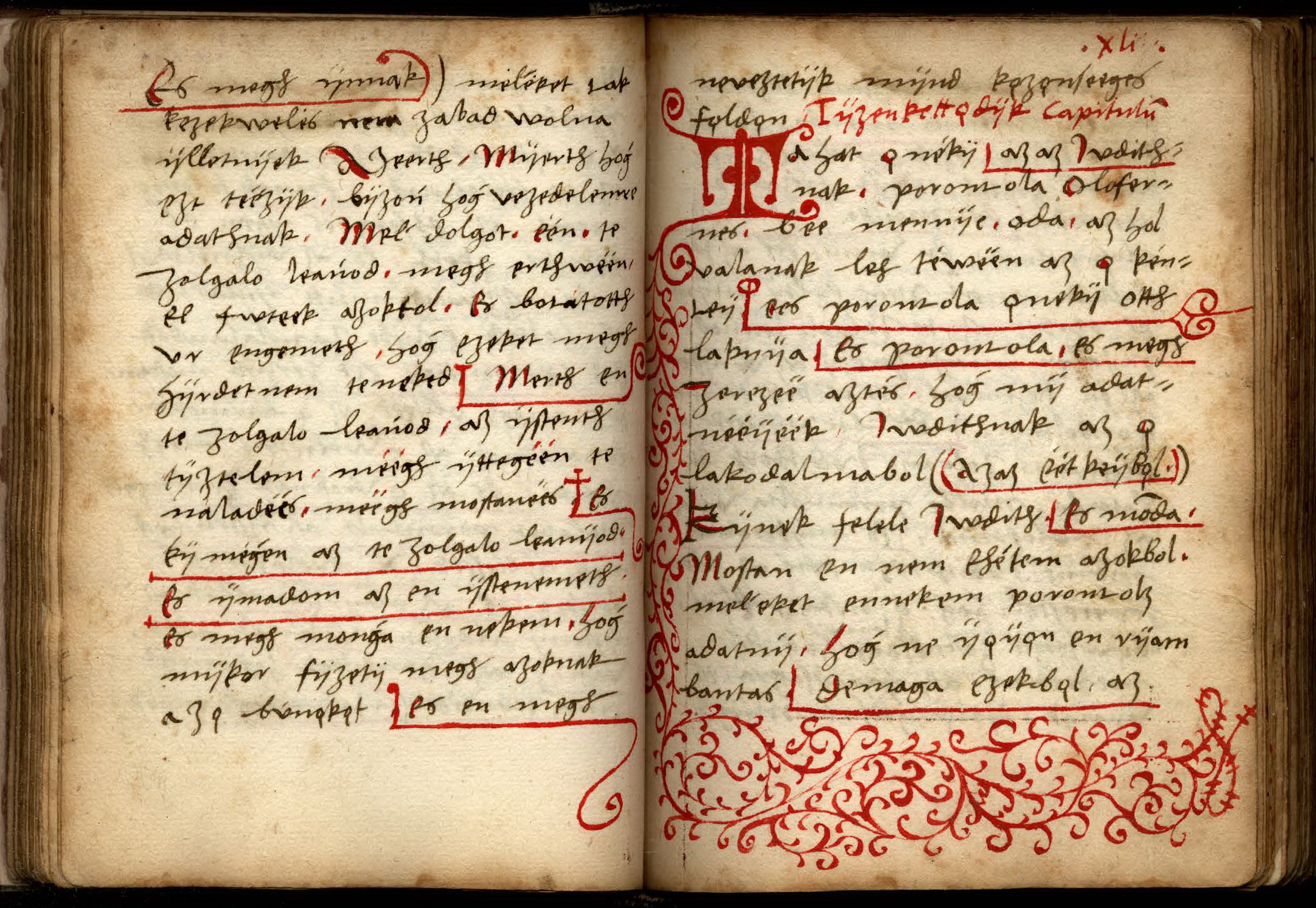
His loving care is also evident in the way he embellished the large initial letters of the chapters, as if building a bridge for his sister from the visual world to the world of reading.
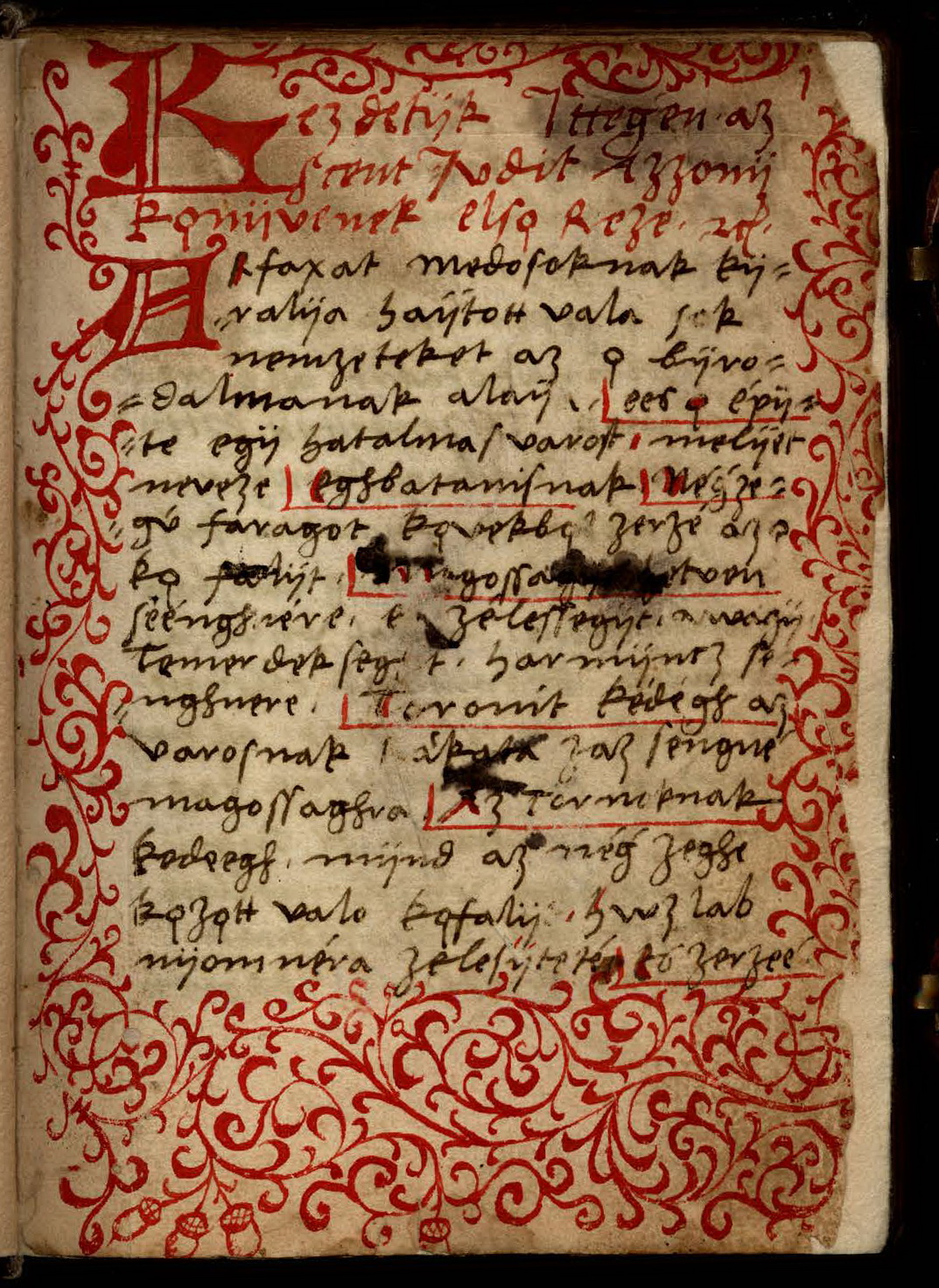
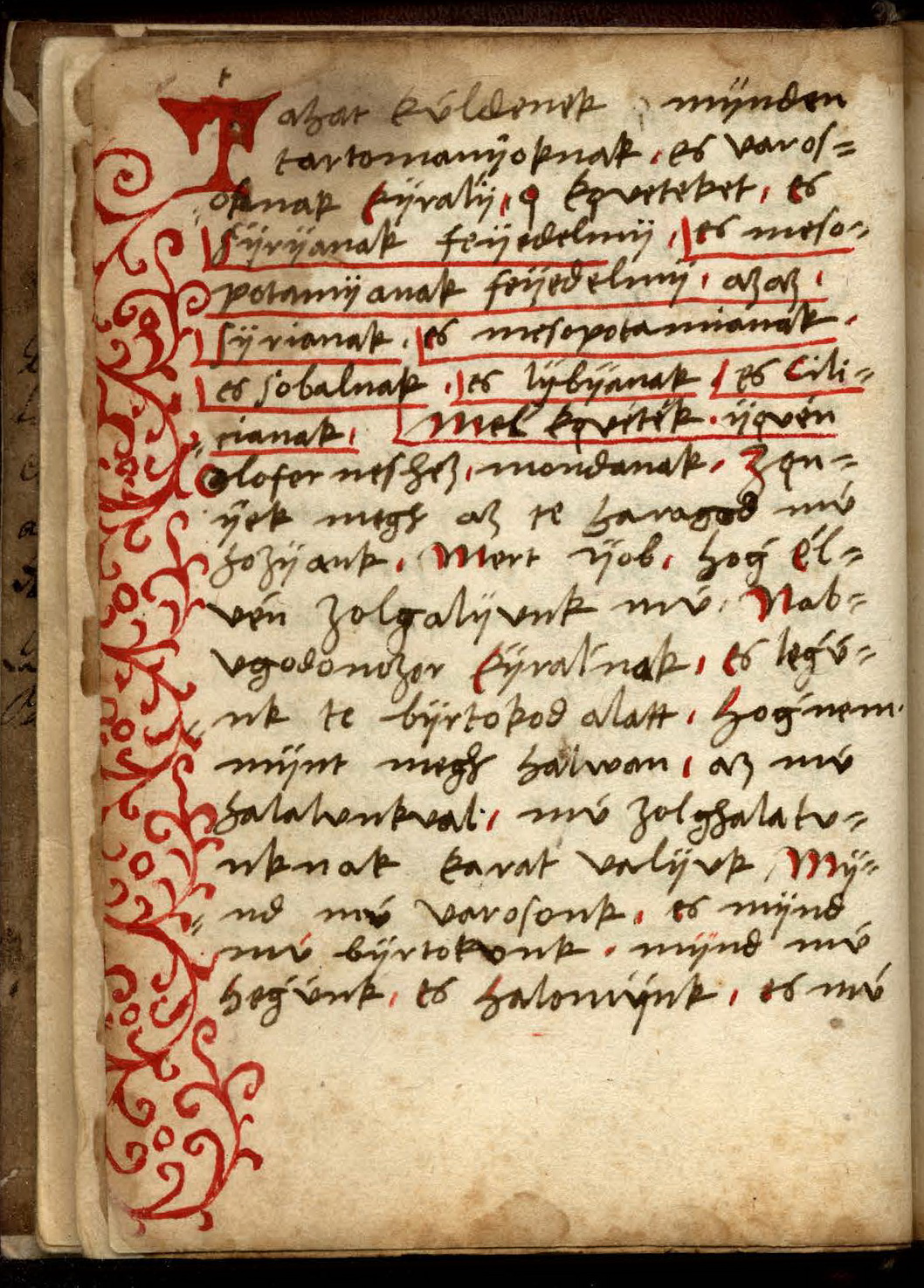
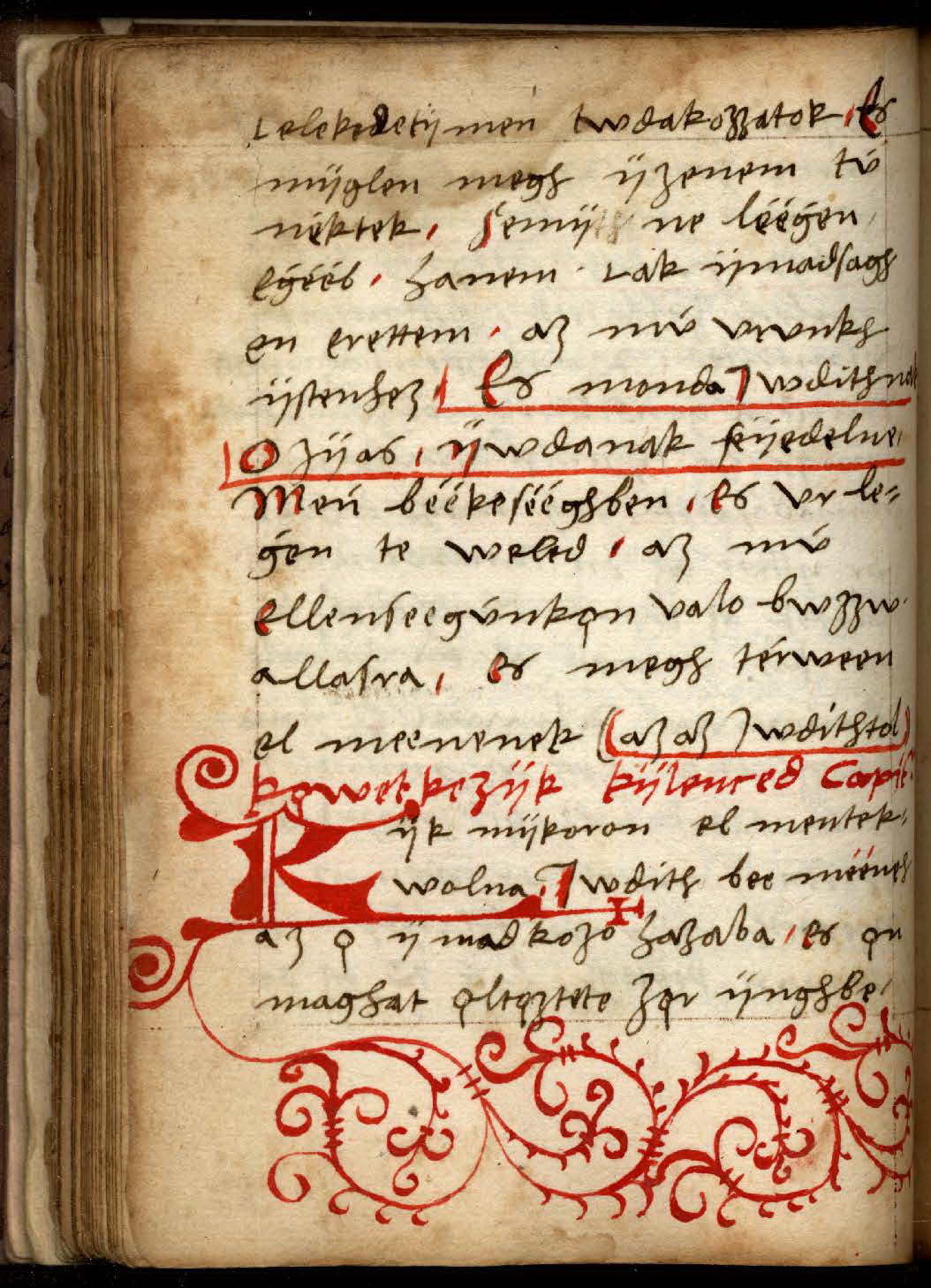
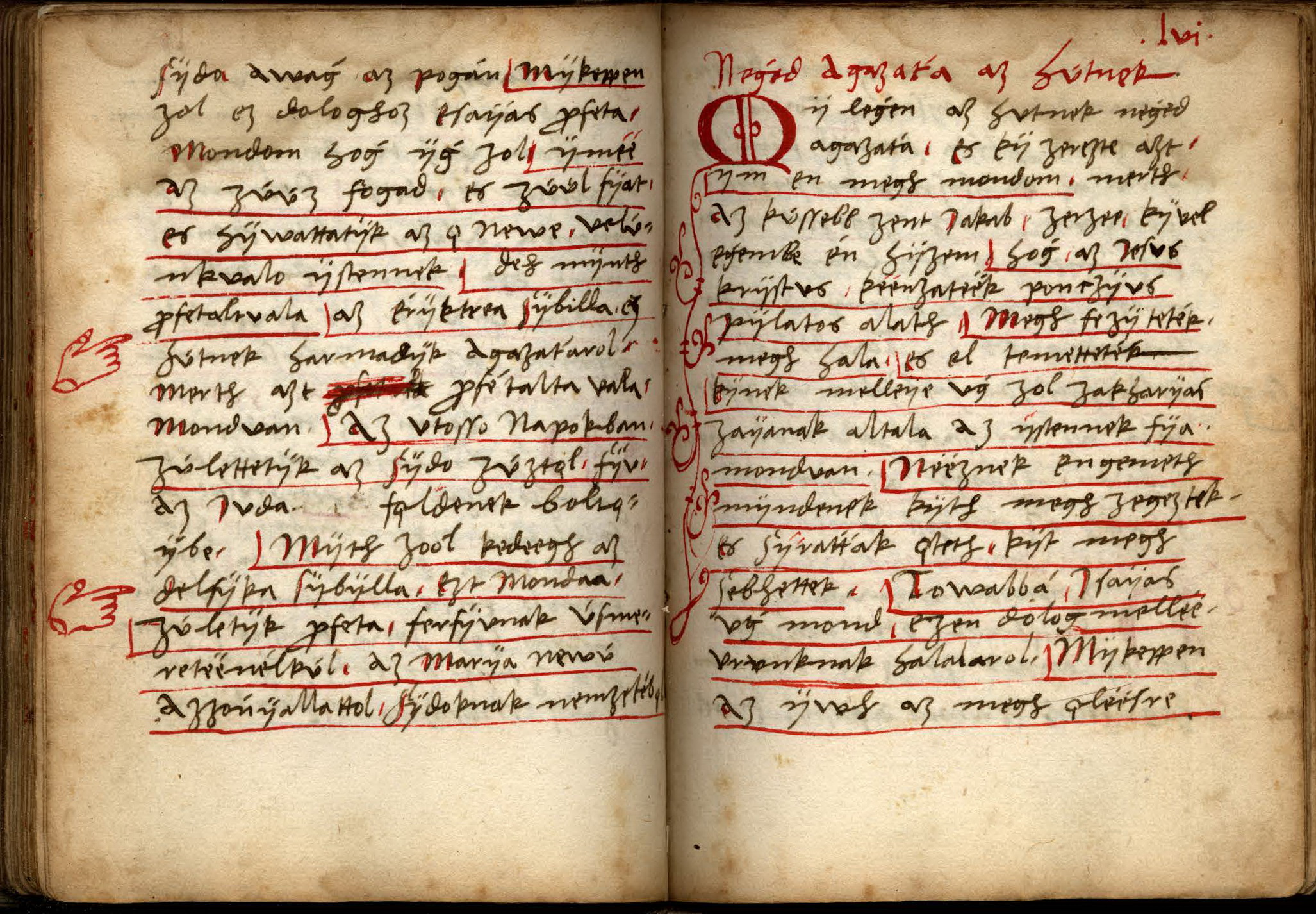
And he supplemented his translation of the Book of Judith with another work: the first surviving catechism in the Hungarian language. This, too, is not a mechanical translation of the Latin original, but a version specifically adapted for his sister, in a personal tone, omitting the sections intended for young men.
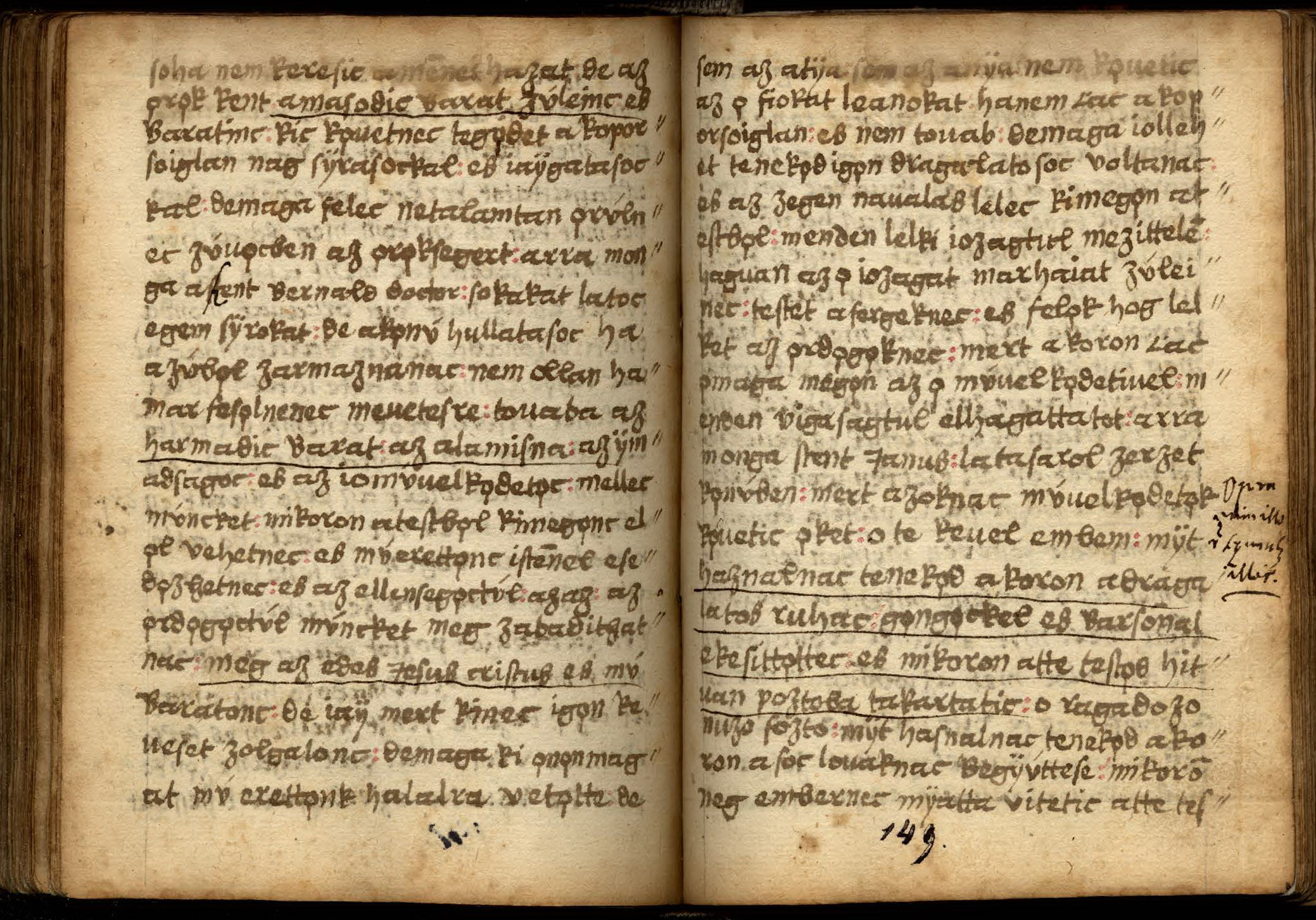
The two works trace an arc of development in which the translator becomes an author. And they show that he achieved his purpose. Judith Nyújtódi went from reader to copyist, and perhaps even to author, adding four further Hungarian-language booklets – meditations on a good death and monastic life, exempla, and sermons – to the collection, which was then sometime in the middle of the 16th century bound together in a single leather volume.
Cranach’s Judith, too, achieved her purpose, uniting the German Lutheran nobility into a common front which, as we have seen, successfully blocked in the Reichstag the efforts of their two Holofernes figures, the emperor and the pope, to launch a joint crusade against the increasingly threatening Ottoman expansion. And two months after Andrew Nyújtódi completed his Judith, our own Holofernes, Sultan Suleyman arrived and, in the Battle of Mohács, brought to an end the world in which the codex had been born. The two monasteries at Tövis were destroyed. Only this codex, like a kind of time capsule, preserved the personal memory of two former inhabitants and their love for each other, keeping it alive to this day.
After passing through several hands, the volume eventually came to the Catholic high school in Székelyudvarhely (Odorheiu Secuiesc) – today the Áron Tamási High School – where it is still kept. To mark the 500th anniversary of the translation, it is now also on display at the Rezső Haáz Museum in Székelyudvarhely. But for those who are far away, the museum has made it possible to leaf through the entire volume in an excellent facsimile edition in the digital collection of the Hungarian National Széchényi Library.


Add comment