


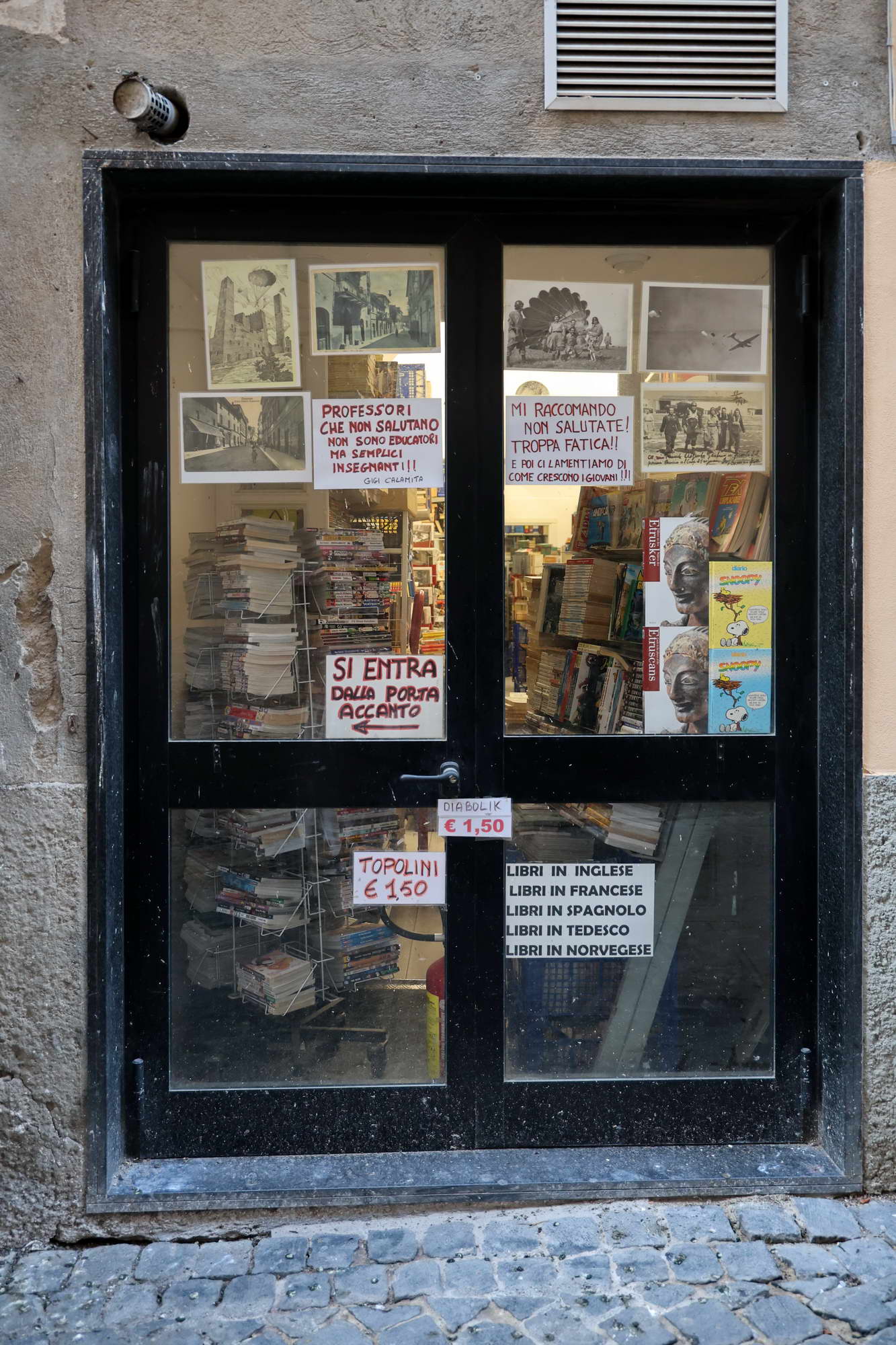
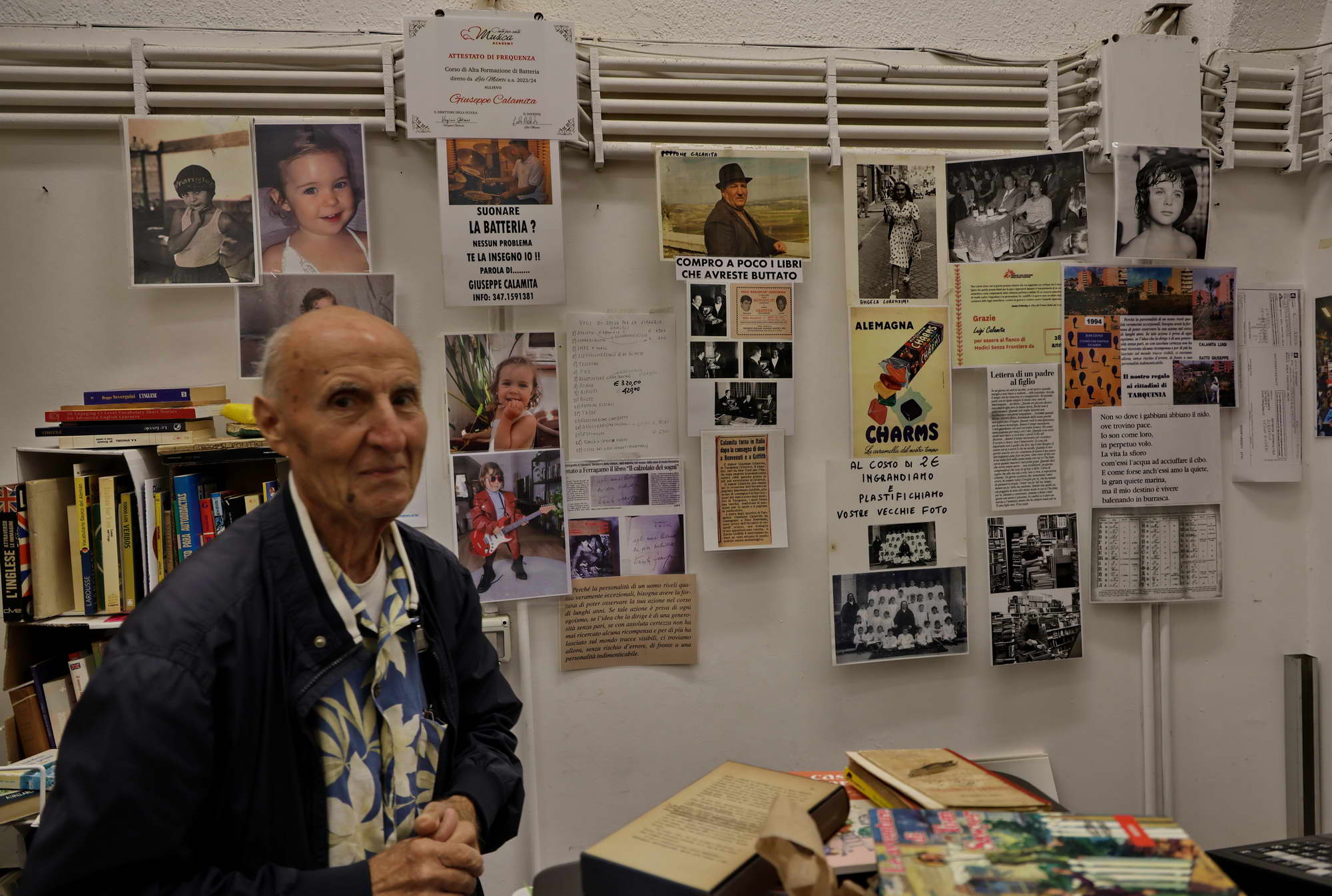
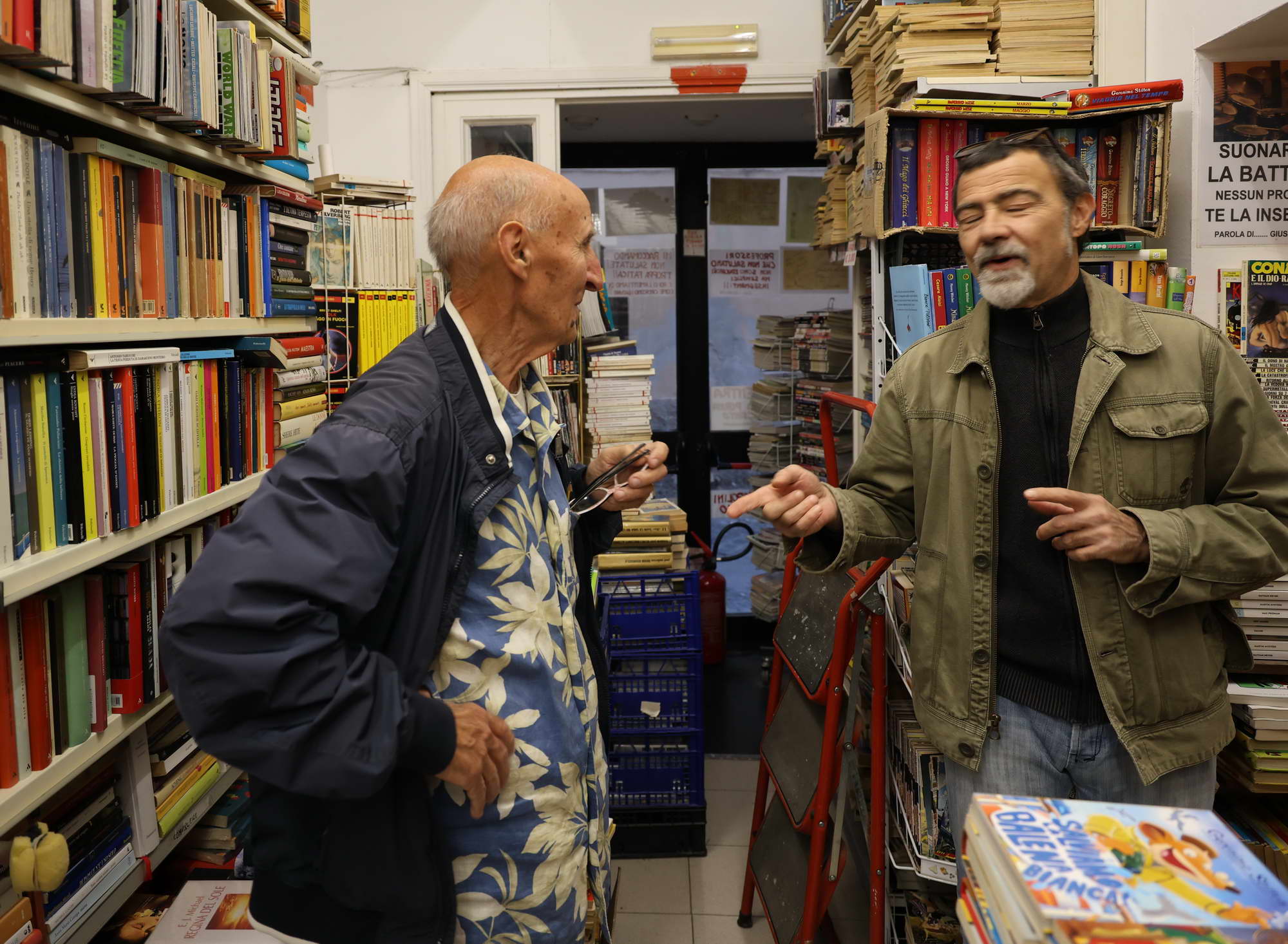
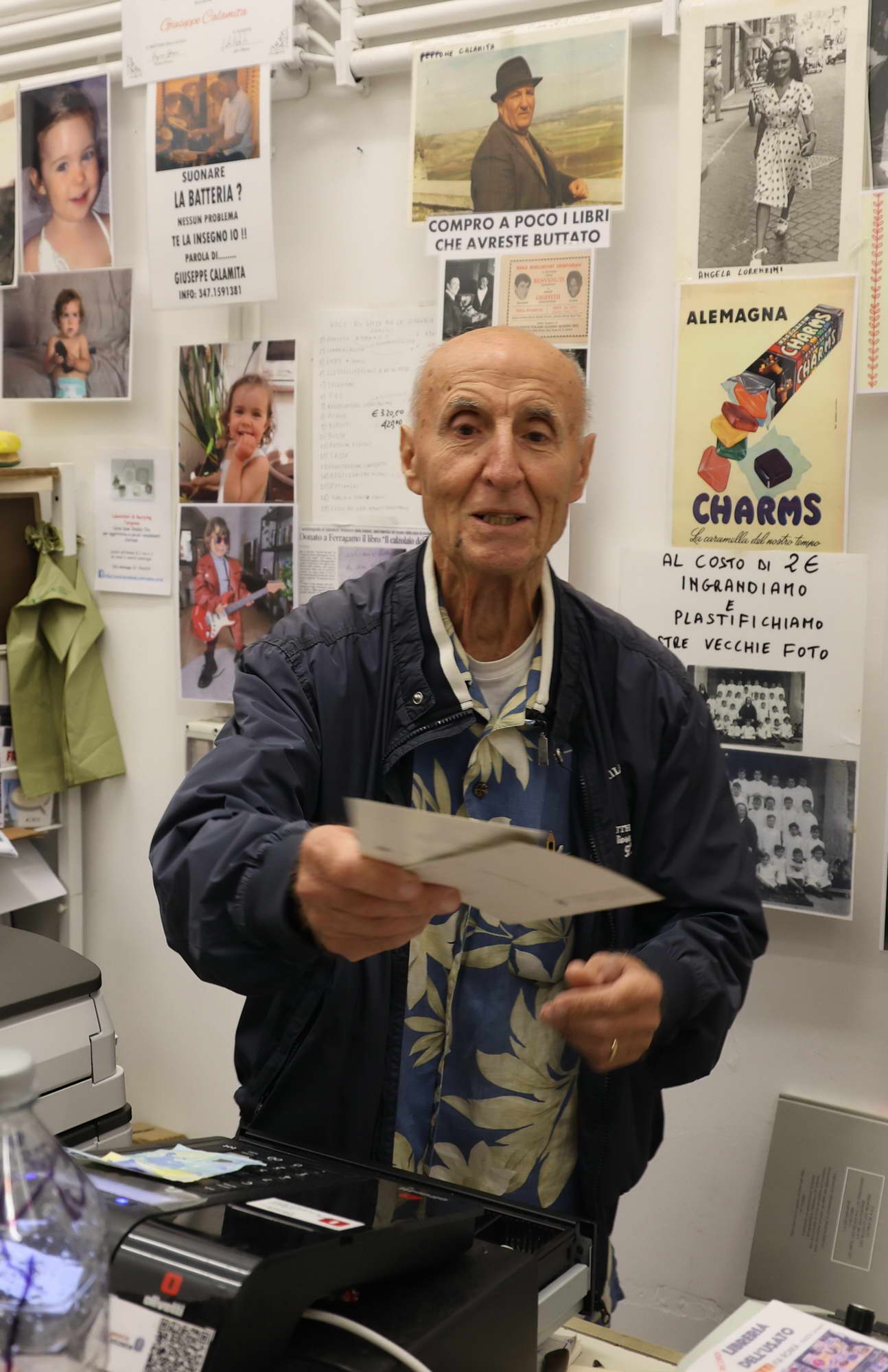
Wandering through the old town of Tarquinia, I stumble upon a curious little second-hand bookshop. At first, I am captivated by the notices in its only shop window, which, in several different voices, emphasise the importance of greeting the shopkeeper when entering. But I am spared the effort, because Signor Luigi himself steps out through the door, greets me, and invites me inside.
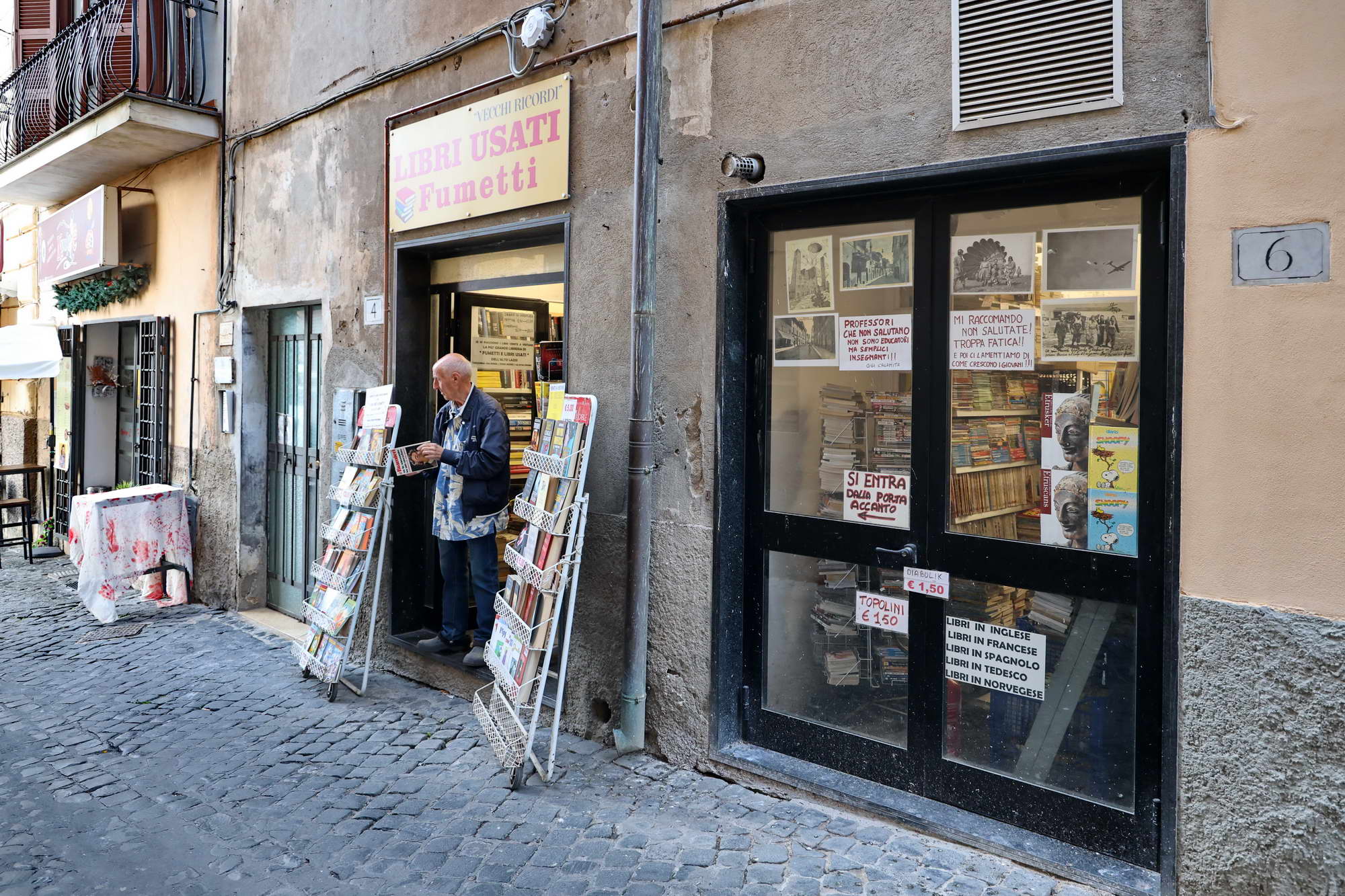
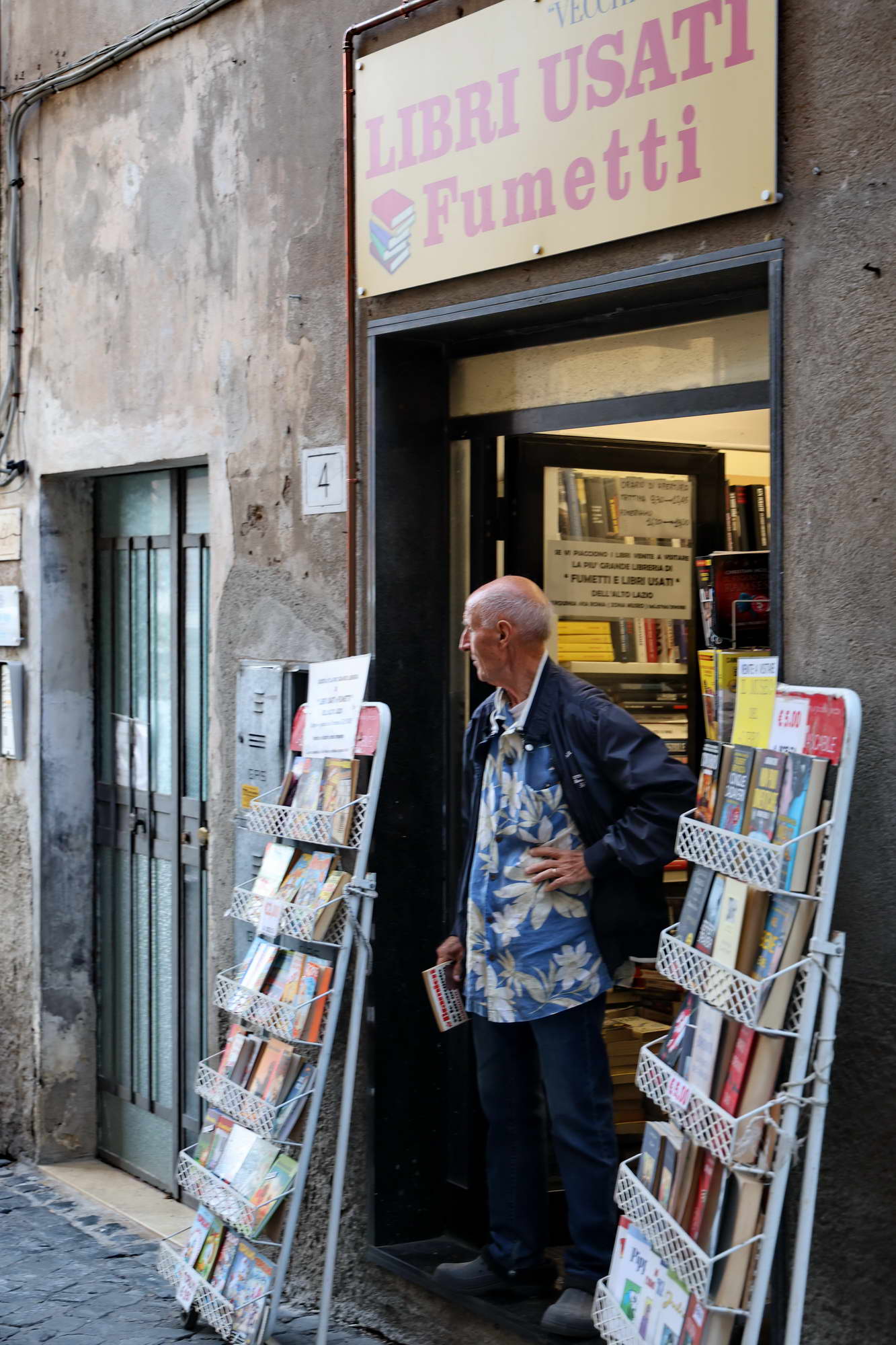
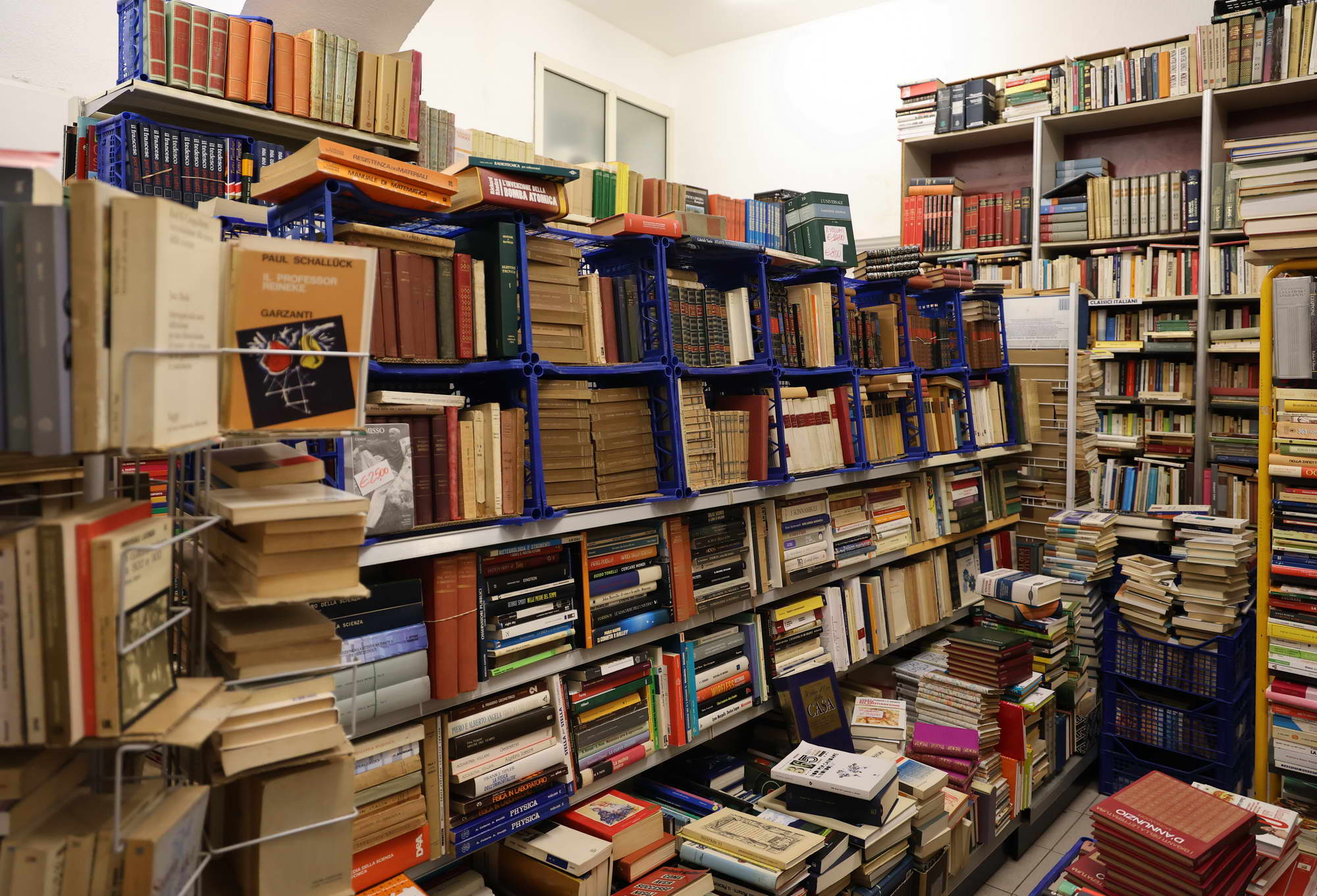
It is a vast, chaotic jumble-sale of a place, but Signor Luigi knows his way around it, talking at length about his wares and singing their praises.
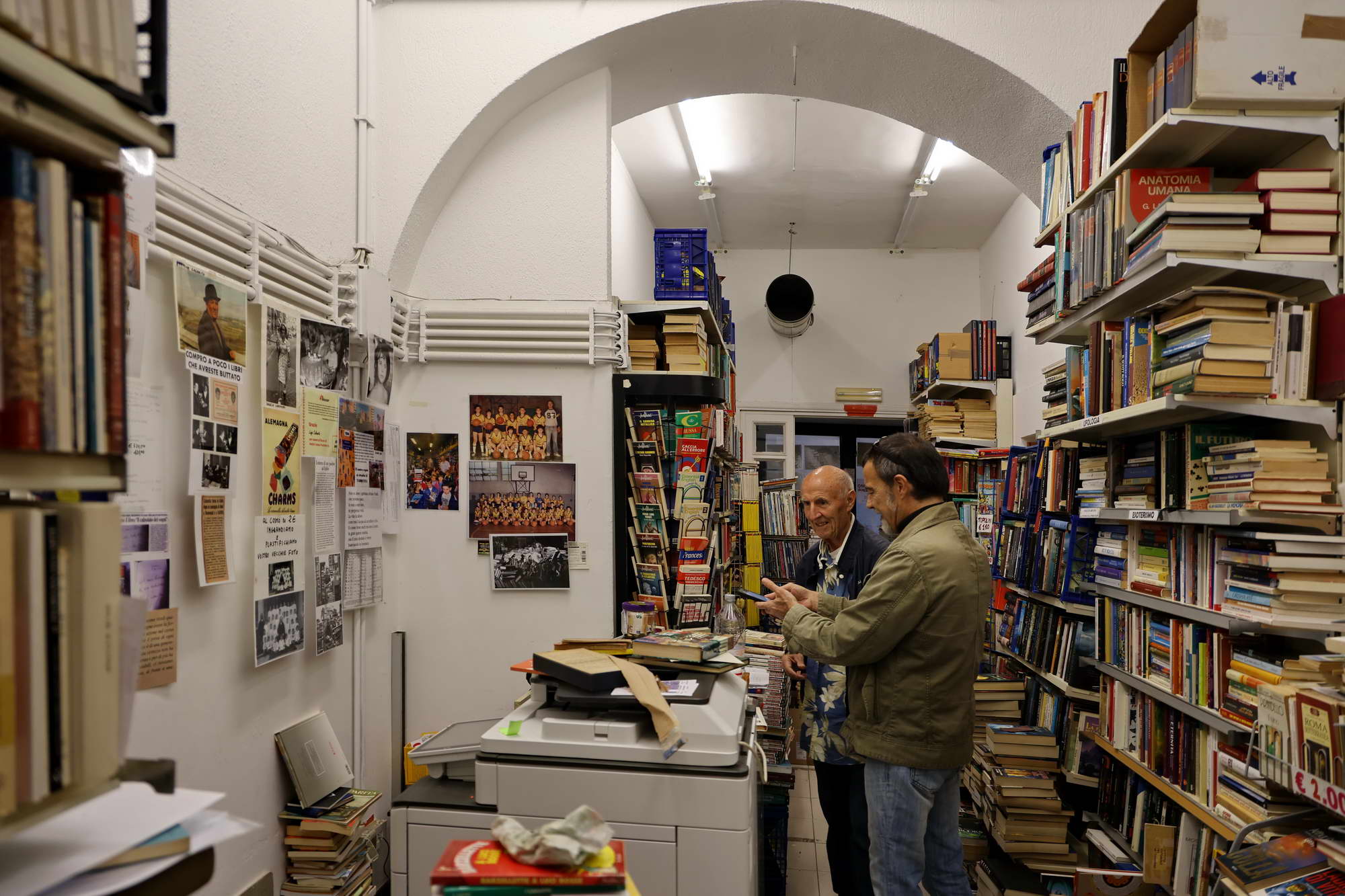
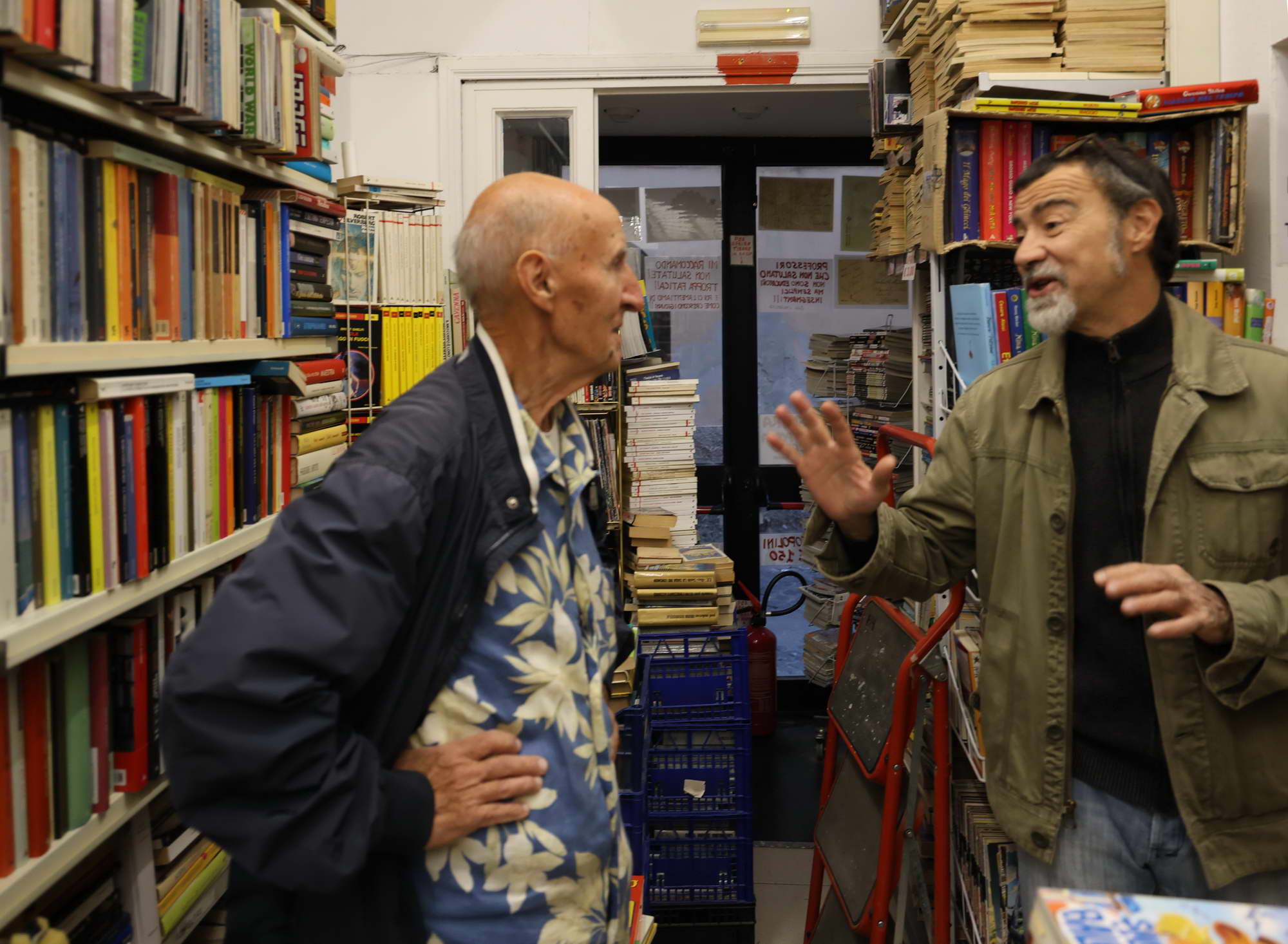
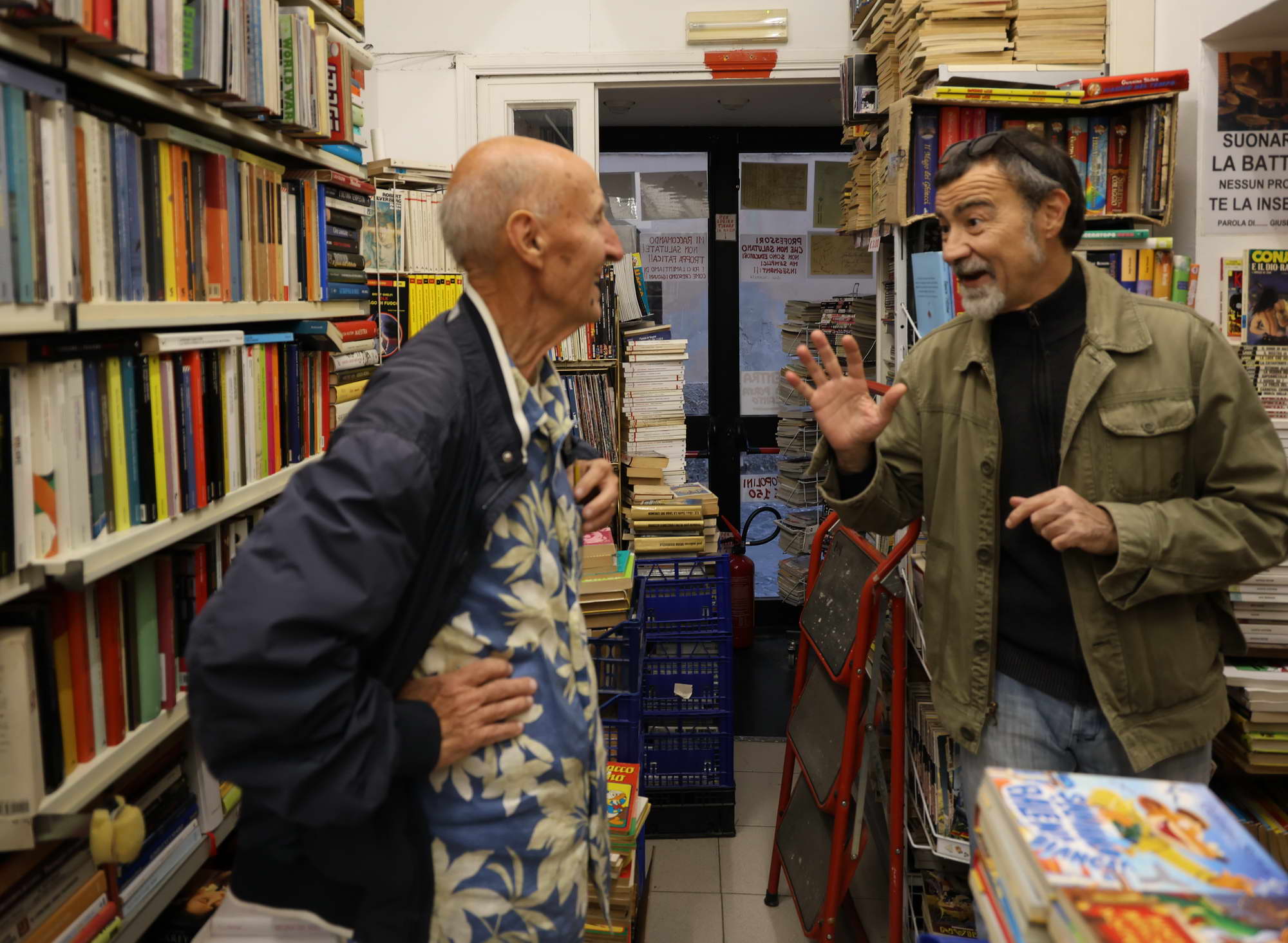
A new customer arrives: Toni, who is also a tourist here in Tarquinia. He praises the shop, buttering Signor Luigi up. Then it turns out that he is a chef who has worked with all kinds of colleagues in many countries and picked up a little of many languages. Languages are Signor Luigi’s forte, too, so the two men put their skills to the test. Signor Luigi holds his own admirably, even returning Toni’s Swedish volley, but Yoruba proves his undoing. I have to step in once myself, when Toni gets his Russian declension wrong, but he takes the correction in good spirits.
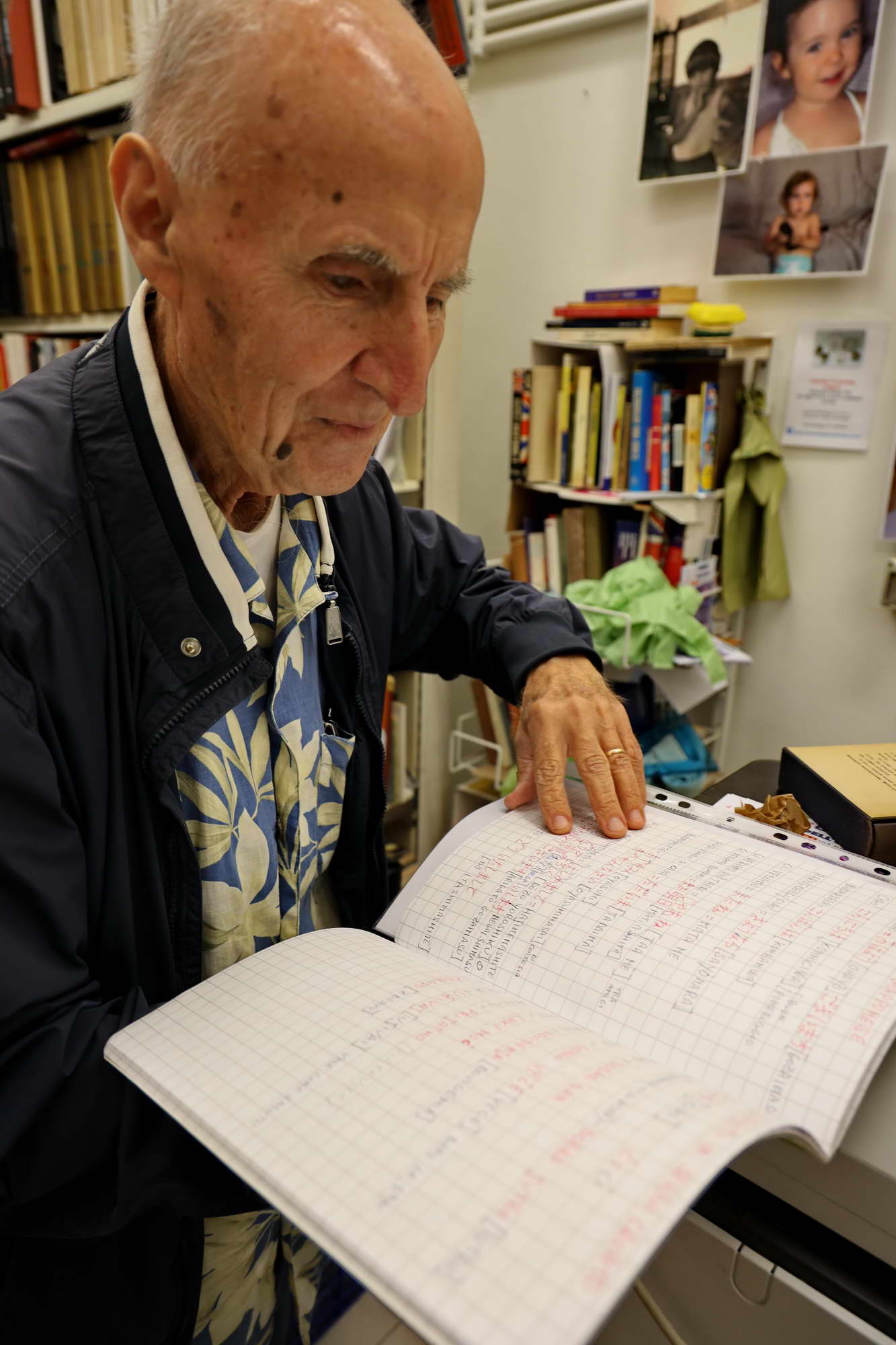
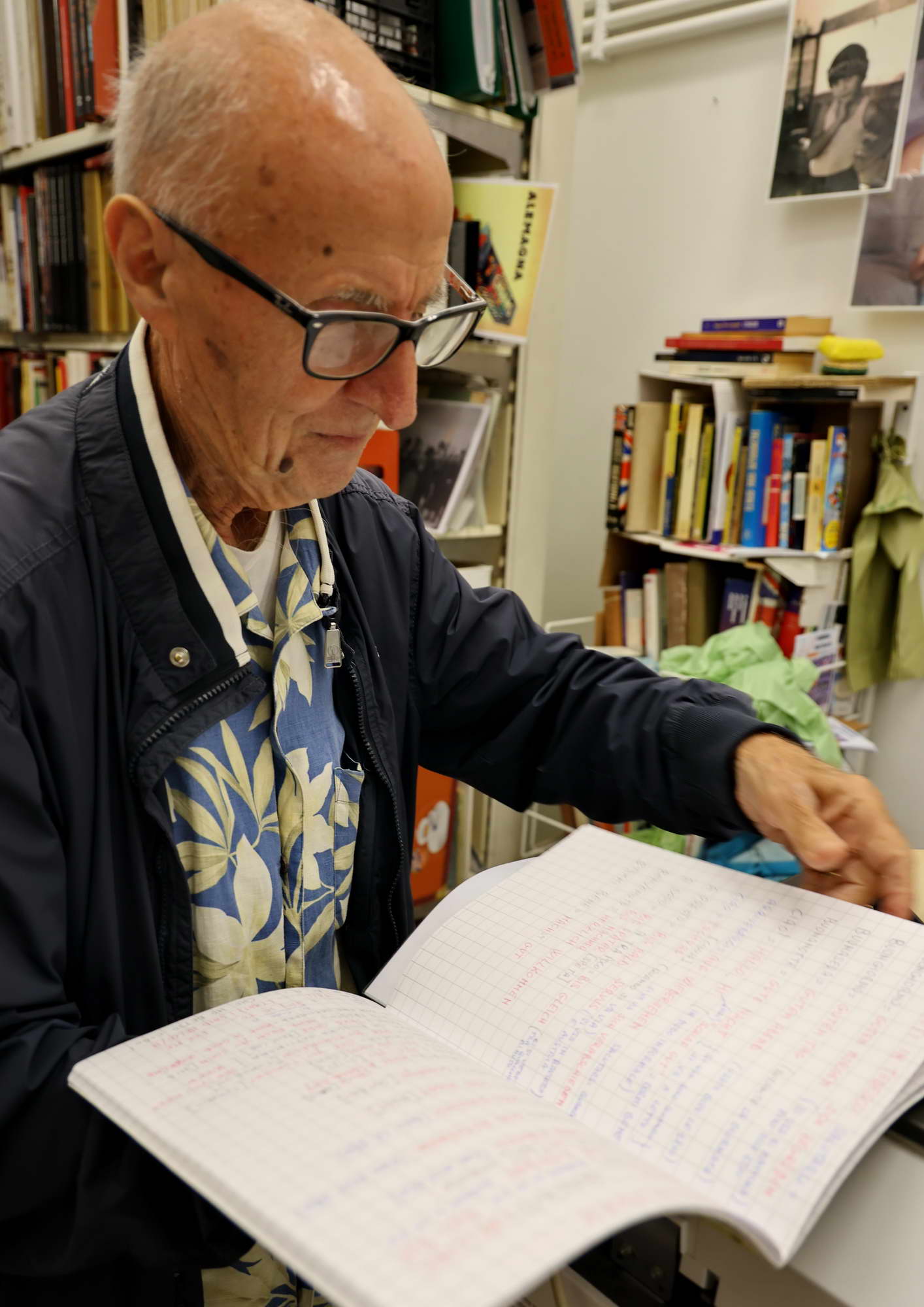
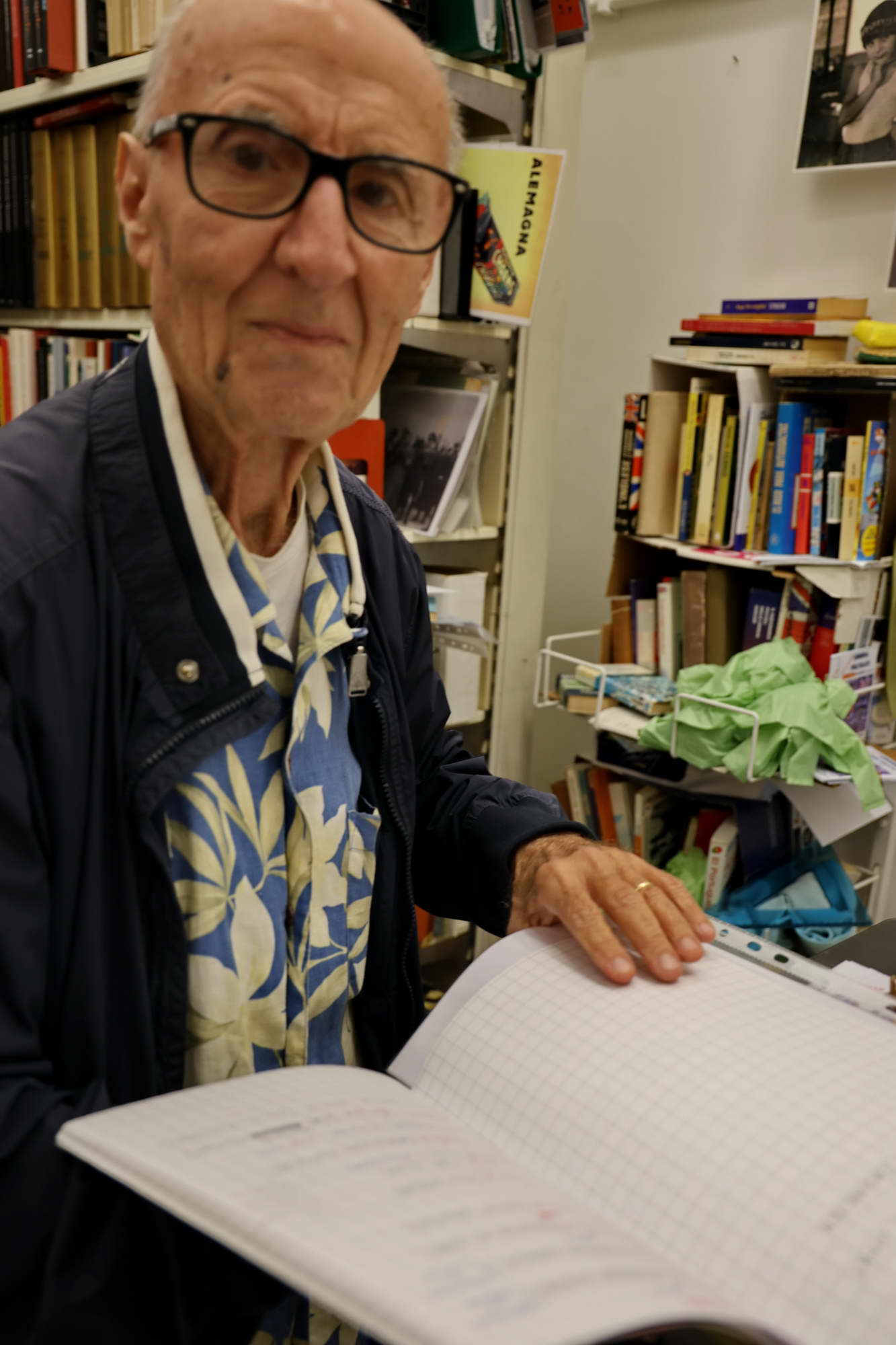
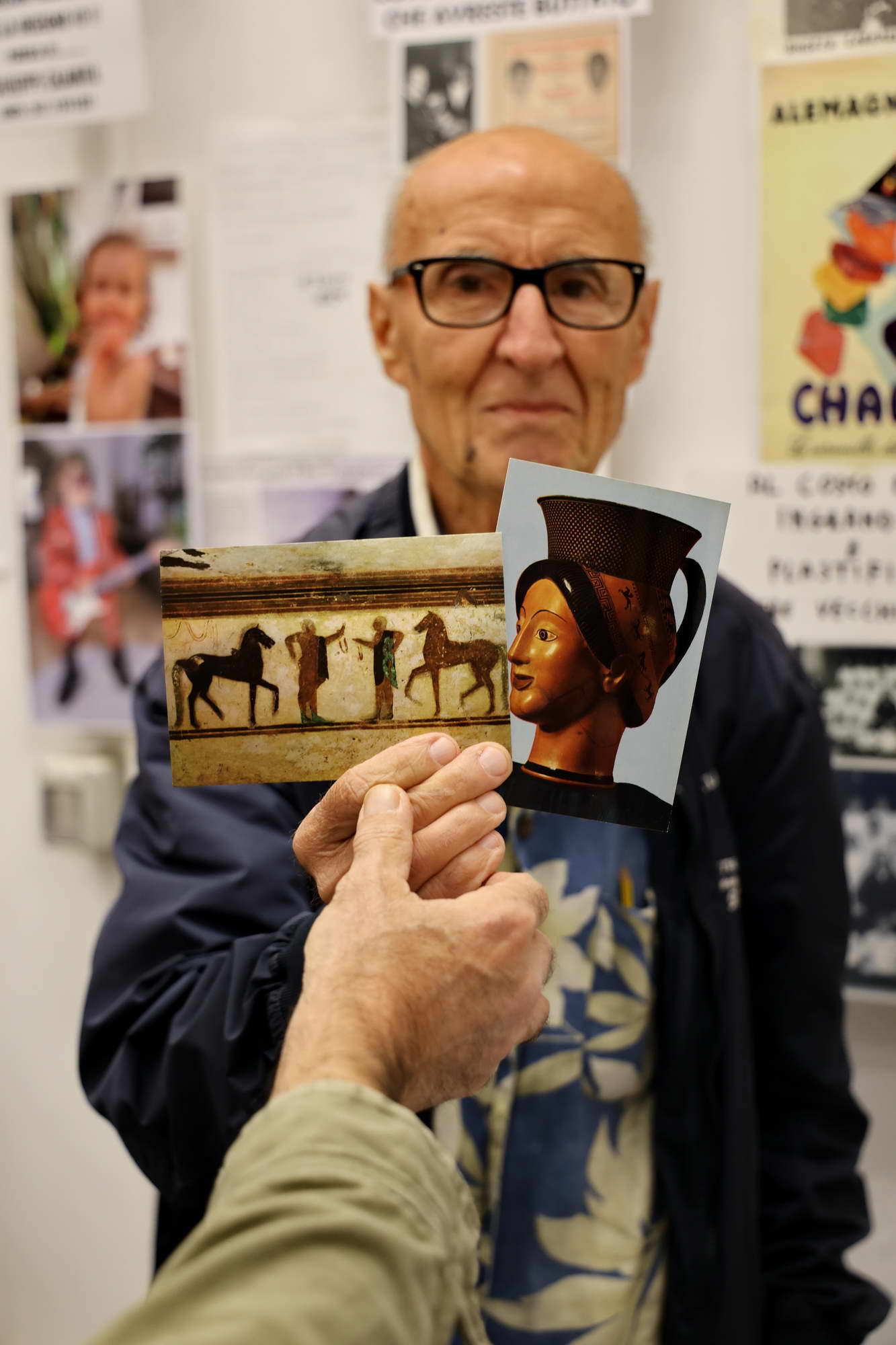
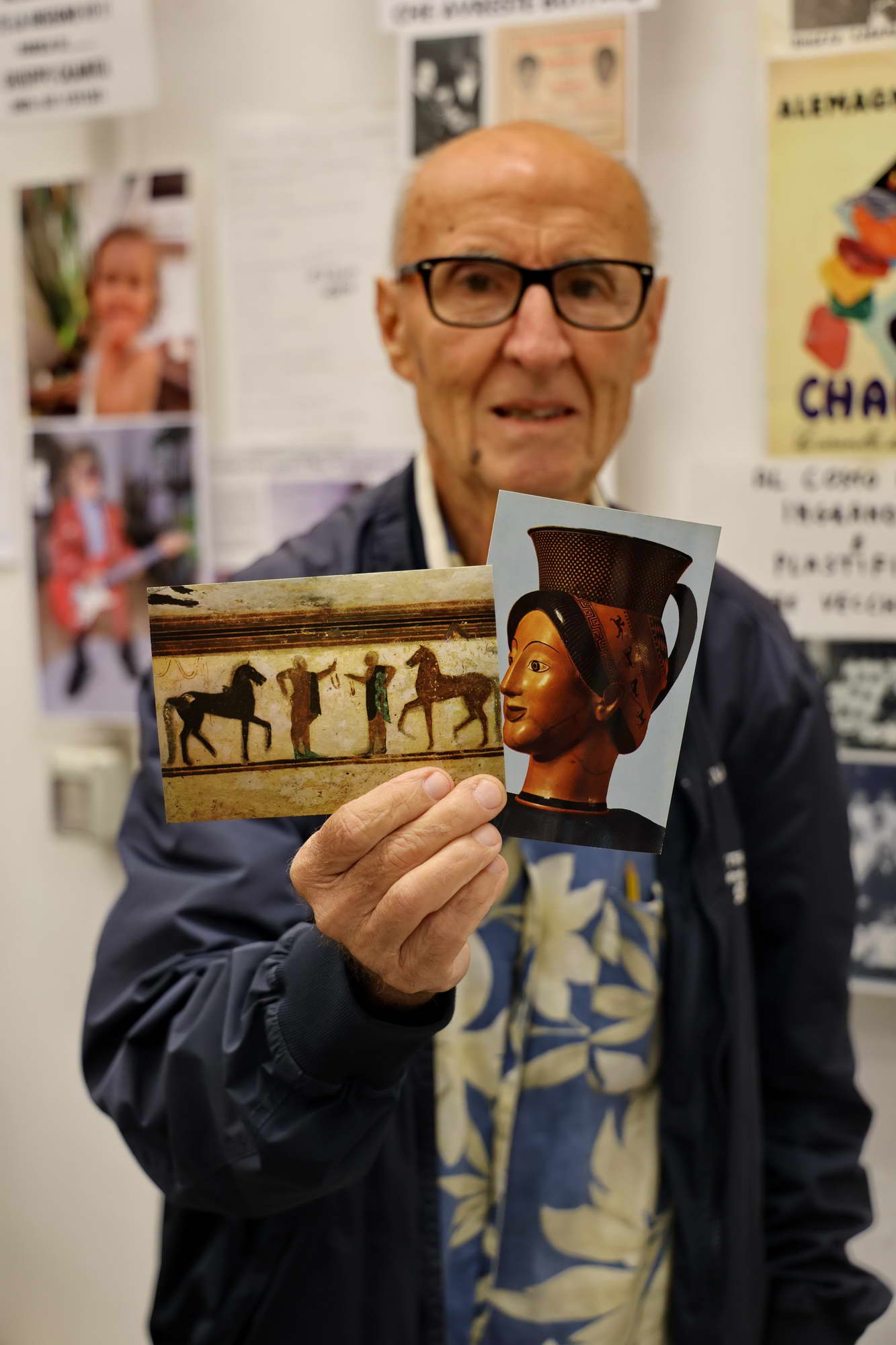
When he discovers that I am Hungarian, Signor Luigi opens a large notebook. On different pages, he has written down basic greetings and conversational phrases in a variety of languages. Hungarian is one language he has not yet covered. Until now. When he notices me taking photographs, he tells me to wait and puts on his glasses. Not because he needs them, but because he looks better in them.
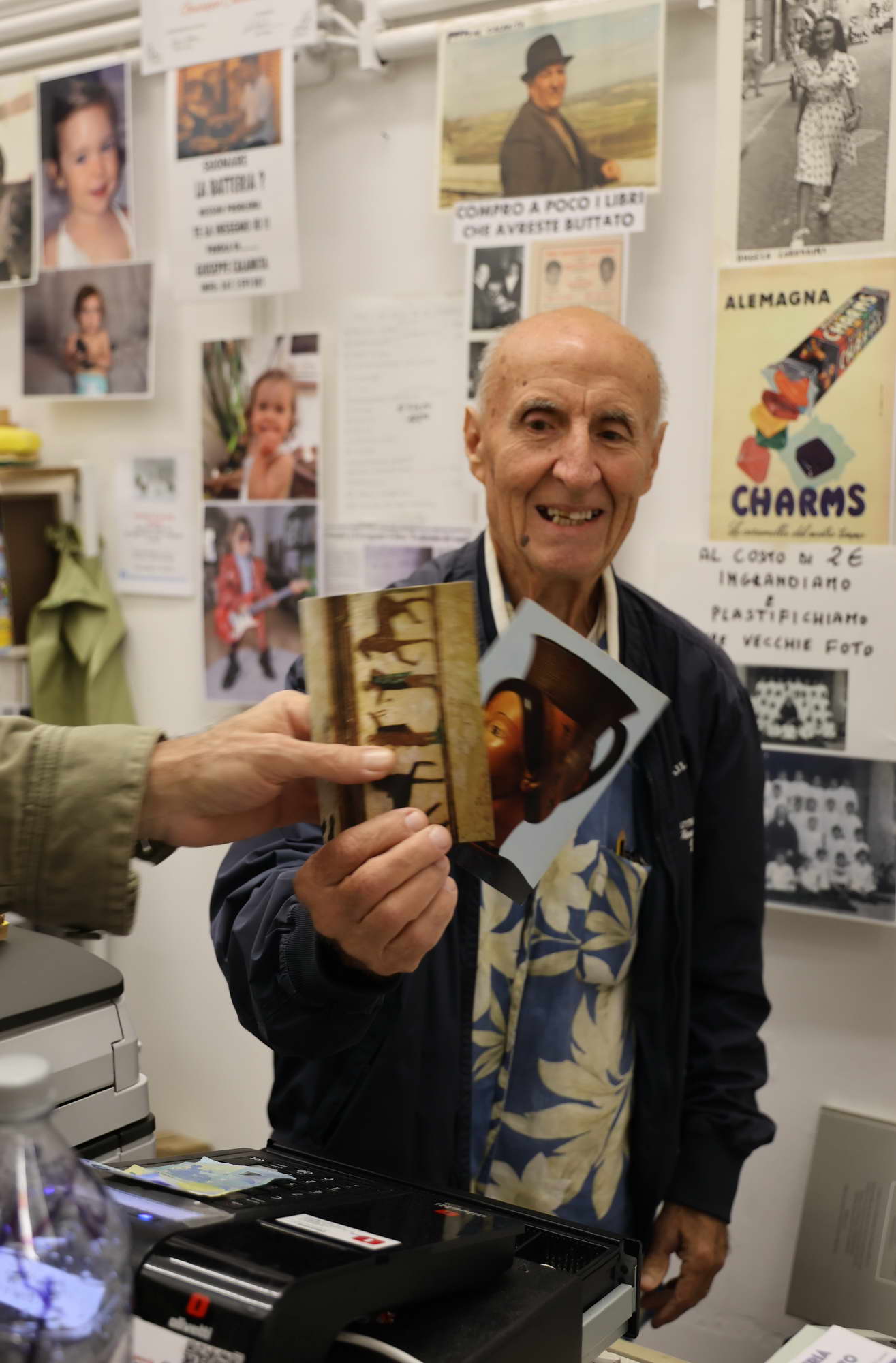
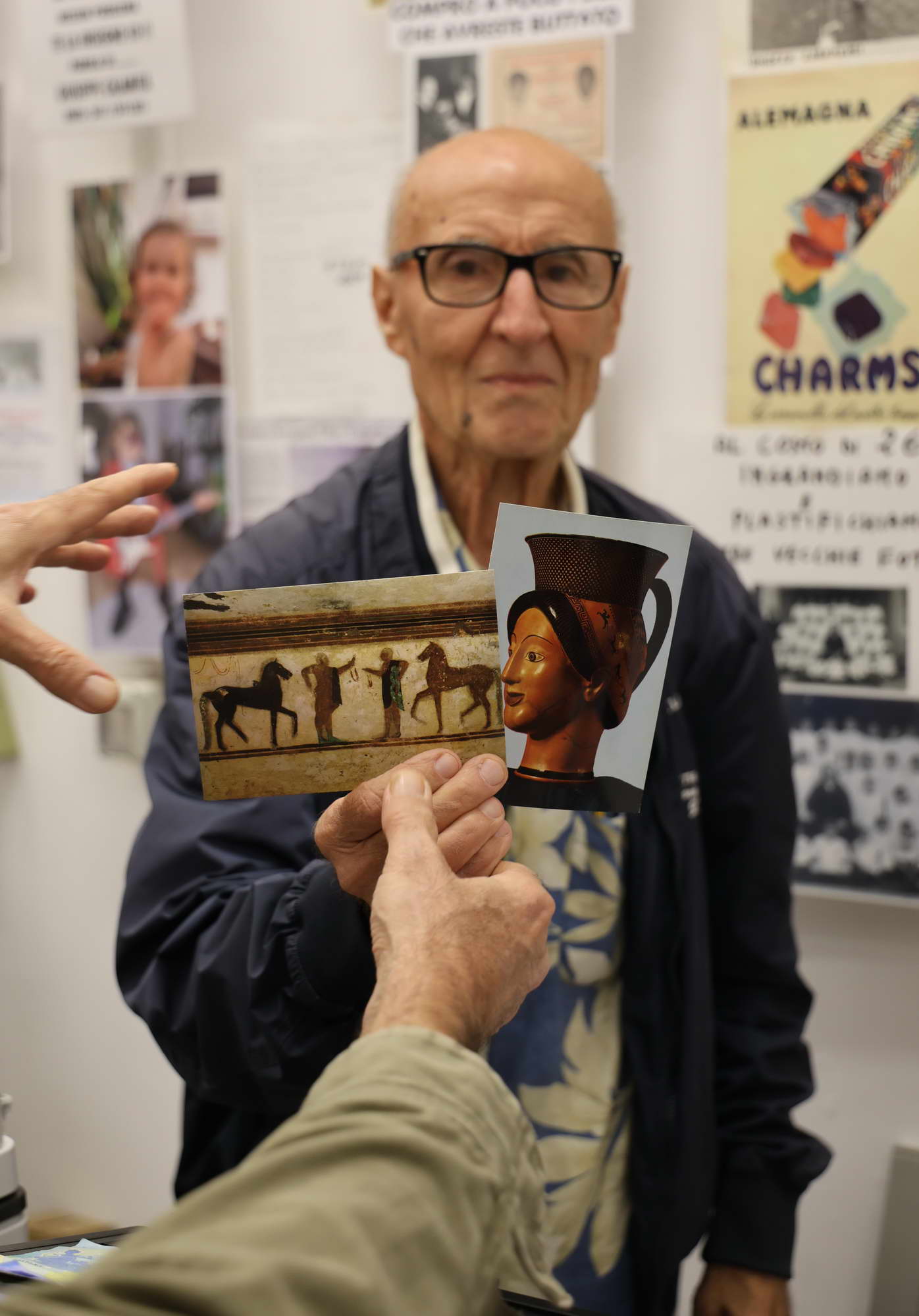
As we say goodbye, he gives me two postcards depicting Etruscan sites in Tarquinia. Toni adjusts them just so, like a Michelin-starred dish being arranged on a plate.


Recent comments