


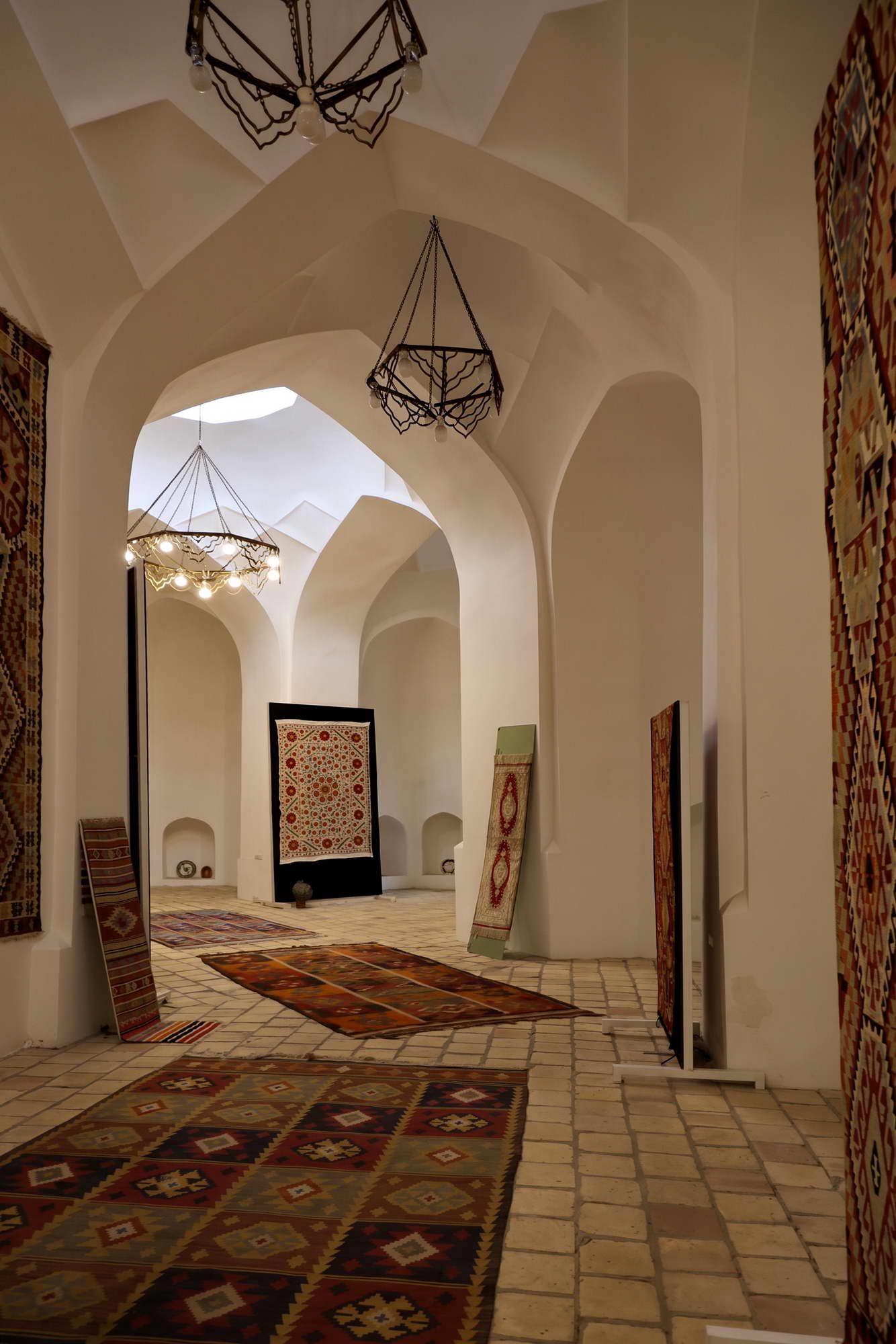
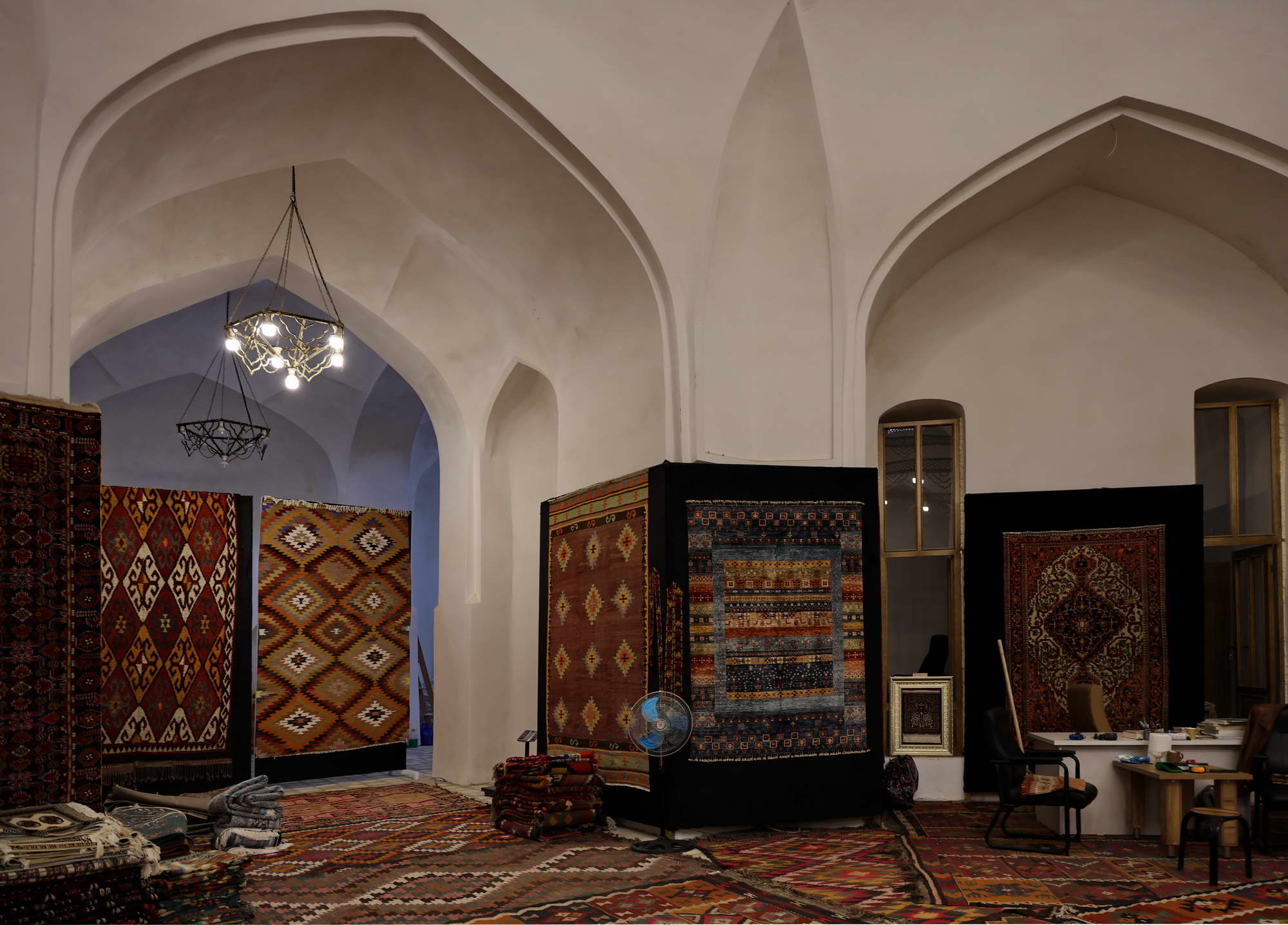
The Abdullakhan Tim in Bukhara was built in 1577 by Abdullah Khan II as the most elegant covered cloth market in the city’s bazaar. In the culture of the Silk Road, the Persian word tim referred to a large, enclosed, domed building where the most valuable goods—silk, fine textiles, jewellery and gold—changed hands. These were prestigious showrooms where customers could bargain over luxury goods in a refined and unhurried setting.
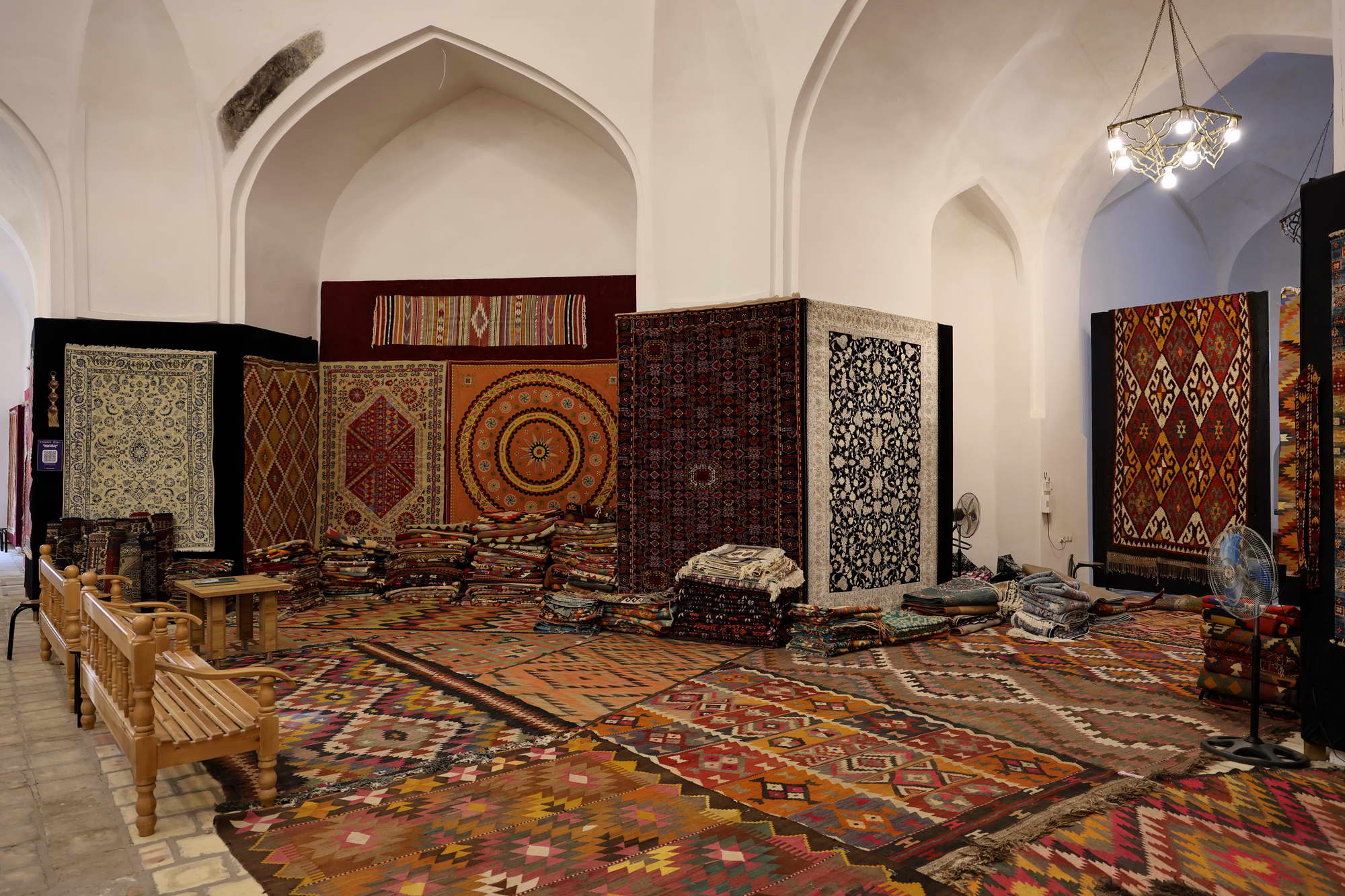
A wave of construction of these tims—or, as they were called in Anatolia, bedestens, from the Persian bezzâzistân, “the place of cloth merchants”—swept across the region in the sixteenth century, from Istanbul to Bukhara and Sarajevo. Every commercially important city acquired a monumental domed tim or bedesten at the heart of its bazaar. Abdullah Khan’s tim was part of this trend, and it is a rare example that has preserved its character as a luxury showroom to this day. While the bedestens of many other cities have turned into souvenir shops or cheap Chinese markets as bazaar culture has declined, the Abdullakhan Tim remains a showcase for the finest Persian carpets, exuding luxury not only through the quality of its wares but also through the exclusive way in which they are displayed.
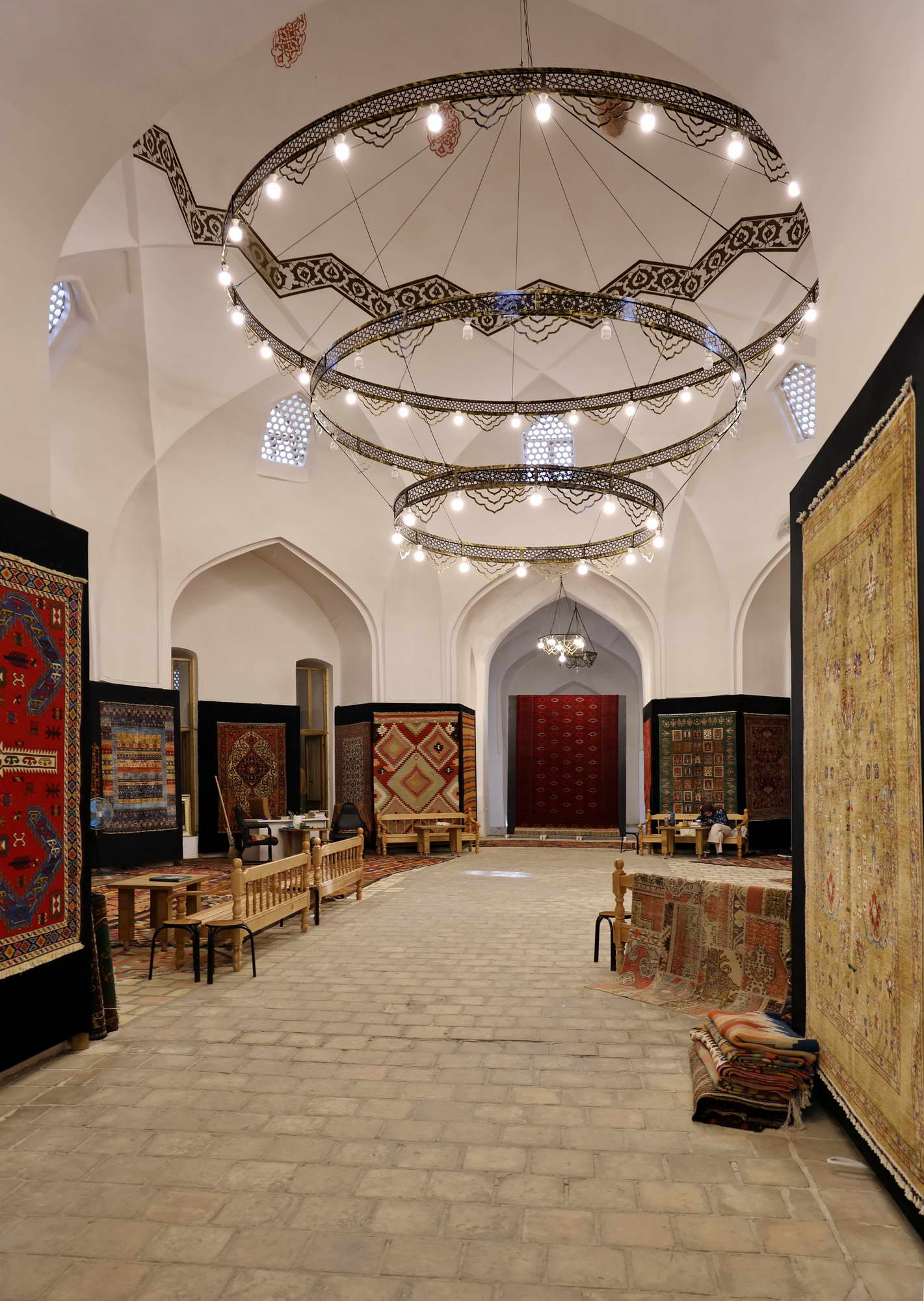
The vast central dome is surrounded by an octagonal gallery, covered by a further nineteen smaller domes and intersecting vaults. Small openings cut into the tops of the domes filter the light into mystical shafts that illuminate the interior, moving continuously across the carpet patterns as the sun travels through the sky. Nor are the carpets crammed together as they would be in an ordinary bazaar shop: each has its own spacious setting, where it shines alone, its significance and value all the more apparent.
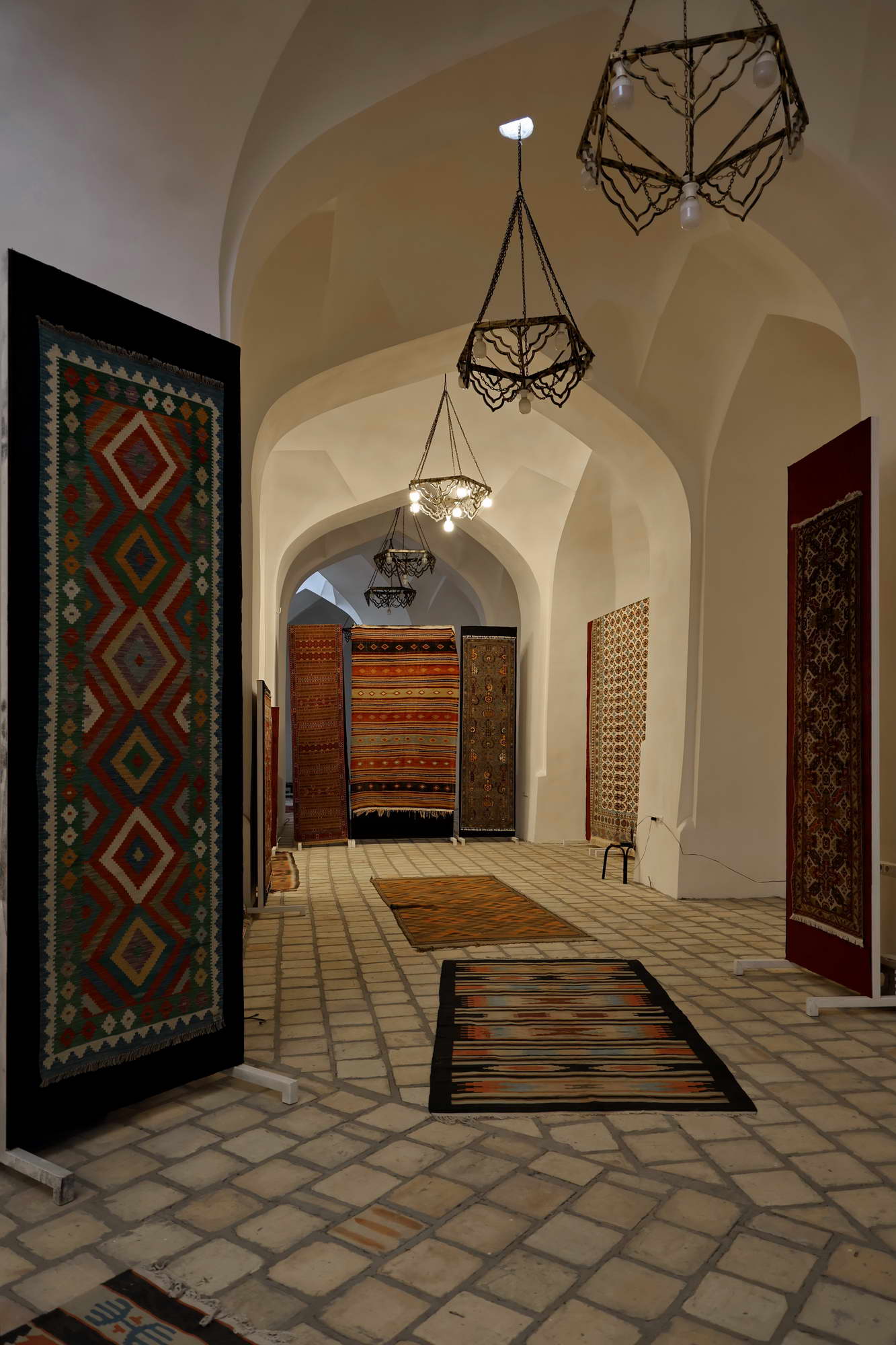
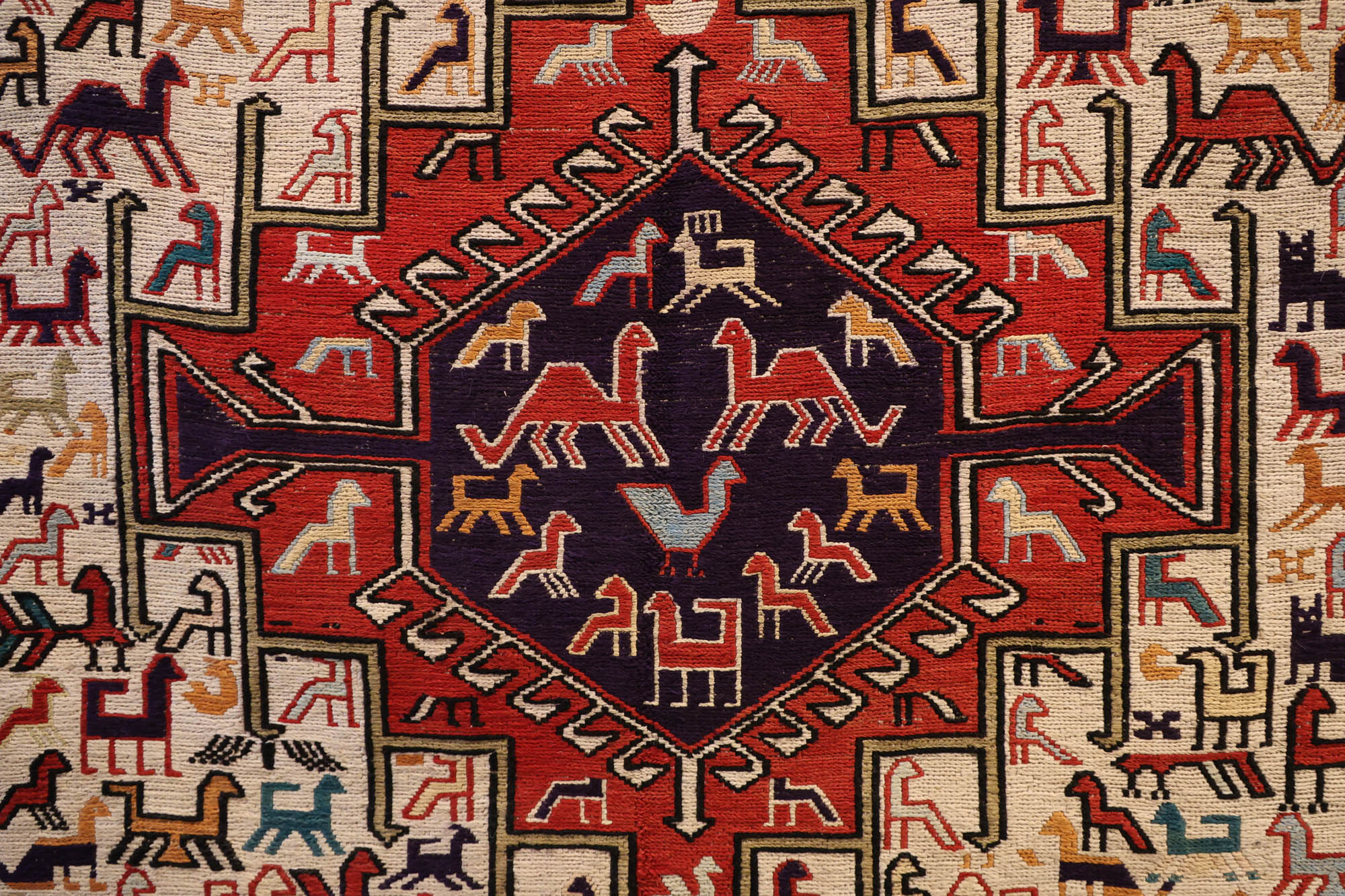
I recently wrote about “Ararat carpets”, a type of carpet common among the peoples around Mount Ararat, in which a large central medallion is surrounded by a teeming multitude of small animals. These are the carpet weavers’ flocks, emphasising the family’s actual or hoped-for prosperity, alongside symbolic and protective creatures such as peacocks and lions. Two examples of this type are on display here as well; according to the dealer, they come from Azerbaijan.
But another, related type of carpet is on display here too, one I had never imagined would be sold along the Silk Road. This is the gabbeh, knotted by the tribes of the Zagros Mountains in southwestern Iran, two thousand kilometres from here. The principal makers are the Turkic Qashqai, followed by their neighbours, the Kurds and Lurs.
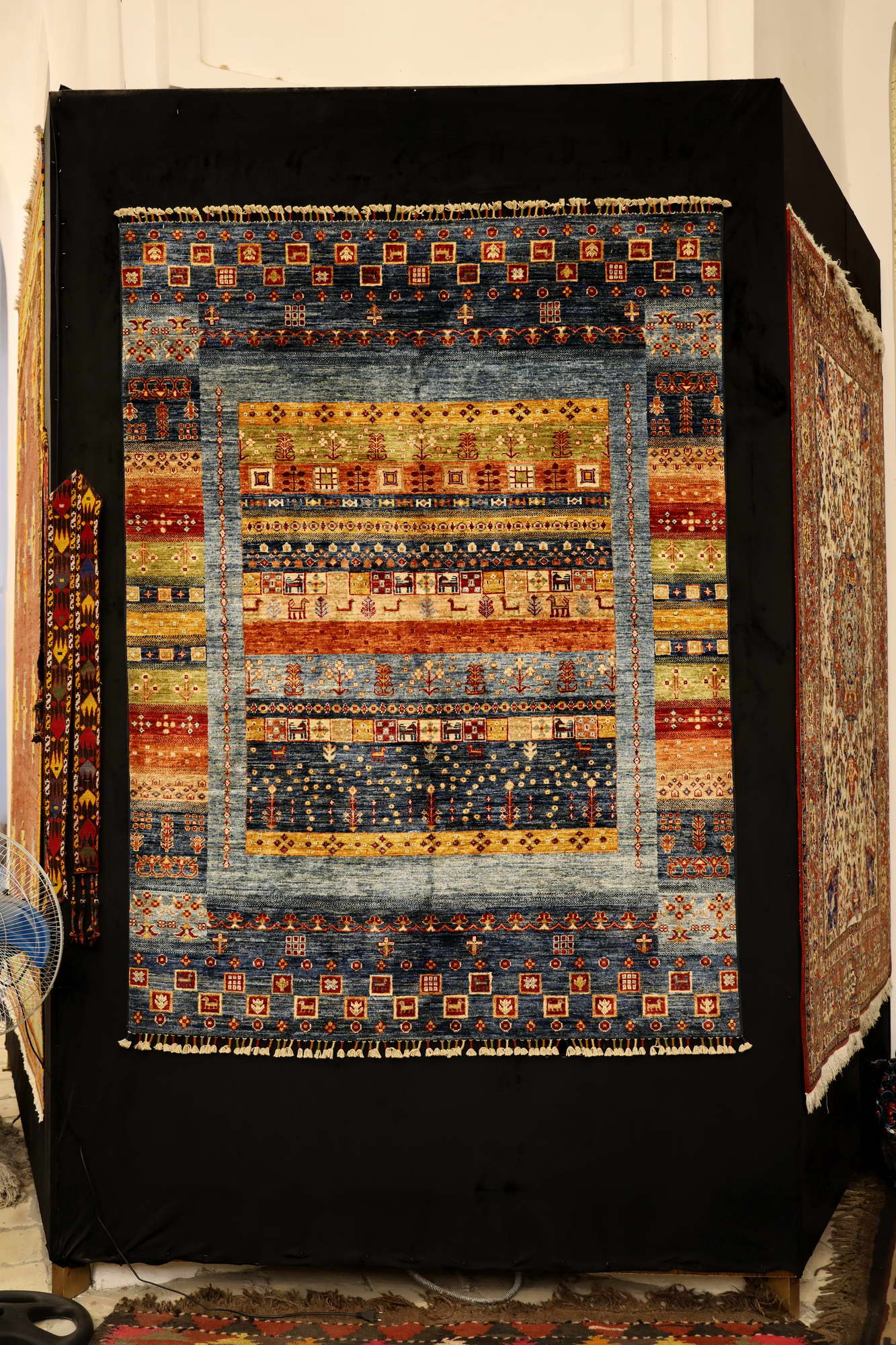
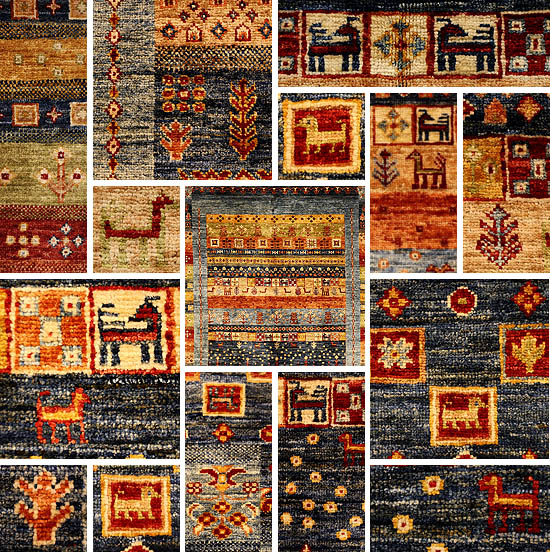
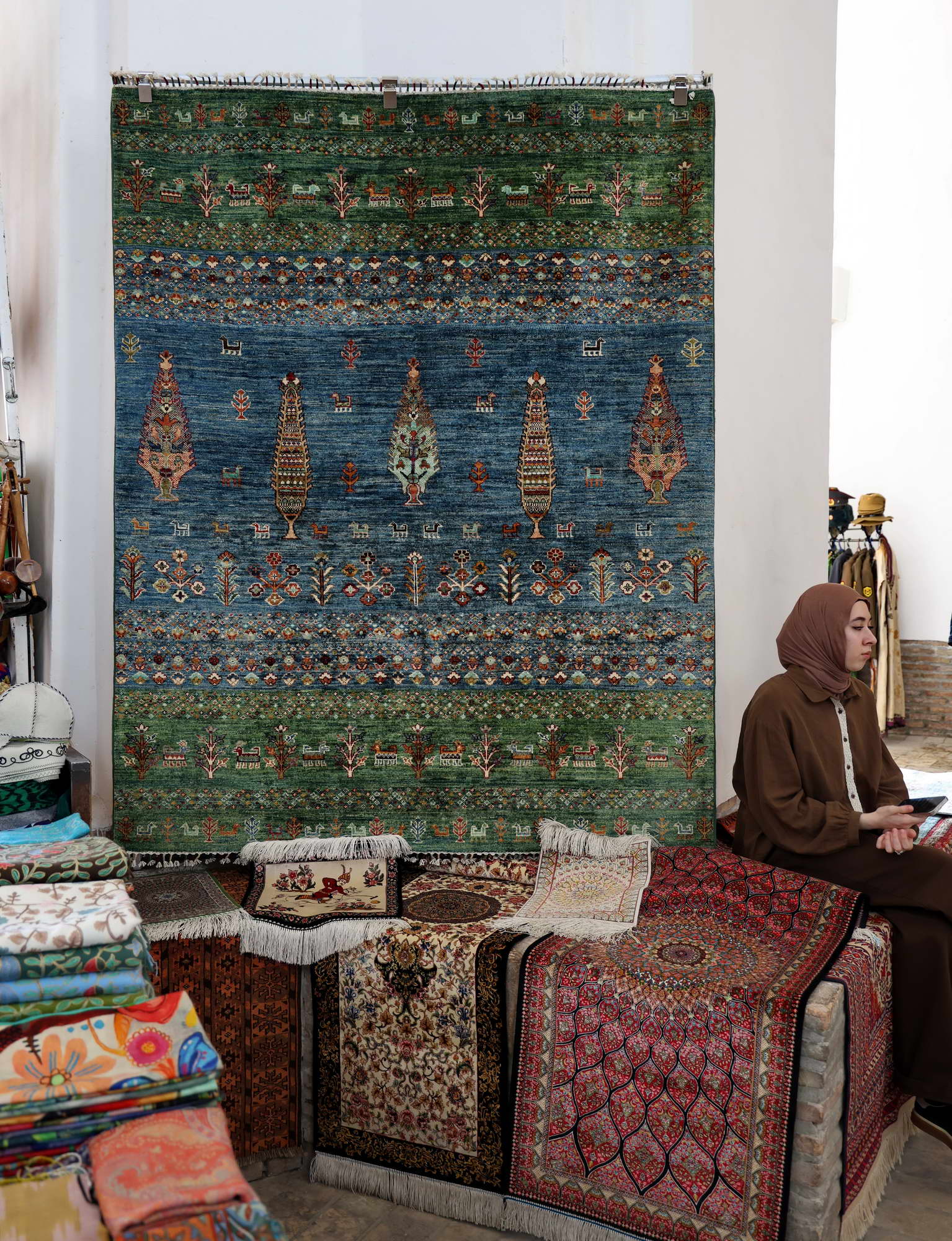
Like the Ararat rugs, these carpets feature a multitude of small animals, but here they seem to float amid brilliant gradations of colour. Colour takes centre stage in gabbeh rugs. Their delicate, shimmering variations—the effect known as abresh—arise from the nomads’ practice of dyeing wool in small batches, which means that the colour is never entirely uniform. Large fields of colour dominate the design, scattered with geometric, stylised figures resembling almost childlike drawings: animals, trees of life and human figures. The “inner world” of a gabbeh is often enclosed by a square evoking a river, while the surrounding “outer world” represents the mountains and is decorated with motifs intended to ward off misfortune and offer protection.
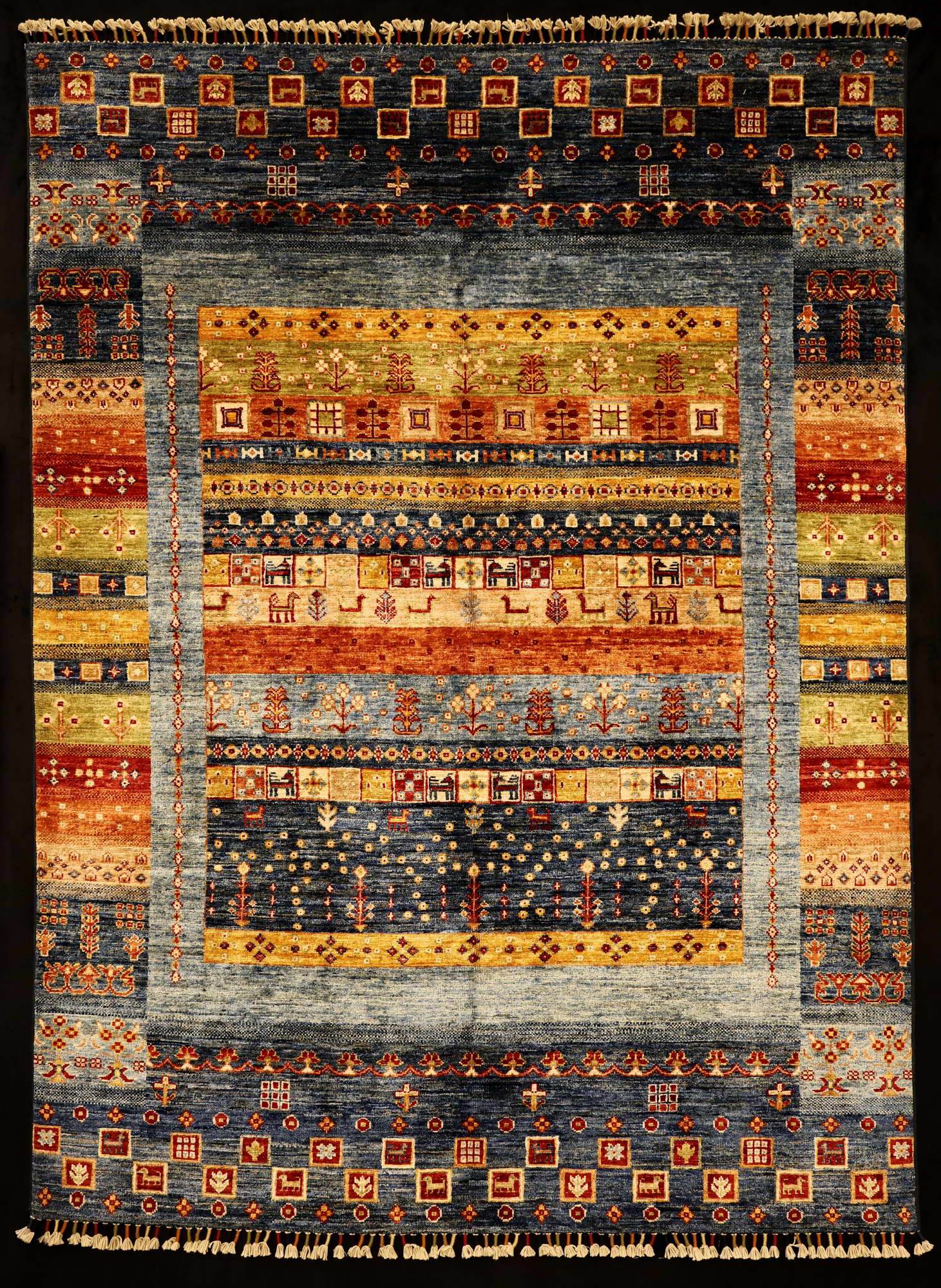
This rug follows a shawal (banded) layout, in which each section carries its own distinct system of symbols.
The layered, striped composition itself evokes a landscape and its horizon—the mountains, fields and rivers as the weavers saw them in nature. Trees rising from the earth towards the sky symbolise eternal life, growth and the bond between earth and heaven. On gabbeh rugs, they also represent the flourishing and growth of the family.
The small, geometrically stylised animals symbolise abundance, livelihood and good fortune. For nomads, their herds were their wealth, so depicting them on a rug was believed to bring blessings to the home. The small squares running along the edge of the carpet serve a protective purpose. According to tradition, these geometric motifs—often functioning as amulets—keep harmful influences and evil spirits away from the rug’s owner.
The deep blue and azure shades that dominate the rug, obtained from indigo, symbolise the sky, lofty heights and peace. In nomadic cultures, blue is also associated with spirituality and intuition. Terracotta and red, traditionally derived from madder root, evoke fire, vital energy, happiness and prosperity, lending warmth and strength to the design. Yellow, obtained from wild mignonette or pomegranate peel, celebrates the sun, light and the joy of life. Green, produced from spinach or by mixing blue and yellow, represents nature, renewal and spring. In arid regions, it also came to symbolise hope and prosperity.
Gabbeh burst into the Western consciousness in 1996 with a film of the same name by Mohsen Makhmalbaf, one of the great masters of Iranian cinema. The film had originally been commissioned by an Iranian handicraft cooperative as a promotional piece about the carpet-weaving culture of the Qashqai nomads. But Makhmalbaf was so captivated by nomadic life, the use of plant dyes to colour yarn, and the way carpet patterns actually tell personal stories that he expanded the project into a full-length magical-realist feature film. It was later followed by the other two works in what became known as the “Makhmalbaf trilogy”: The Silence (1998) and The Gardener (2012).
The film opens with an elderly couple washing their gabbeh in a stream. The carpet comes to life and turns into the young woman who wove it day after day, like a blog, weaving into it her family, significant events and characters, animals, people, trees and mountains—and, above all, the riot of colours that constantly surrounds the nomads.
The real protagonists of the film are the colours themselves. !زندگی رنگ است! عشق رنگ است Zendegi rang ast! Esgh rang ast! “Life is colour! Love is colour!” the film declares again and again. Every frame is pure poetry, brimming with elemental colour. We see the weavers gathering red flowers, washing wool in the river, blue yarn drying beneath the desert sun, and characters speaking without words through the colours they deliberately choose to wear.
Makhmalbaf follows the tableau-like aesthetic that Sergei Parajanov explored in The Colour of Pomegranates (1969), one of the boldest visual experiments in film history and one of its most influential cult classics. With the camera held still, he creates almost motionless, painting-like tableaux in which movement comes from the rhythm of colours and textures within the frame. The linear narrative dissolves into pure visual poetry. Rather than “telling” a story, the film “lives” it through images, symbols and metaphors: a girl emerging from a carpet or a horseman galloping across the landscape becomes an abstract poetic image. Colours become characters in their own right, expressing drama, suffering and love. Both directors were also fascinated by the authenticity of Caucasian and Iranian tribal cultures. Like Parajanov, Makhmalbaf does not aim for realism. Instead, through magical realism, he elevates rituals—the washing of wool, the monotonous, hypnotic movements of weaving—to a ritualistic, almost sacred plane.
Makhmalbaf’s Gabbeh helped millions of Western viewers understand that a gabbeh is not merely a functional object or a decorative furnishing, but “a human soul woven into threads”—a unique work of art.
After its premiere at Cannes and its international theatrical release, Western interior designers, gallery owners and luxury department stores began snapping up gabbeh rugs in large numbers. The film made naïve, minimalist tribal design fashionable and turned the gabbeh into a must-have feature of modern interiors, eclipsing traditional Persian carpets.
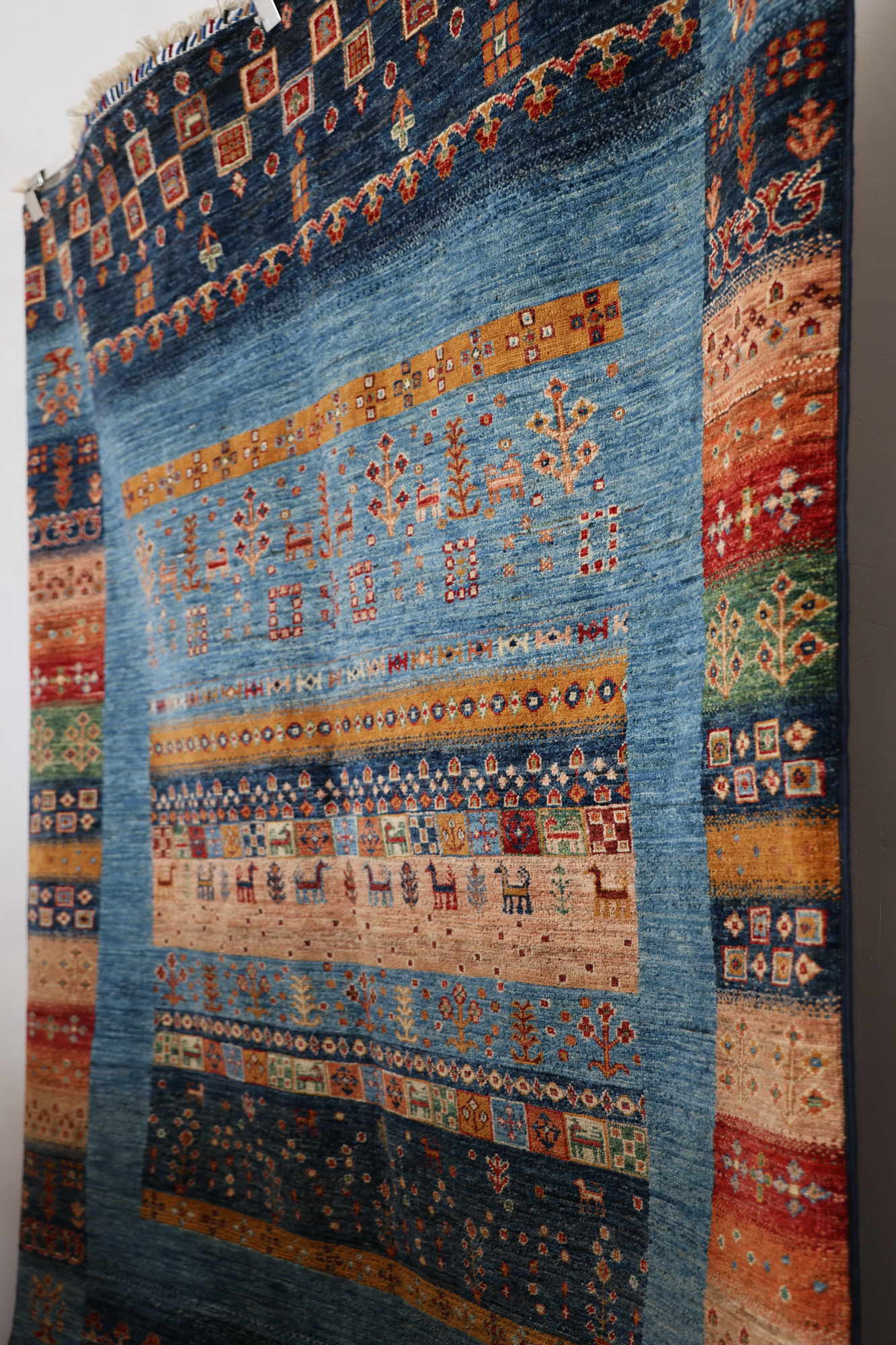
The Qashqai, for whom gabbeh is just one type of carpet—and not even the most common—could never meet such demand. A whole new industry sprang up to fill the gap. In the neighbouring carpet shops, I spot four or five rugs very similar to the gabbeh in the Abdullakhan Tim, and in one shop the dealer reveals that they are made to order in Afghanistan. The clients—local wholesalers—supply high-quality Ghazni wool and looms to tribal communities and families there, where women weave the carpets at home or in communal workshops. They are given a pattern to follow, but also considerable creative freedom. Rather than working from a precise design plan (talim), they weave traditional tribal symbols, trees and animal figures from memory and improvise as they go, ensuring that every finished piece is entirely unique. At the same time, the basic design they are given is more modern, more design-conscious and more minimalist, making it an even better fit for contemporary interiors than the original Qashqai rugs.
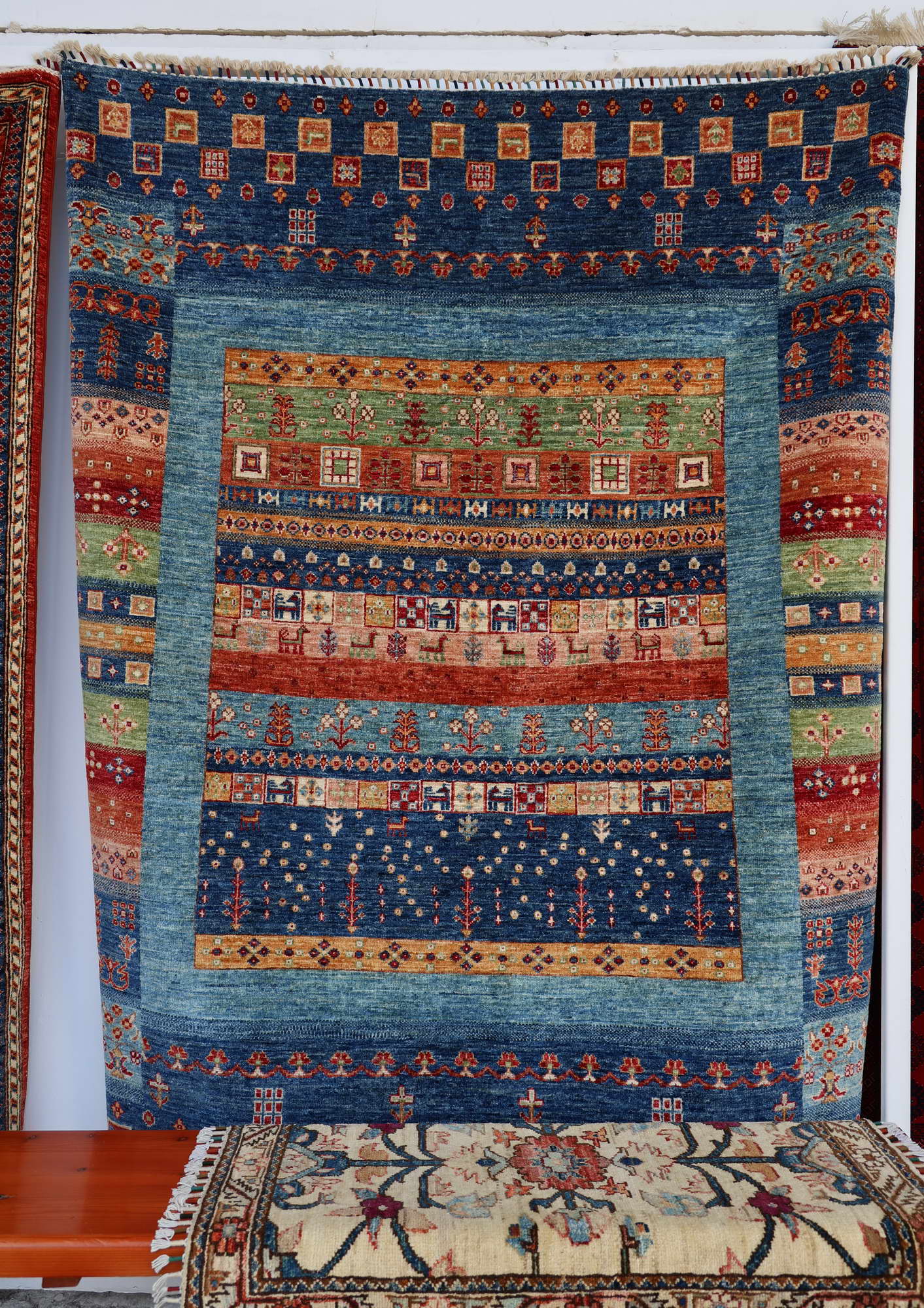
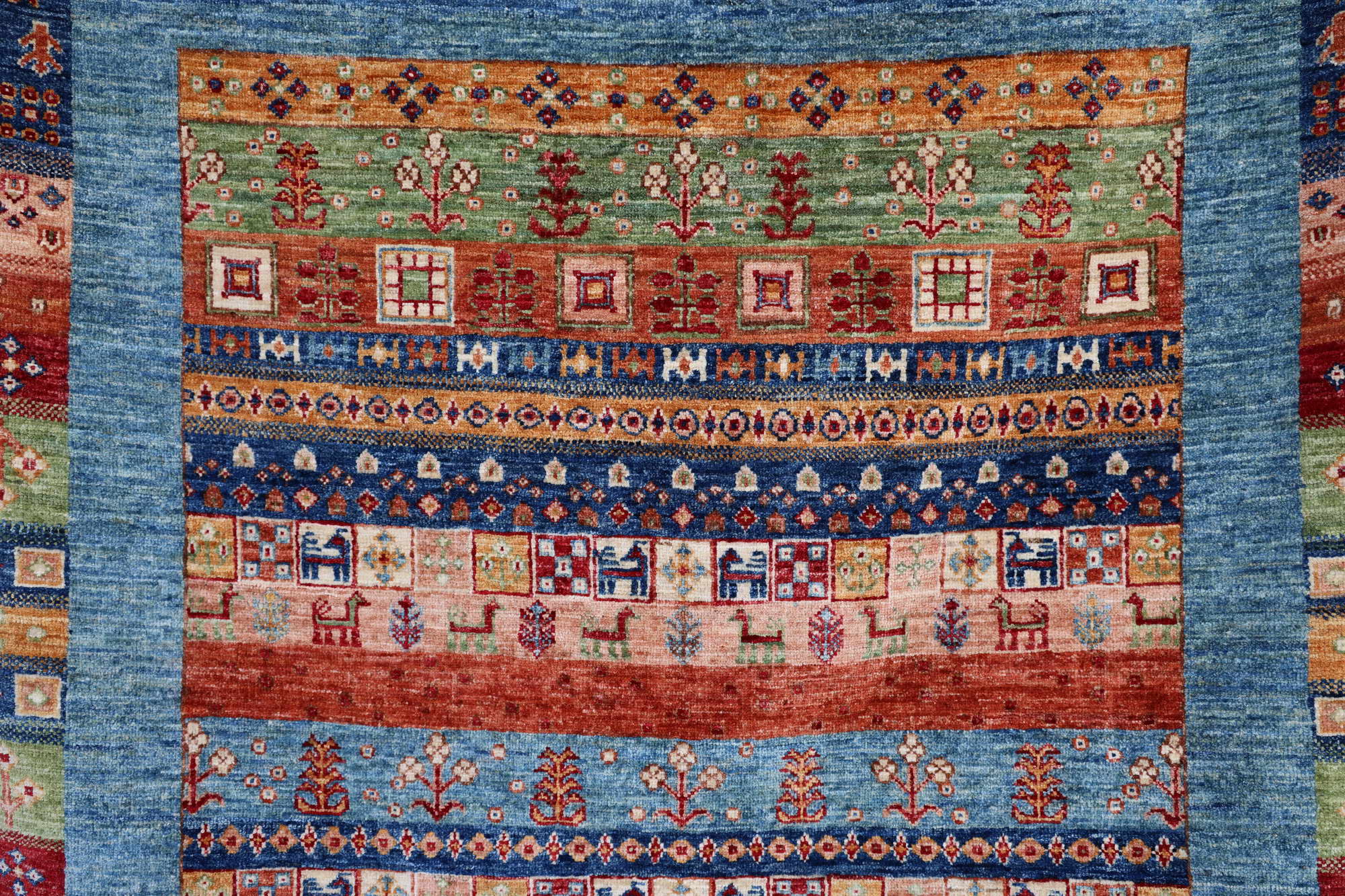
These Afghan-made gabbeh rugs, woven on commission, are genuinely beautiful and authentic, preserving many motifs from the older tradition. But can we believe that they, too, have the life woven into them that makes us long to own them?


Recent comments