


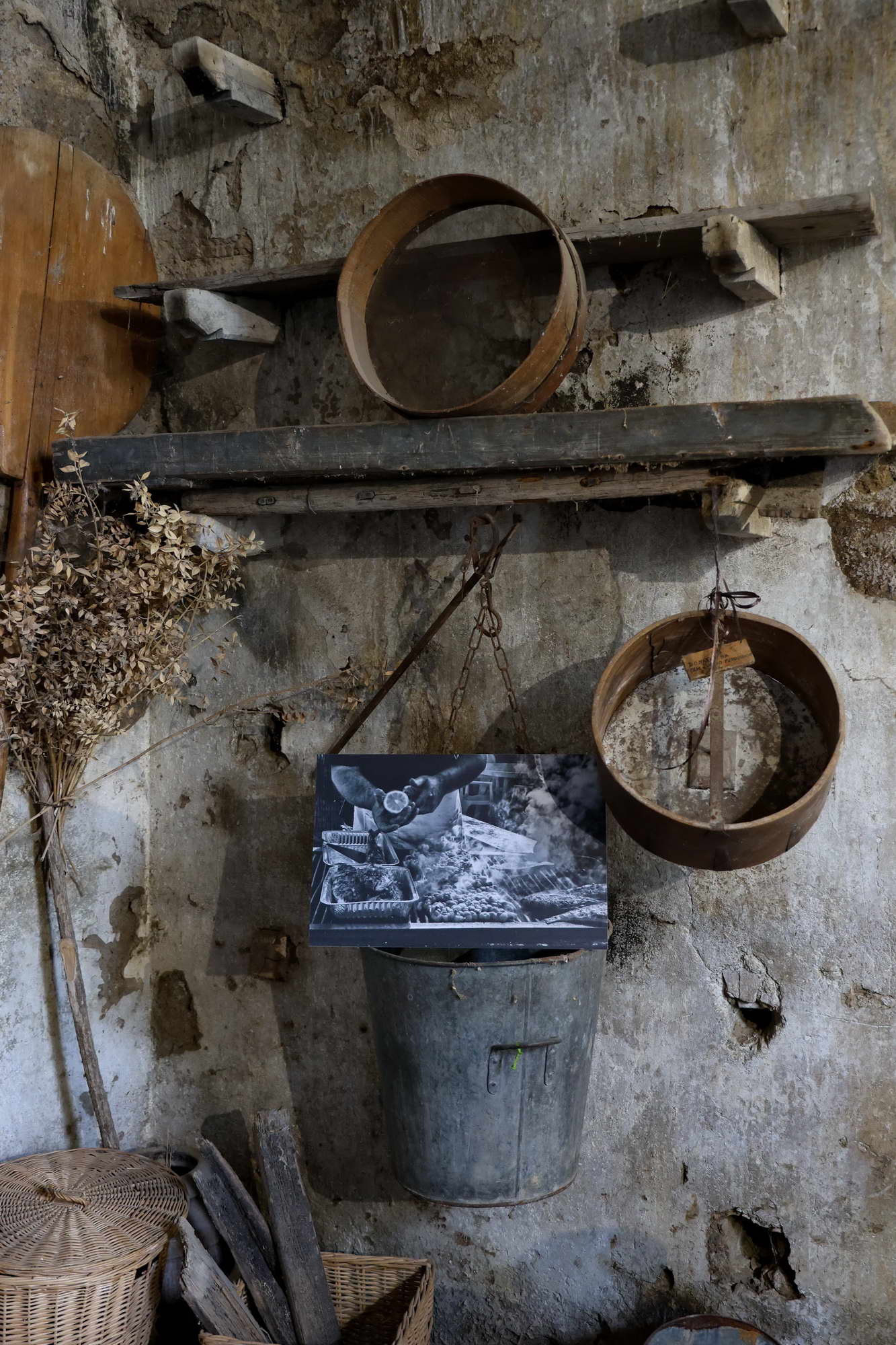
Fabrizio Loiacono has been photographing the last surviving tribal communities of Africa and India since 2008. In recent years, he has turned the knowledge and vision he gained there towards the outskirts of Italy’s major cities. In 2018, he created his series “Palermo. L’antica ZyZ”, portraying people living on the margins of Palermo. Yet Palermo has its own particular way of defining its periphery: here, it is the old town itself, the Greek-Arab-Jewish-medieval quarter stretching from the eclectic Art Nouveau city centre to the harbour. Its character is shaped by the contrast between the former grandeur of its decaying monuments and the marginalised communities eking out an existence in their shadow, a contrast deepened by the severe destruction of the Second World War and the large-scale internal and international migration that followed.
The series’ title, too, evokes the past: Zyz or Sys was the name of the Phoenician city founded in 734 BC, as attested by surviving coins. According to the Treccani dictionary, the name may mean “flower”, making the contrast all the more striking. It is also an allusion to a line by the great Italian singer-songwriter Fabrizio De André: “dai diamanti non nasce niente, dal letame nascono i fior” — “nothing grows from diamonds; flowers grow from manure”.
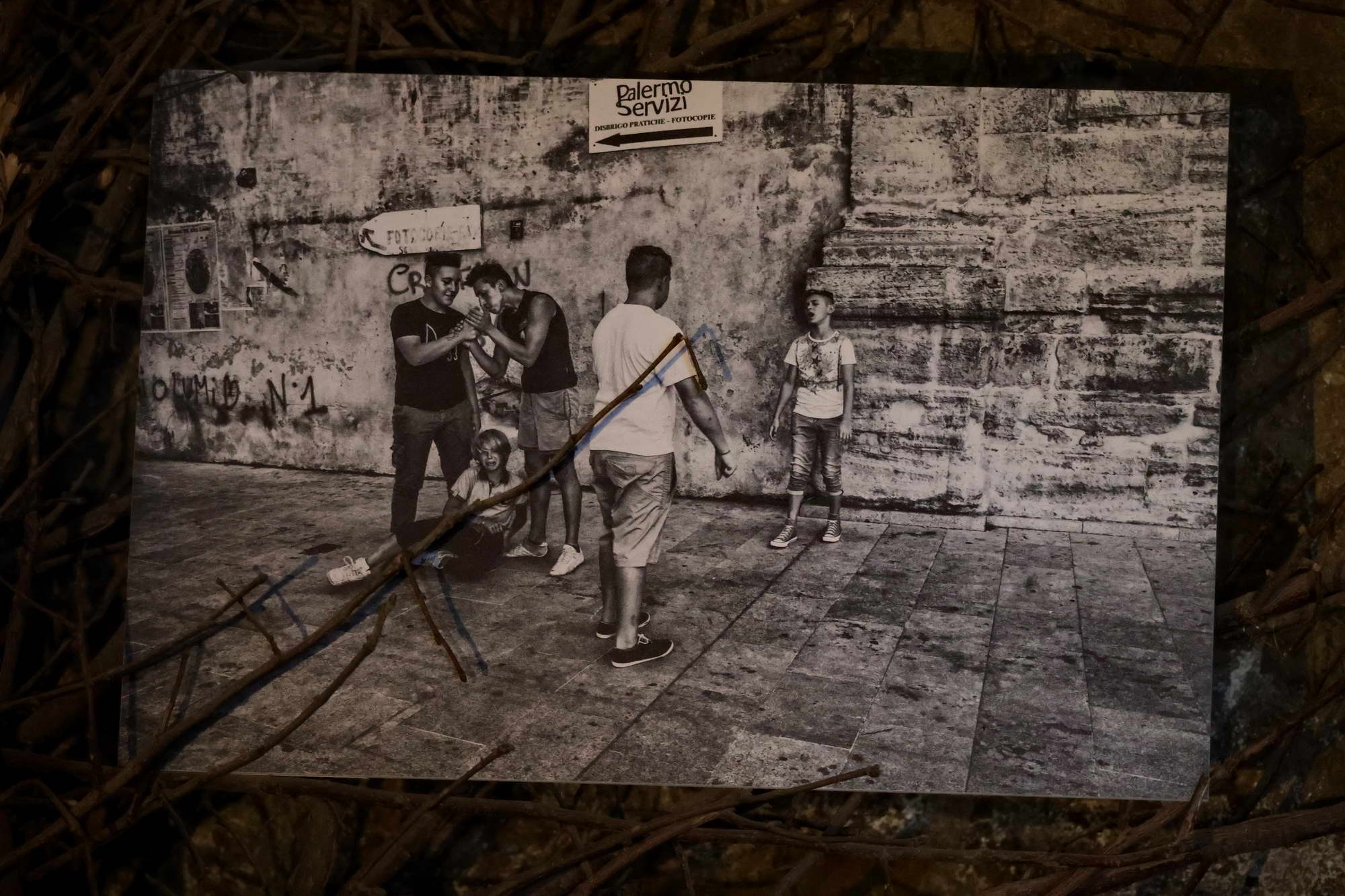
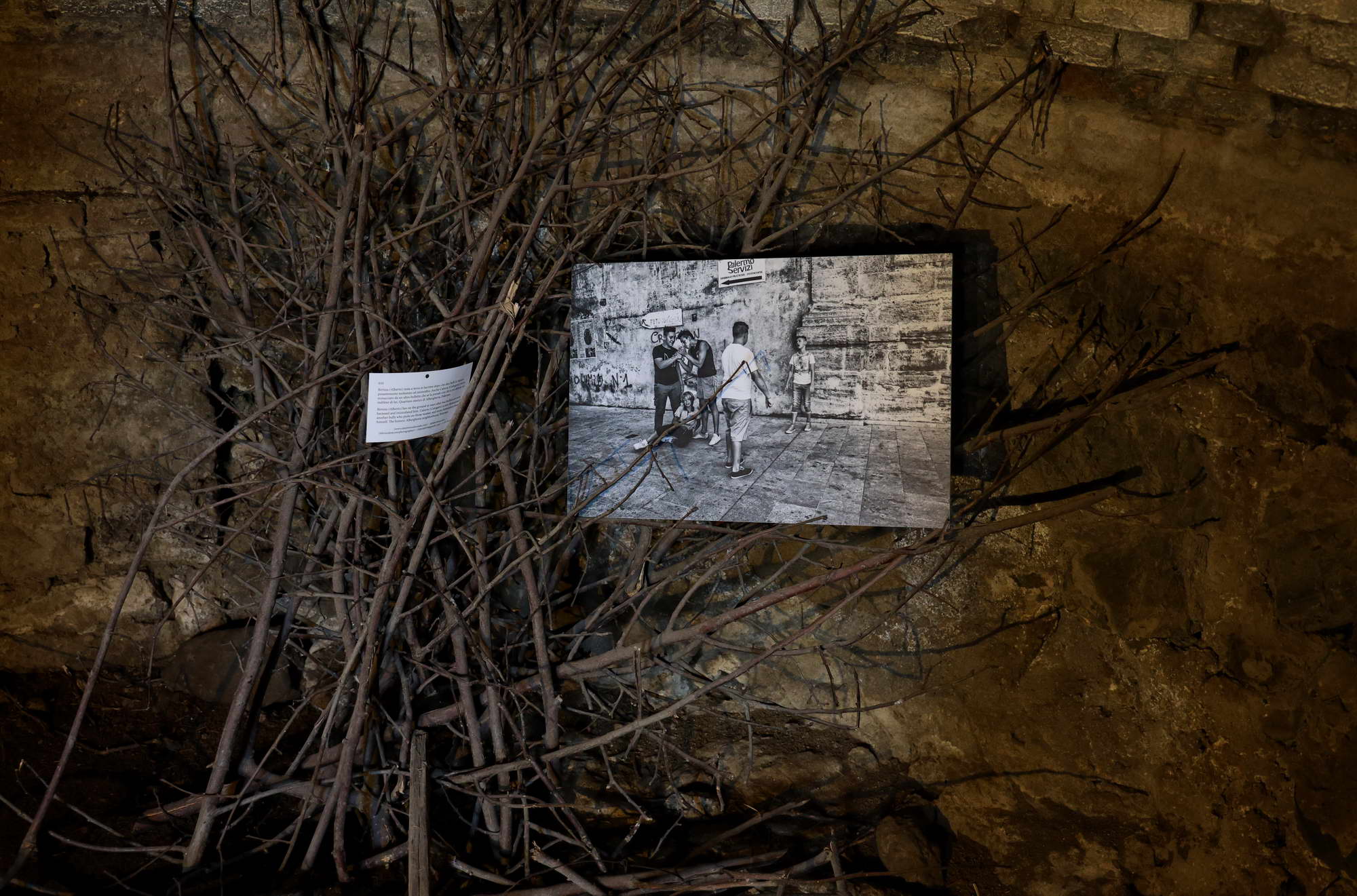 Birtinu (Alberto) sits on the ground, weeping, after two thugs have brutally harassed and intimidated him. Caloriu (Calogero) is also threatened by another bully who preys on those weaker and more defenceless than himself. Albergheria, the historic quarter of Palermo.
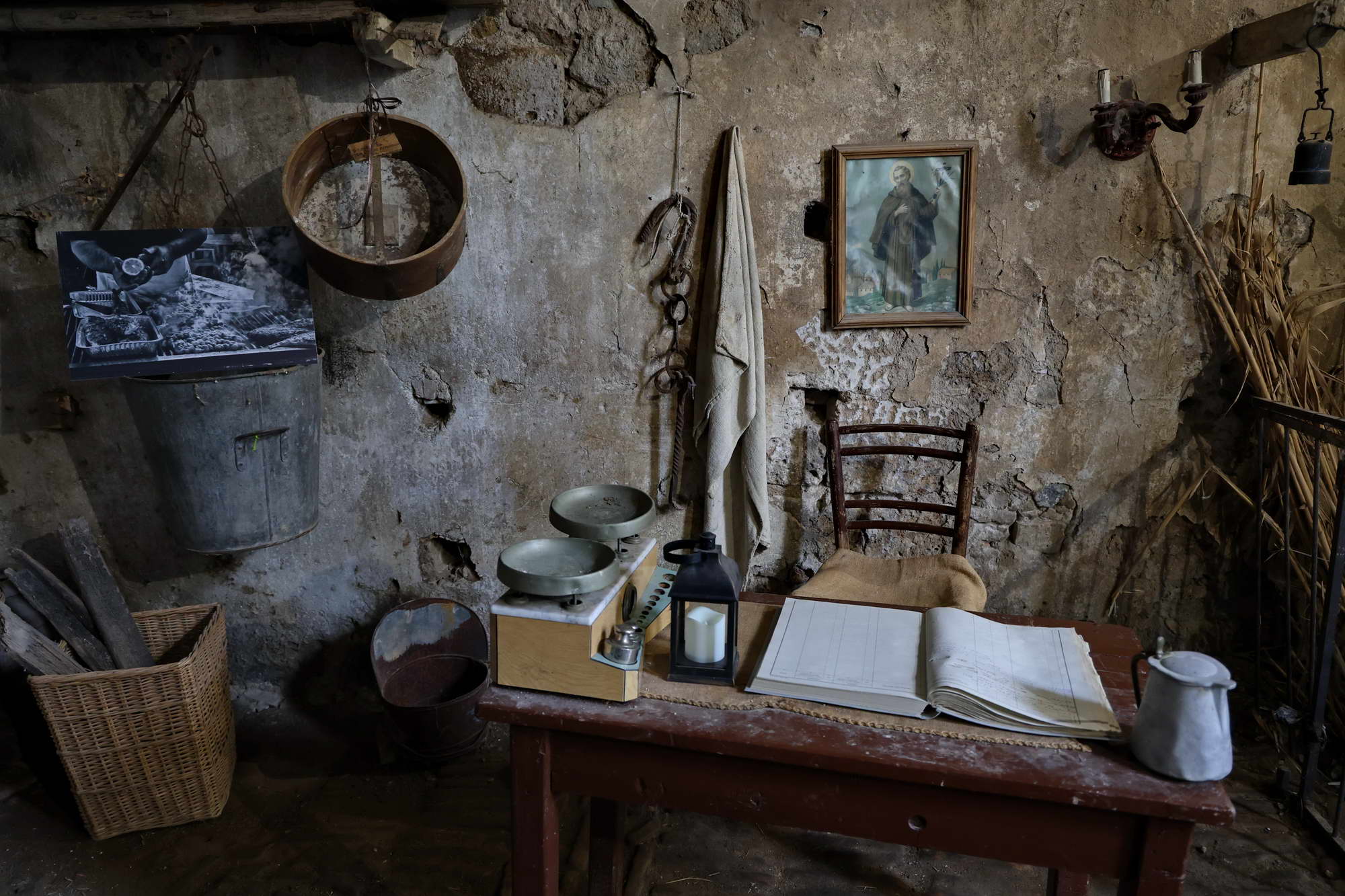
The series has been exhibited at several venues and has won numerous awards. It is now being shown in a remarkable setting as part of the 2026 Viterbo Biennale: in Celleno, one of the three “dying towns” — the one that did not wait for its own demise, but rushed ahead of it and blew up its erosion-ravaged old town. Yet the residents who moved to the area around the old town remain attached to it. They have founded a cultural association to care for the ruins and furnished the surviving basement rooms of the Palazzo Orsini with the modest objects of everyday life, recreating the settings in which that life once unfolded.
These rooms now provide the setting for exhibitions presented as part of the Viterbo Biennale under the title Appartenenza e radici: opportunità od ostacolo? — “Belonging and Roots: Opportunity or Obstacle?” Among them are images of “old Zyz”, displayed in the former bakery.
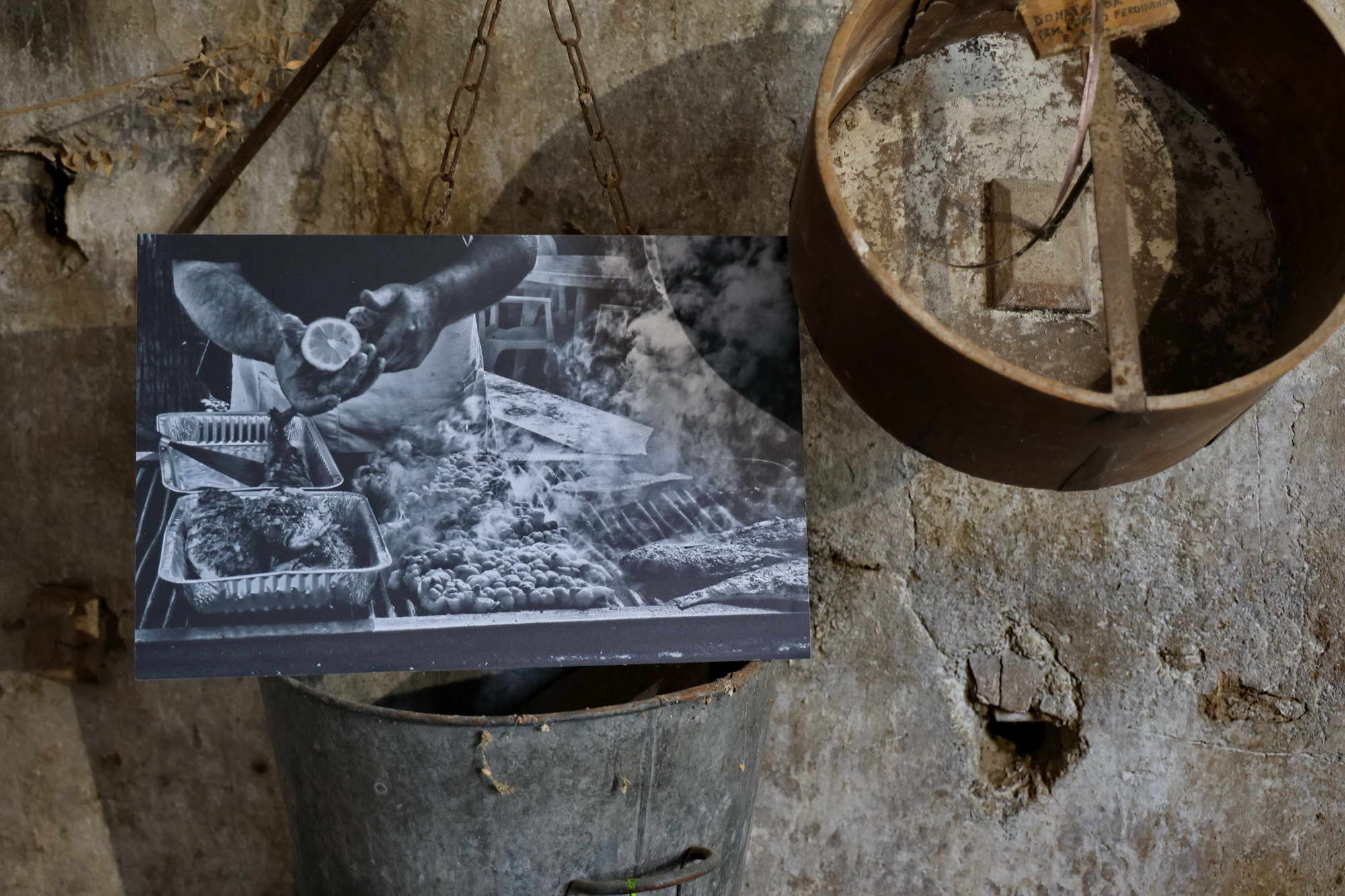
The images undoubtedly acquire an added dimension by appearing not on the sterile walls of a gallery, but amid the objects of a workshop in an abandoned town. The two forms of decay reinforce one another, creating a context in which viewers can physically experience the desolation captured in the photographs. The abandoned bakery is a particularly powerful setting for images of lives left to languish, forgotten on the outskirts of Palermo.
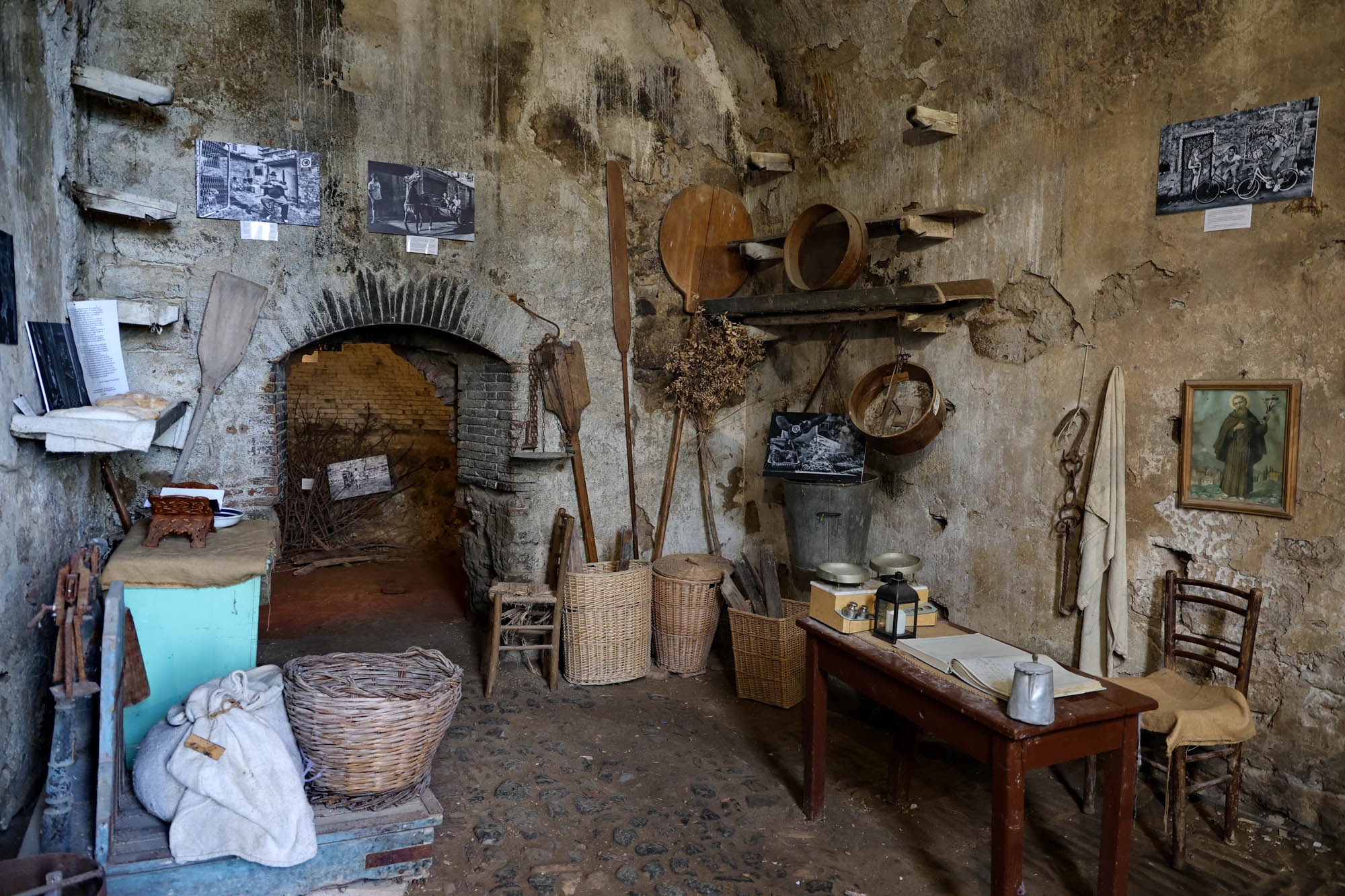
Yet placing these two forms of decay side by side is not mere poverty porn, nor simply an intensification of desolation for the sake of an even more sophisticated aesthetic pleasure. Applied to both the setting and the photographs, the exhibition’s title seems to ask: what roots hold a community together, and what happens when those roots can no longer provide a habitable environment?
Celleno’s answer is that, although erosion made it necessary to abandon the old town as a place to live, the roots remained. The former residents continue to preserve them through their installations, assembled from objects of the past—almost heartbreakingly poignant, yet authentic, and safeguarding their identity.
In Loiacono’s interpretation, Palermo’s answer is personal connection. Loiacono has also published this series on his own website. There, however, the photographs are accompanied by brief, sterile captions: “Musicians. A group of friends gathers in a tailor’s workshop to play music together. Old town, Palermo.” In the exhibition, these captions expand into short stories: “Giuseppe and his best friend Antonio improvise a little concert on their accordions in Antonio’s tailor’s workshop. The historic Kalsa district, Palermo.”
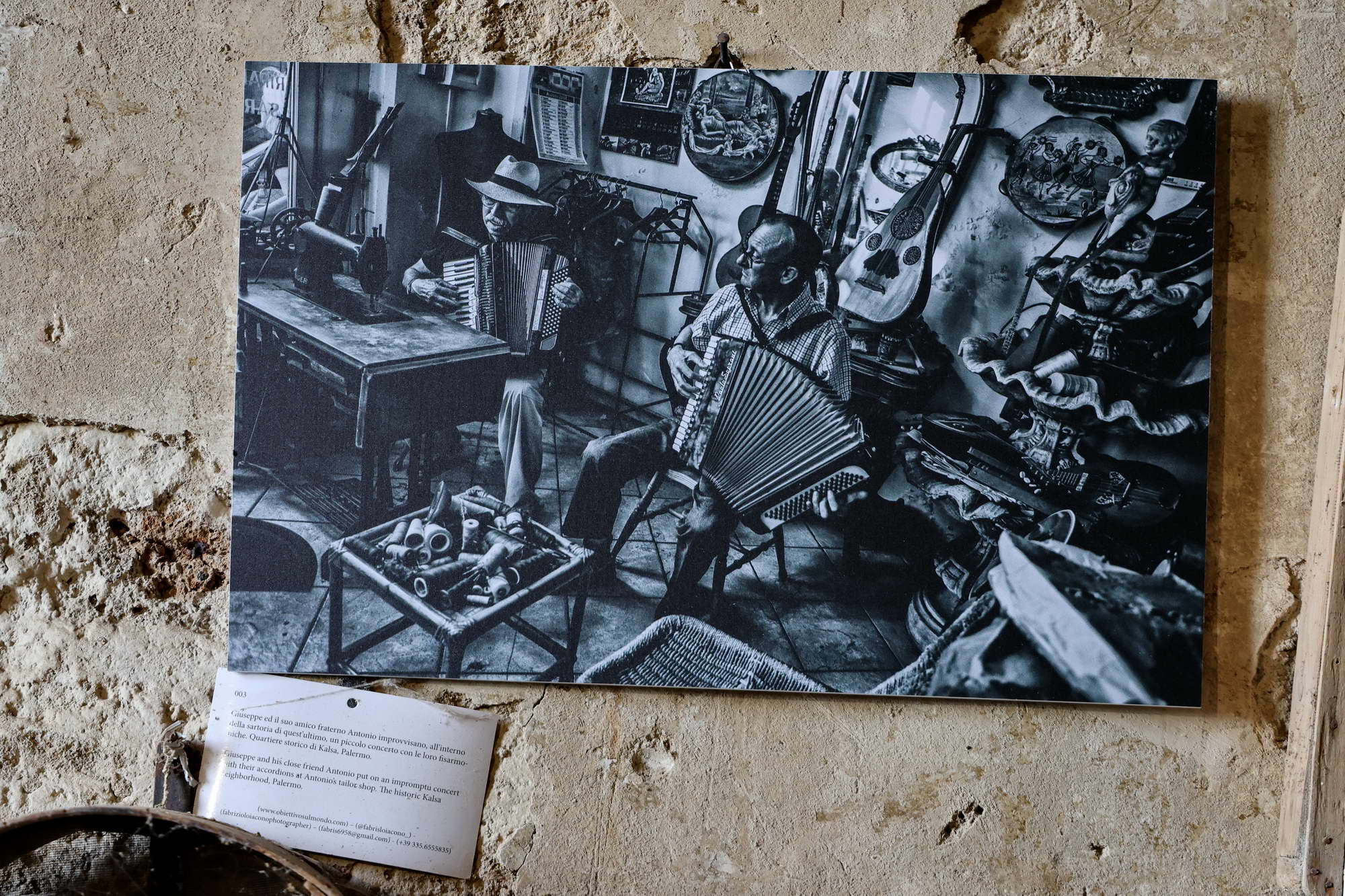
Among the tribes, the photographer may have learned that a good portrait—the kind of photograph of which Capa would say that “you were close enough”—can only be made when the photographer earns the subject’s trust, is welcomed into their world, and comes to know their story. The condensed stories beneath these photographs, complete with names and context, testify that this is exactly what happened.
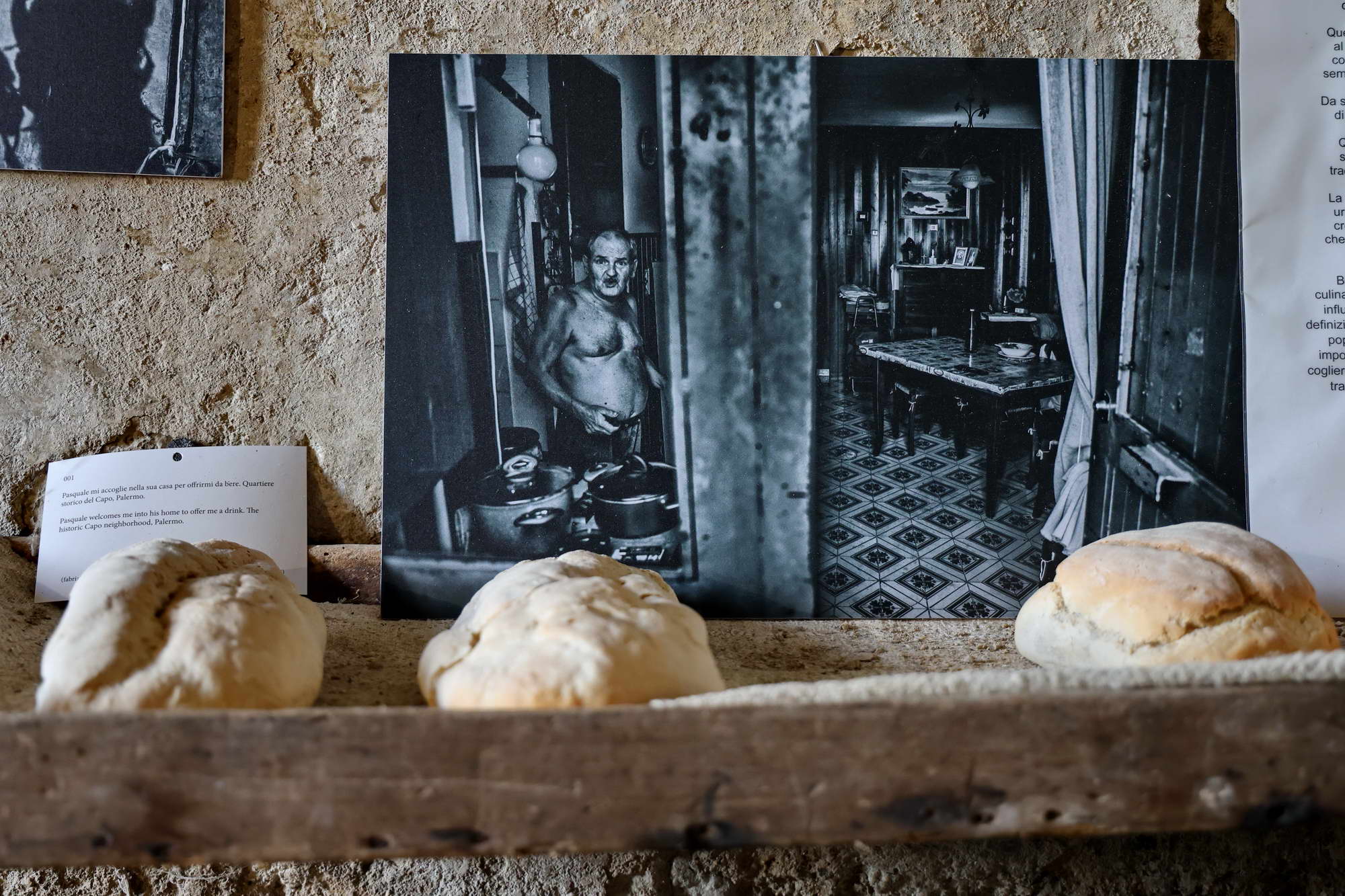 Pasquale invites me to his home for a drink. The historic Capo district, Palermo
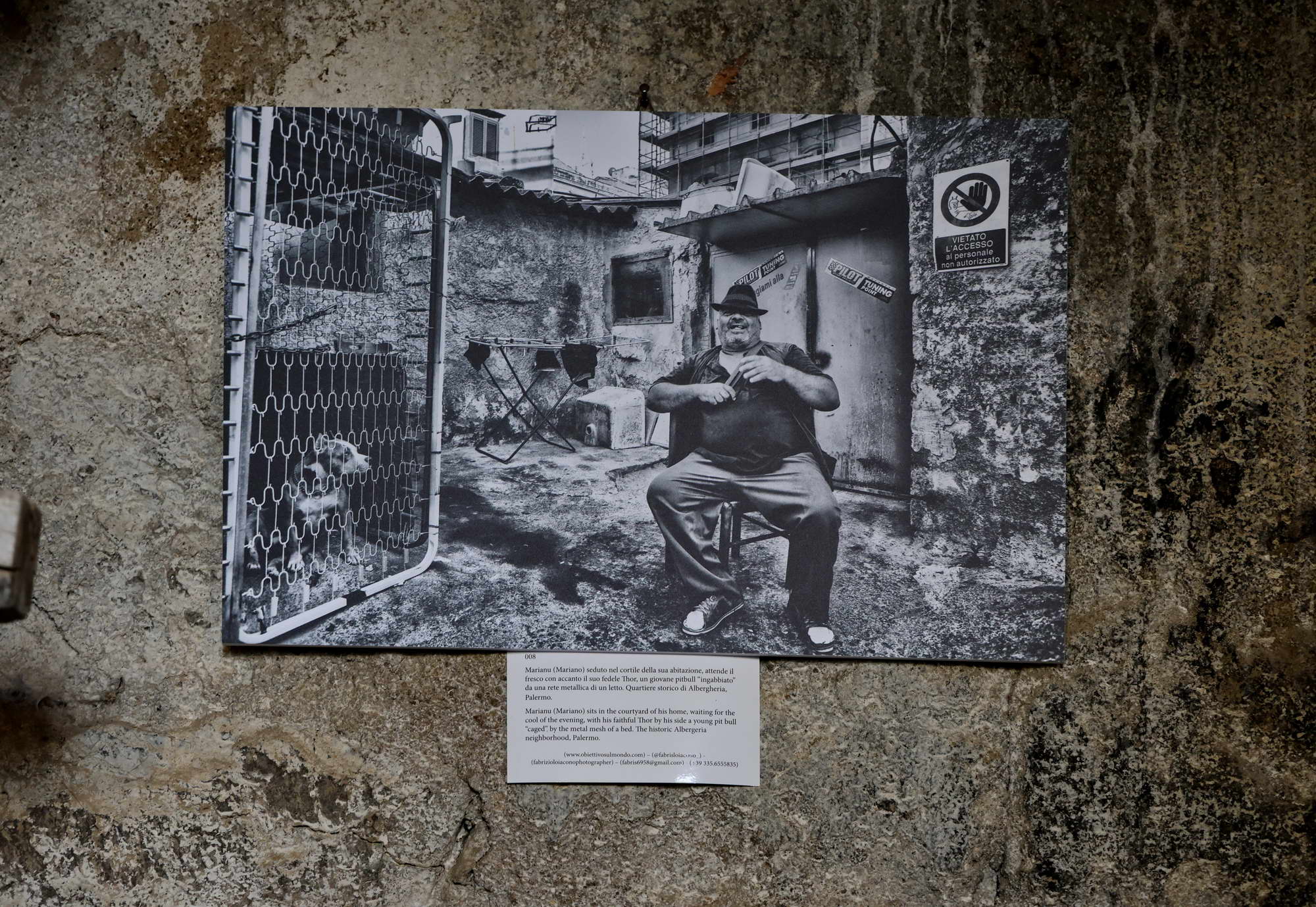 Marianu (Mariano) sits in the courtyard of his home, waiting for a cooling breeze. Beside him is his faithful Thor, a young pit bull, in a cage made from a mattress spring frame. The historic Albergheria district, Palermo
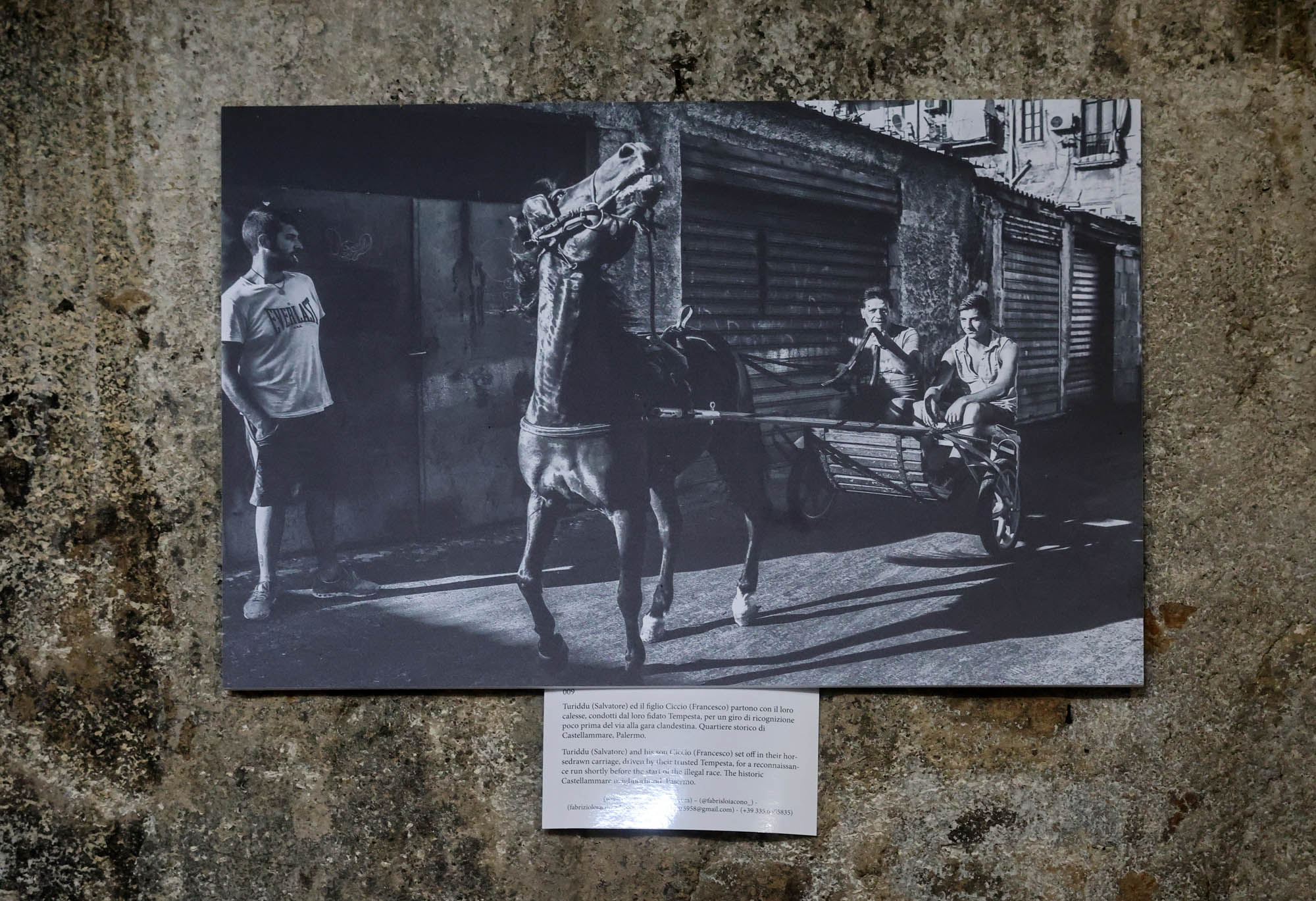 Turiddu (Salvatore) and his son Ciccio (Francesco) set out in their cart, pulled by their faithful Tempesta, to scout the terrain before an illegal horse race. The historic Castellammare district, Palermo
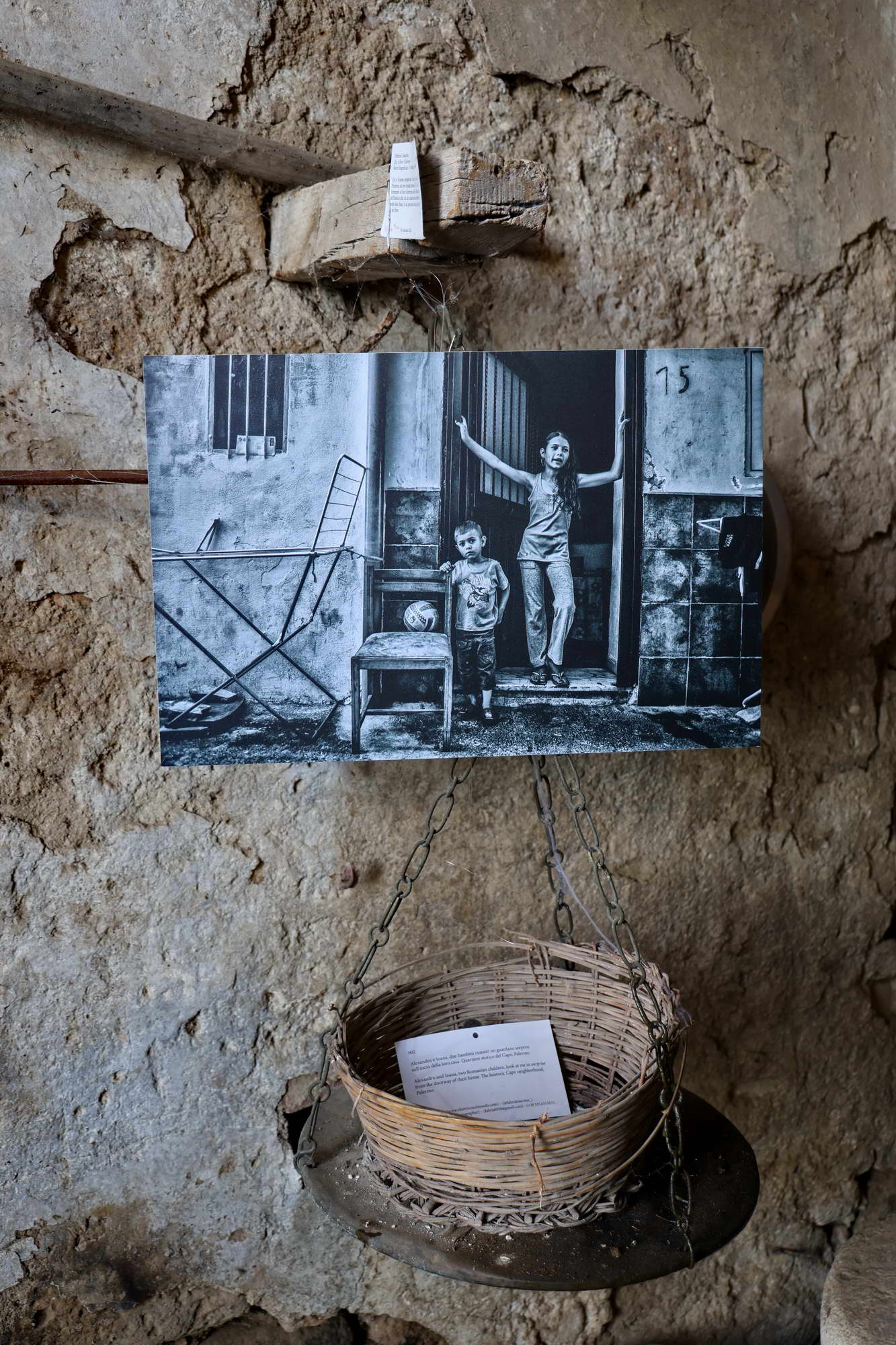 Alexandru and Ioana, two Romanian children, stare at me in surprise from the doorway of their apartment. The historic Capo district, Palermo
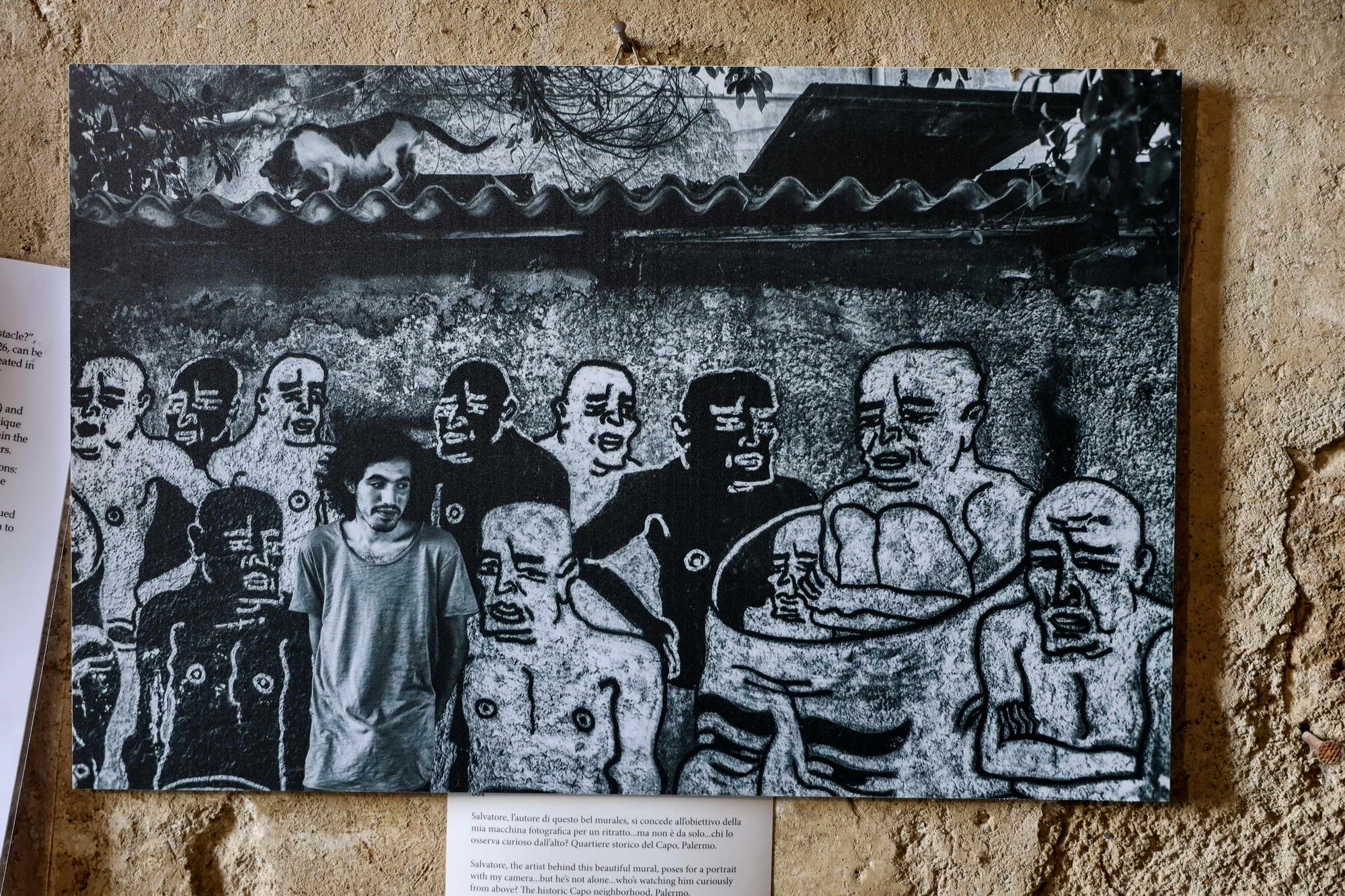 Salvatore, the artist who created this beautiful mural, poses for a portrait in front of my lens. But he is not alone who is watching him curiously from above? The historic Capo district, Palermo
The photographer does not portray these people as wretched figures in an exotic world, but as individuals striving to live with dignity despite undignified circumstances. And, as Antal Szerb writes in the final sentence of Journey by Moonlight: “As long as a person is alive, something can still happen.”
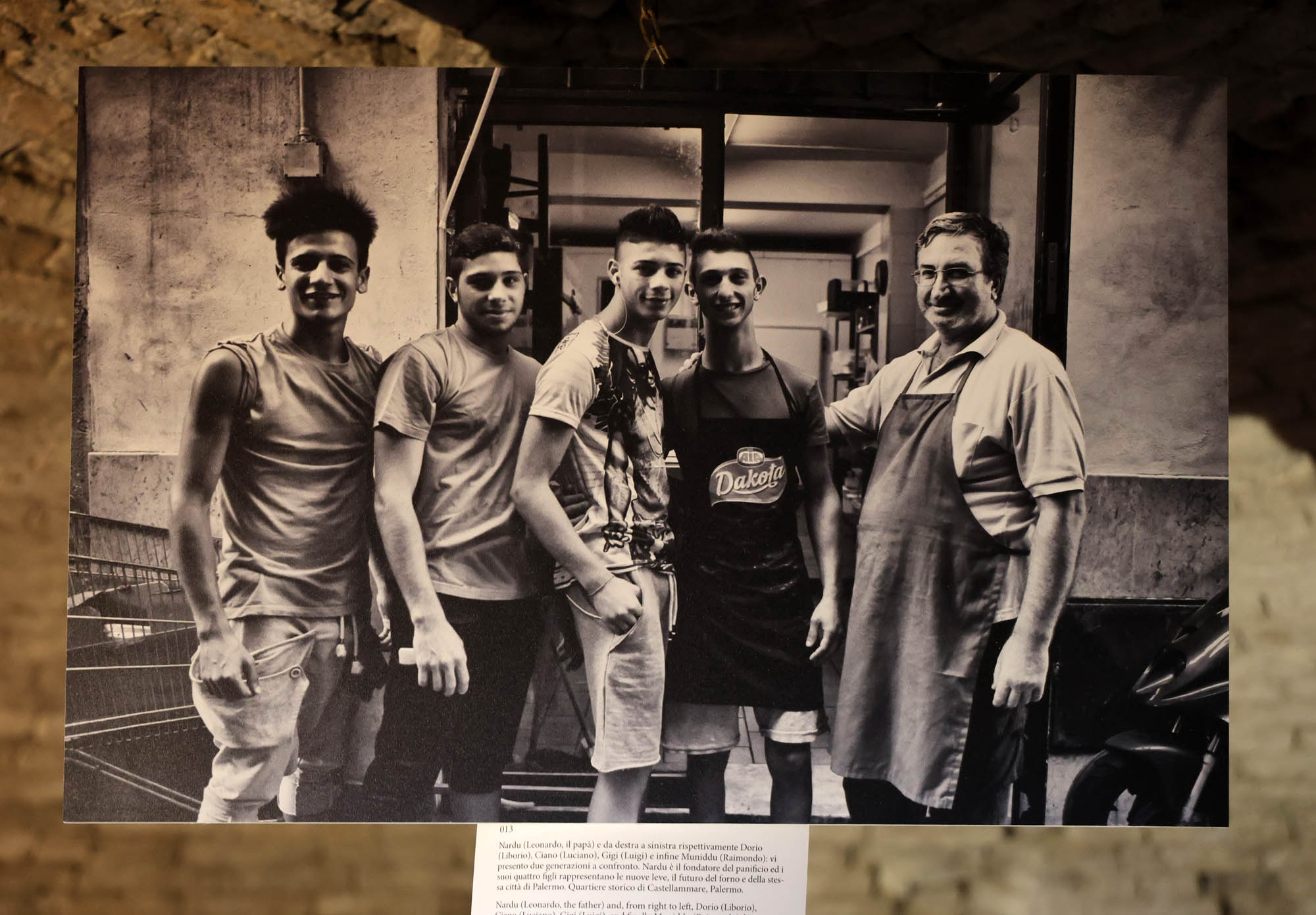 Nardu (Leonardo, the father) and, from right to left, Dorio (Liborio), Ciano (Luciano), Gigi (Luigi) and Muniddu (Raimondo): two generations side by side. Nardu founded the bakery, and his four sons are its new leaven—the future of both the bakery and Palermo itself. The historic Castellammare district, Palermo


Add comment